Effect of nerve cuff electrode geometry on onset response firing in high-frequency nerve conduction block
- PMID: 20813650
- PMCID: PMC3467702
- DOI: 10.1109/TNSRE.2010.2071882
Effect of nerve cuff electrode geometry on onset response firing in high-frequency nerve conduction block
Abstract
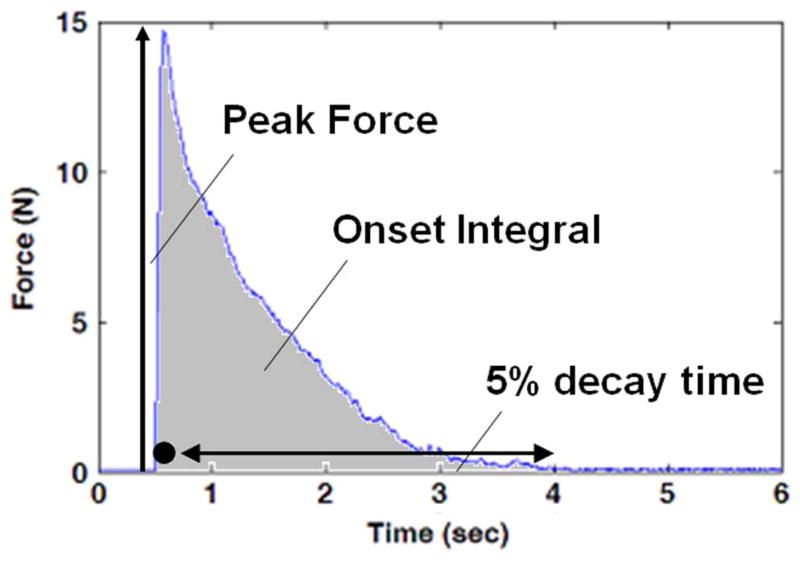
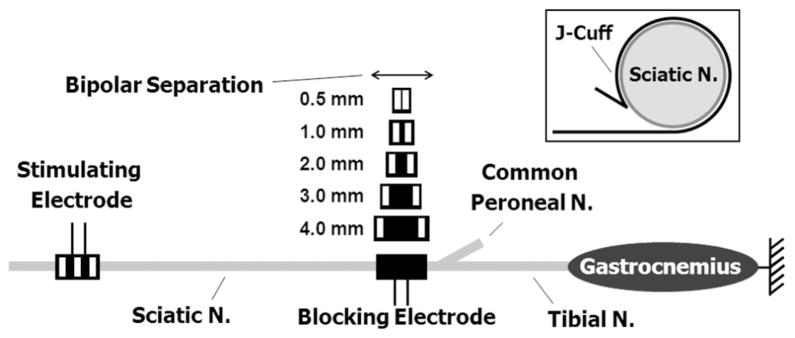
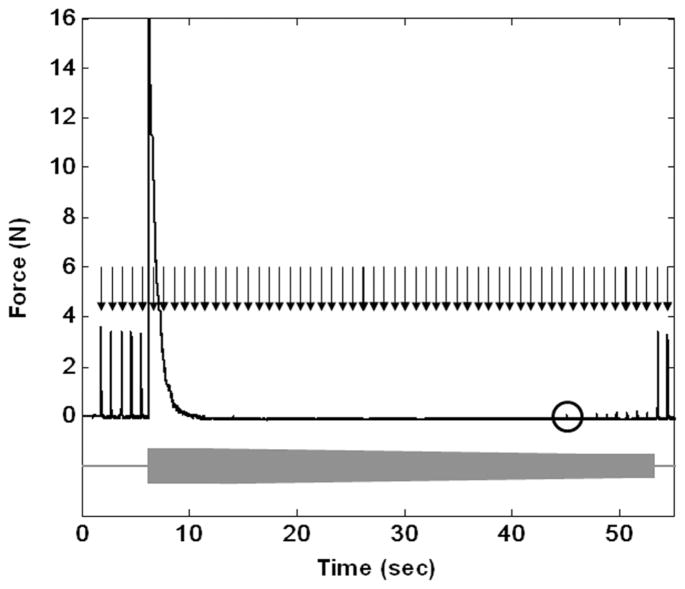
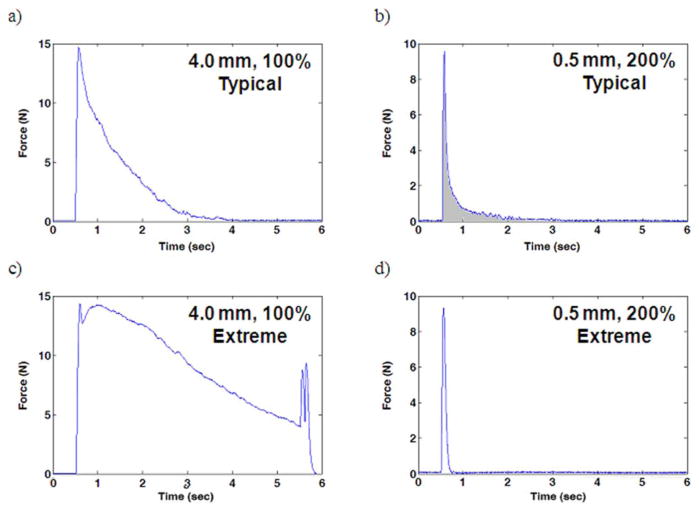
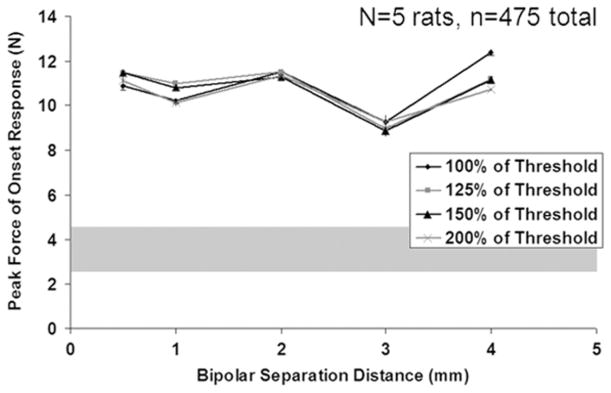
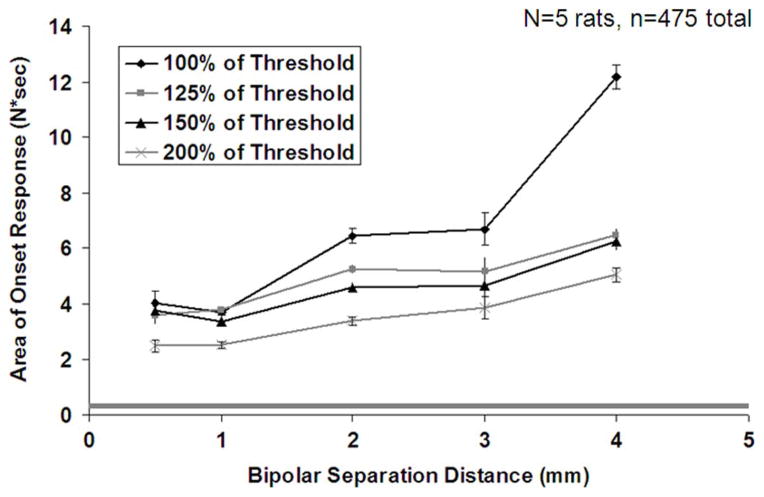
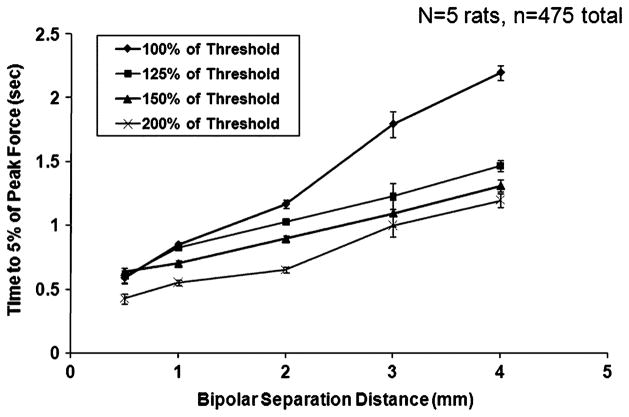
The delivery of high-frequency alternating currents has been shown to produce a focal and reversible conduction block in whole nerve and is a potential therapeutic option for various diseases and disorders involving pathological or undesired neurological activity. However, delivery of high-frequency alternating current to a nerve produces a finite burst of neuronal firing, called the onset response, before the nerve is blocked. Reduction or elimination of the onset response is very important to moving this type of nerve block into clinical applications since the onset response is likely to result in undesired muscle contraction and pain. This paper describes a study of the effect of nerve cuff electrode geometry (specifically, bipolar contact separation distance), and waveform amplitude on the magnitude and duration of the onset response. Electrode geometry and waveform amplitude were both found to affect these measures. The magnitude and duration of the onset response showed a monotonic relationship with bipolar separation distance and amplitude. The duration of the onset response varied by as much as 820% on average for combinations of different electrode geometries and waveform amplitudes. Bipolar electrodes with a contact separation distance of 0.5 mm resulted in the briefest onset response on average. Furthermore, the data presented in this study provide some insight into a biophysical explanation for the onset response. These data suggest that the onset response consists of two different phases: one phase which is responsive to experimental variables such as electrode geometry and waveform amplitude, and one which is not and appears to be inherent to the transition to the blocked state. This study has implications for nerve block electrode and stimulation parameter selection for clinical therapy systems and basic neurophysiology studies.
Figures
References
-
- Boger A, Bhadra N, Gustafson KJ. Bladder voiding by combined high frequency electrical pudendal nerve block and sacral root stimulation. Neurourol Urodynamics. 2008;27(5):435. - PubMed
-
- Gaunt R, Prochazka A. Transcutaneously coupled, high-frequency electrical stimulation of the pudendal nerve blocks external urethral sphincter contractions. Neurorehabil Neural Repair. 2009;23:615. - PubMed
-
- Peckham H, Knutson J. Functional electrical stimulation for neuromuscular applications. Annu Rev Biomed Eng. 2005;7(1):327. - PubMed
-
- Bhadra N, Kilgore KL. High-frequency electrical conduction block of mammalian peripheral motor nerve. Muscle Nerve. 2005;32(6):782. - PubMed
-
- Kilgore K, Bhadra N. Nerve conduction block utilizing high-frequency alternating current. Med Biol Eng Comput. 2004;42(3):394–406. - PubMed
Publication types
MeSH terms
Grants and funding
LinkOut - more resources
Full Text Sources
Other Literature Sources