


Effect of Triphala mouthwash on the caries status
- PMID: 20814522
- PMCID: PMC2924990
- DOI: 10.4103/0974-7788.64413
Effect of Triphala mouthwash on the caries status
Abstract
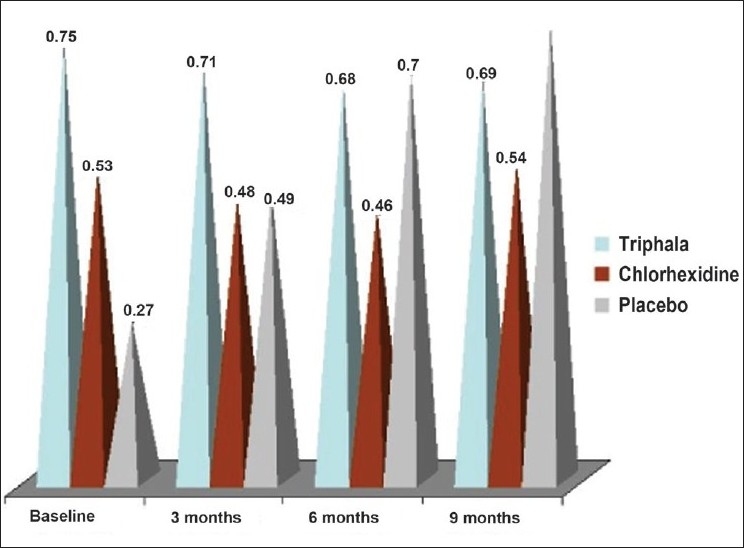
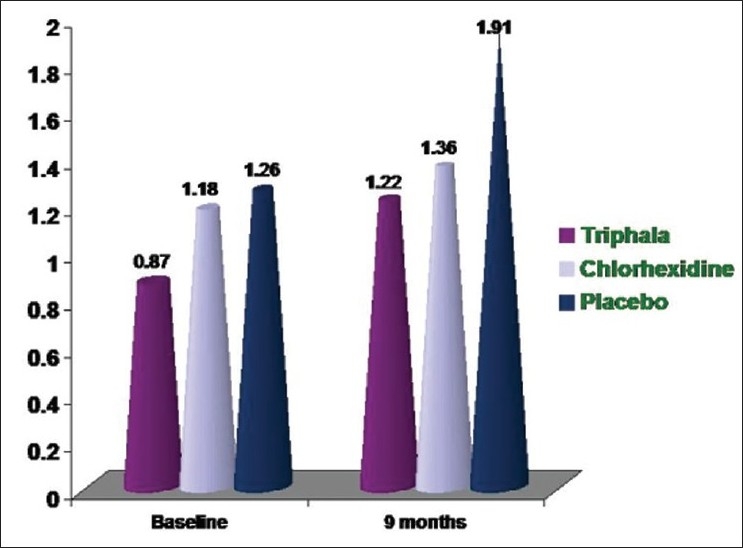
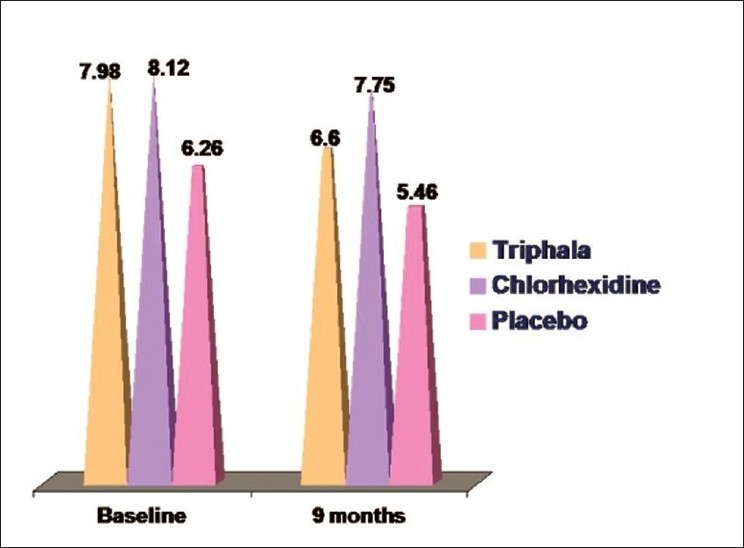
Nearly 60-70% of the child Indian population suffers from dental caries. Mouth rinsing is the most cost effective method of preventing dental caries. 'Triphala' has been a classic Ayurveda remedy, probably the best known among all Ayurvedic compounds. This study was conducted on 1501 students in the age group of 8-12 years with the aim of determining the effect of Triphala mouthwash on prevention of dental caries (manifest caries) as well as incipient carious lesions, and also comparing the effect of Triphala and chlorhexidine mouthwashes. The incipient caries was recorded at 3, 6, 9 months intervals and manifest caries at 9 months interval. No significant increase in the DMFS scores was found at the end of 9 months. Also, there was no significant increase in the incipient caries score towards the conclusion of the study. It was concluded that there was no significant difference between the Triphala and the chlorhexidine mouthwashes.
Keywords: Dental caries; Triphala.
Conflict of interest statement
Figures
References
-
- Damle SG. Pediatric Dentistry- Scope and Rationale. 1st ed. Pediatric Dentistry; pp. 1–4.
-
- Anusavice KJ. Chlorhexidine, fluoride varnish, and xylitol chewing gum: Underutilized preventive therapies? Gen Dent. 1998;46(40):34–8. - PubMed
-
- Klein, Palmer, Knutson . Dental caries index 1938 In: Soben P, editor. .Cited in Essentials of Preventive and Community Dentistry. 1st ed
-
- Bjarnason S, Kohler K, Ranggard L. Dental caries in a group of 15 to 16 years old from Goteborg. Swed Dent J. 1992;16:143–9. - PubMed
-
- Overholser CD., Jr Longitudinal clinical studies with antimicrobial mouthrinses. J Clin Periodontol. 1988;15:517–9. - PubMed
LinkOut - more resources
Full Text Sources
Medical