


Constraints to estimating the prevalence of trypanosome infections in East African zebu cattle
- PMID: 20815940
- PMCID: PMC2944308
- DOI: 10.1186/1756-3305-3-82
Constraints to estimating the prevalence of trypanosome infections in East African zebu cattle
Abstract
Background: In East Africa, animal trypanosomiasis is caused by many tsetse transmitted protozoan parasites including Trypanosoma vivax, T. congolense and subspecies of T. brucei s.l. (T. b. brucei and zoonotic human infective T. b. rhodesiense) that may co-circulate in domestic and wild animals. Accurate species-specific prevalence measurements of these parasites in animal populations are complicated by mixed infections of trypanosomes within individual hosts, low parasite densities and difficulties in conducting field studies. Many Polymerase Chain Reaction (PCR) based diagnostic tools are available to characterise and quantify infection in animals. These are important for assessing the contribution of infections in animal reservoirs and the risk posed to humans from zoonotic trypanosome species. New matrices for DNA capture have simplified large scale field PCR analyses but few studies have examined the impact of these techniques on prevalence estimations.
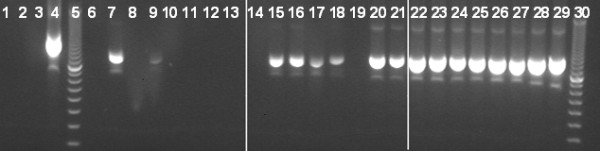
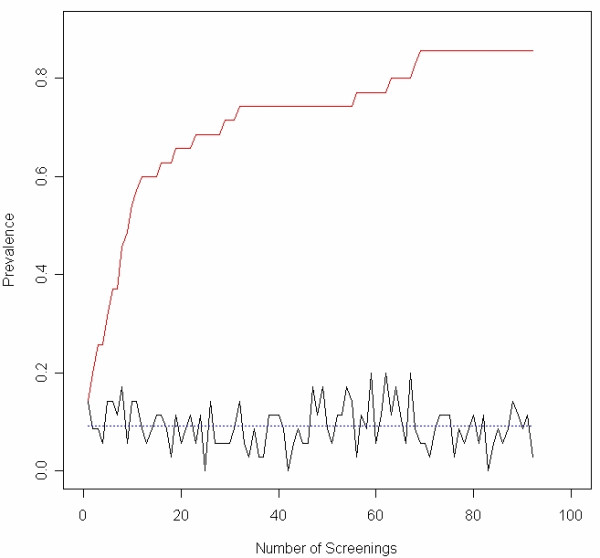
Results: The Whatman FTA matrix has been evaluated using a random sample of 35 village zebu cattle from a population naturally exposed to trypanosome infection. Using a generic trypanosome-specific PCR, prevalence was systematically evaluated. Multiple PCR samples taken from single FTA cards demonstrated that a single punch from an FTA card is not sufficient to confirm the infectivity status of an individual animal as parasite DNA is unevenly distributed across the card. At low parasite densities in the host, this stochastic sampling effect results in underestimation of prevalence based on single punch PCR testing. Repeated testing increased the estimated prevalence of all Trypanosoma spp. from 9.7% to 86%. Using repeat testing, a very high prevalence of pathogenic trypanosomes was detected in these local village cattle: T. brucei (34.3%), T. congolense (42.9%) and T. vivax (22.9%).
Conclusions: These results show that, despite the convenience of Whatman FTA cards and specific PCR based detection tools, the chronically low parasitaemias in indigenous African zebu cattle make it difficult to establish true prevalence. Although this study specifically applies to FTA cards, a similar effect would be experienced with other approaches using blood samples containing low parasite densities. For example, using blood film microscopy or PCR detection from liquid samples where the probability of detecting a parasite or DNA molecule, in the required number of fields of view or PCR reaction, is less than one.
Figures

References
-
- Kristjanson PM, Swallow BM, Rowlands GJ, Kruska RL, de Leeuw PN. Measuring the costs of African animal trypanosomosis, the potential benefits of control and returns to research. Agricultural Systems. 1999;59:79–98. doi: 10.1016/S0308-521X(98)00086-9. - DOI
LinkOut - more resources
Full Text Sources
Miscellaneous
