


Differential gene expression profiling of cultured neu-transformed versus spontaneously-transformed rat cholangiocytes and of corresponding cholangiocarcinomas
- PMID: 20816680
- PMCID: PMC2981699
- DOI: 10.1016/j.yexmp.2010.08.007
Differential gene expression profiling of cultured neu-transformed versus spontaneously-transformed rat cholangiocytes and of corresponding cholangiocarcinomas
Abstract
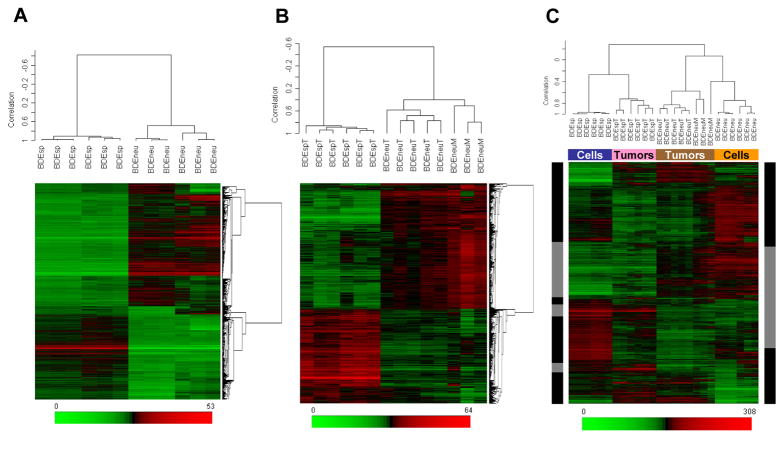
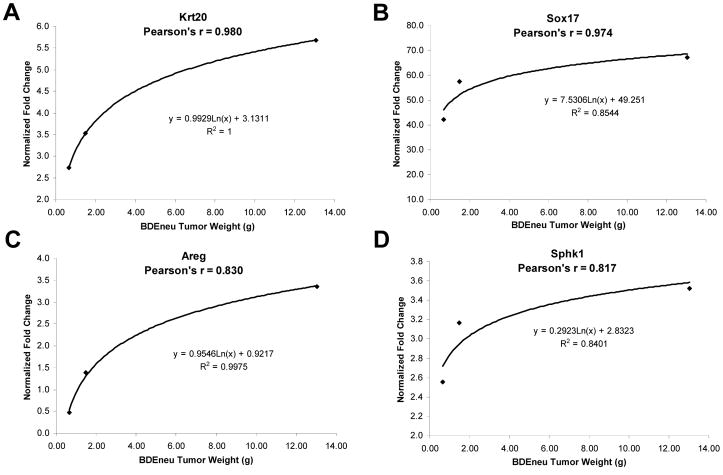
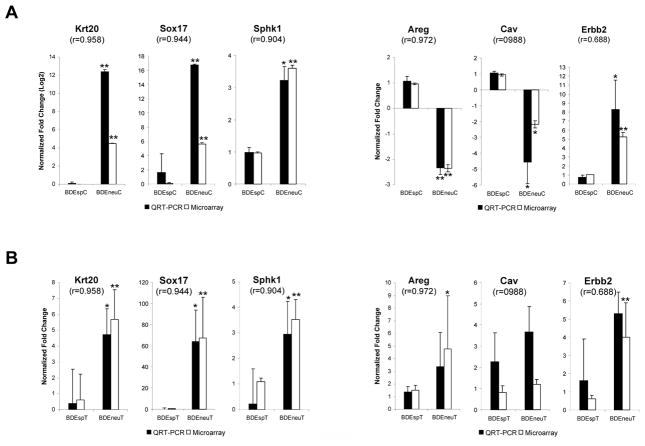
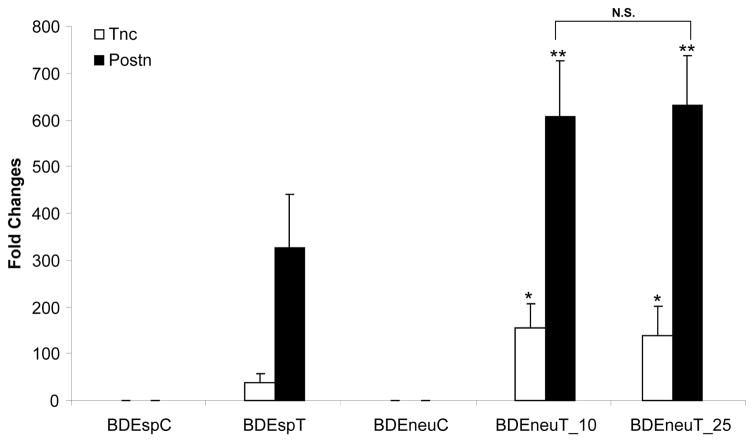
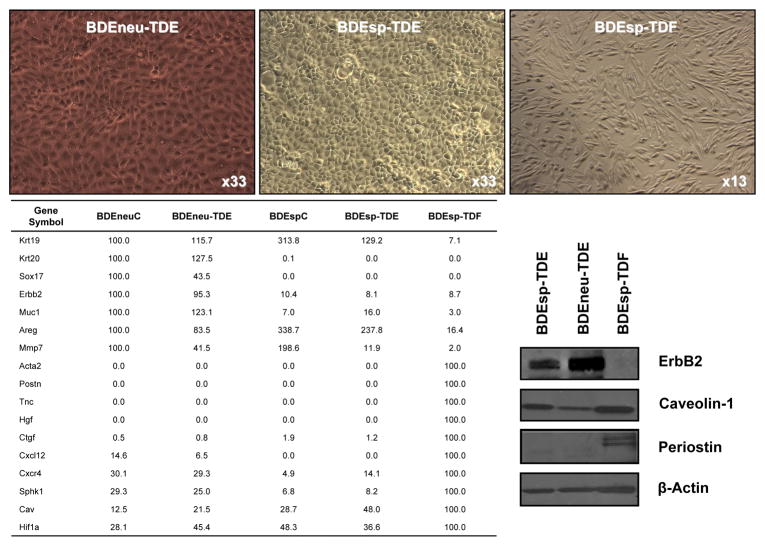
Previously, we described an orthotopic cholangiocarcinoma model based on bile duct inoculation of spontaneously-transformed low grade malignant rat BDE1 cholangiocytes (BDEsp cells) compared to high grade malignant erbB-2/neu- transformed BDE1 cholangiocytes (BDEneu cells) into the livers of syngeneic rats, which closely mimics clinical features of early versus advanced stages of the human cancer. We now used gene expression microarray together with quantitative real-time RT-PCR to profile genes differentially expressed in highly tumorigenic BDEneu cells and corresponding tumors compared to less aggressive tumorigenic BDEsp cells and tumors. Genes identified as being commonly overexpressed in parent BDEneu cells, tumors, and in a BDEneu tumor-derived cholangiocarcinoma cell line included Sox17, Krt20, Erbb2, and Sphk1 when respectively compared to BDEsp cells, tumors, and tumor-derived BDEsp cholangiocarcinoma cells. Muc1 was also prominently overexpressed in BDEneu cells and tumor-derived cholangiocarcinoma cells over that expressed in corresponding BDEsp cell lines. Periostin and tenascin-C, which were produced exclusively by cholangiocarcinoma-associated fibroblastic cells, were each significantly overexpressed in BDEneu tumors compared to BDEsp tumors. Interestingly, amphiregulin was representative of a gene found to be significantly underexpressed in vitro in BDEneu cells compared to BDEsp cells, but significantly overexpressed in BDEneu tumors compared to BDEsp tumors, and correlated with BDEneu cholangiocarcinoma progression in vivo. Our data support a unique animal model that recapitulates important molecular features of human cholangiocarcinoma progression, and may serve as a potentially powerful preclinical platform for identifying and rapidly testing novel molecular targeting strategies for cholangiocarcinoma therapy and/or prevention.
Copyright © 2010 Elsevier Inc. All rights reserved.
Conflict of interest statement
Conflicts of Interest: None
Figures
References
-
- Aishima S, Taguchi K, Terashi T, Matsuura S, Shimada M, Tsueneyoshi M. Tenascin expression at the invasive front is associated with poor prognosis in intrahepatic cholangiocarcinoma. Mod Pathol. 2003;16:1019–1027. - PubMed
-
- Briggs CA, Neal CP, Mann CD, Steward WP, Manson MM, Berry DP. Prognostic molecular markers in cholangiocarcinoma: a systematic review. Eur J Cancer. 2009;45:33–47. - PubMed
-
- Du YC, Oshima H, Oguma K, Kitamura T, Itadani H, Fujimura T, Piao YS, Yoshimoto T, Minamoto T, Kotani H, Taketo MM, Oshima M. Induction and down-regulation of Sox17 and its possible roles during the course of gastrointestinal tumorigenesis. Gastroenterology. 2009;137:1346–1357. - PubMed
-
- Dumur CI, Nasim S, Best AM, Archer KJ, Ladd AC, Mas VR, Wilkinson DS, Garrett CT, Ferreira-Gonzalez A. Evaluation of quality-control criteria for microarray gene expression analysis. Clin Chem. 2004;50:1994–2002. - PubMed
Publication types
MeSH terms
Substances
Grants and funding
LinkOut - more resources
Full Text Sources
Medical
Molecular Biology Databases
Research Materials
Miscellaneous
