


Deep brain stimulation of the lateral cerebellar nucleus produces frequency-specific alterations in motor evoked potentials in the rat in vivo
- PMID: 20816822
- PMCID: PMC2971530
- DOI: 10.1016/j.expneurol.2010.08.019
Deep brain stimulation of the lateral cerebellar nucleus produces frequency-specific alterations in motor evoked potentials in the rat in vivo
Abstract
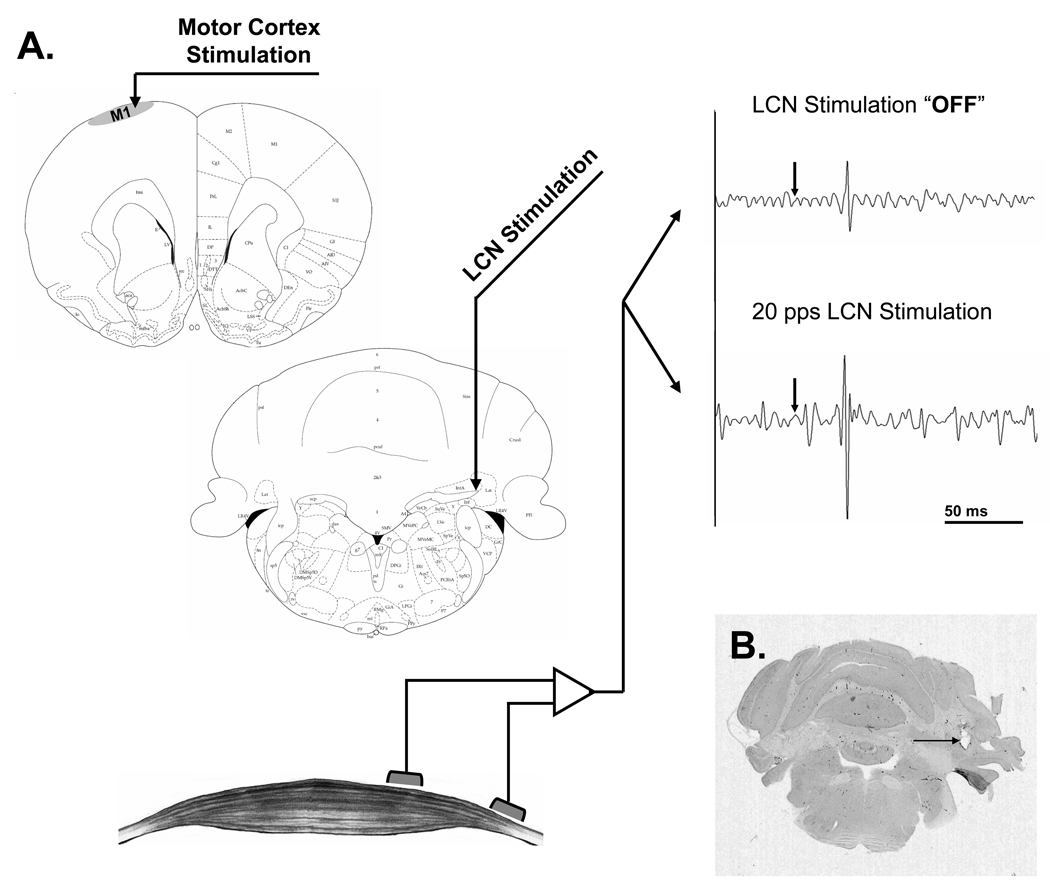
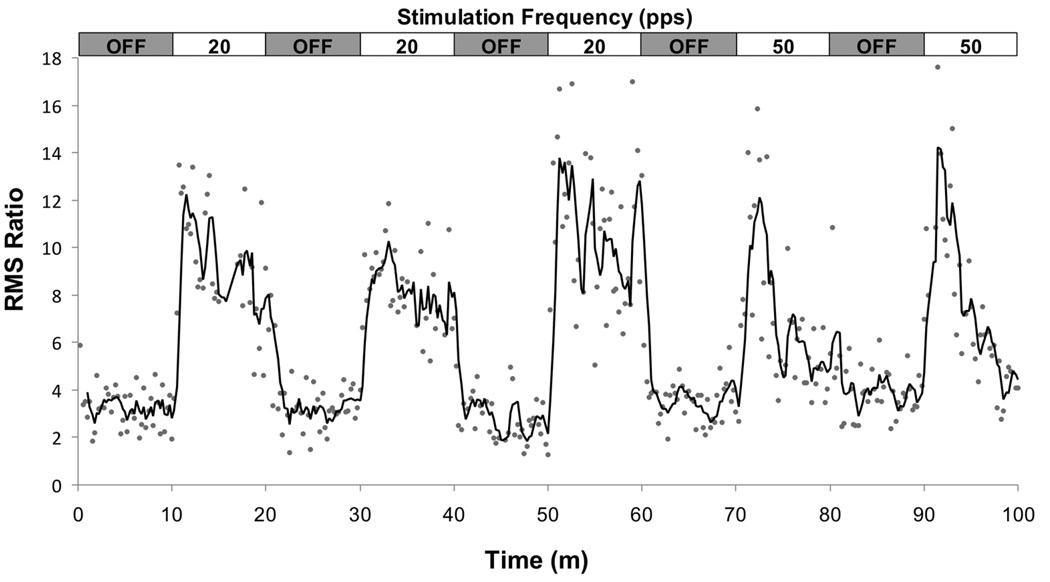
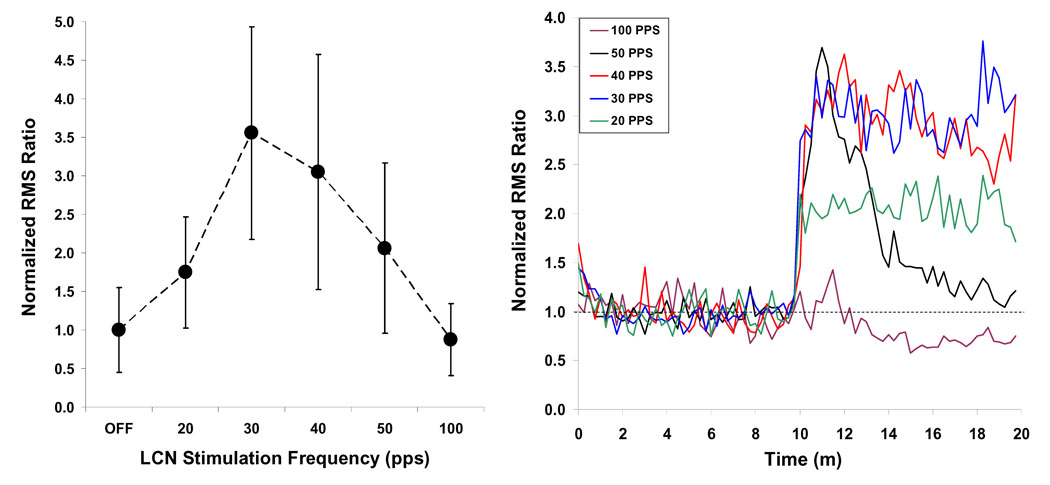
The cerebral cortex is tightly and reciprocally linked to the cerebellum and the ascending dentato-thalalmo-cortical pathway influences widespread cortical regions. Using a rodent model of middle cerebral artery stroke, we showed previously that chronic, 20 Hz stimulation of the contralateral lateral cerebellar nucleus (LCN) improved motor recovery, while 50 Hz stimulation did not. Using motor evoked potentials (MEP) elicited by intracortical microstimulation, we now show the effect of LCN stimulation on motor cortex excitability as a function of pulse frequency in propofol-anesthetized rats. MEPs were recorded serially, at 15-s intervals, with cerebellar stimulation delivered in 10-min blocks at rates of 20, 30, 40, 50 or 100 Hz. Stimulation at 20, 30, 40 or 50 Hz enhanced the average MEP response across the block, with the maximal overall increase observed during 30 Hz stimulation. However, the effect varied as a function of both repeated trials within the block and LCN stimulation frequency, such that 40 Hz and 50 Hz stimulation showed a reduced effect over time. Stimulation at 100 Hz produced a transient increase in MEP amplitude in some animals; however the overall effect across the block was a trend towards reduced cortical excitability. These results suggest that direct stimulation of the LCN can yield frequency-dependent changes in cortical excitability and may provide a therapeutic approach to modulating cortical activity for the treatment of strokes or other focal cortical lesions, movement disorders and epilepsy.
Copyright © 2010 Elsevier Inc. All rights reserved.
Figures
References
-
- Adkins-Muir DL, Jones TA. Cortical electrical stimulation combined with rehabilitative training: enhanced functional recovery and dendritic plasticity following focal cortical ischemia in rats. Neurol Res. 2003;25:780–788. - PubMed
-
- Alesch F, Pinter MM, Helscher RJ, Fertl L, Benabid AL, Koos WT. Stimulation of the ventral intermediate thalamic nucleus in tremor dominated Parkinson's disease and essential tremor. Acta Neurochir (Wien) 1995;136:75–81. - PubMed
-
- Allen GI, Tsukahara N. Cerebrocerebellar communication systems. Physiol Rev. 1974;54:957–1006. - PubMed
-
- Asanuma C, Thach WR, Jones EG. Anatomical evidence for segregated focal groupings of efferent cells and their terminal ramifications in the cerebellothalamic pathway of the monkey. Brain Res. 1983;286:267–297. - PubMed
-
- Asanuma H, Hunsperger RW. Functional significance of projection from the cerebellar nuclei to the motor cortex in the cat. Brain Res. 1975;98:73–92. - PubMed
Publication types
MeSH terms
Grants and funding
LinkOut - more resources
Full Text Sources
Other Literature Sources
Miscellaneous
