


Clinical effects and brain metabolic correlates in non-invasive cortical neuromodulation for visceral pain
- PMID: 20822942
- PMCID: PMC3000866
- DOI: 10.1016/j.ejpain.2010.08.002
Clinical effects and brain metabolic correlates in non-invasive cortical neuromodulation for visceral pain
Abstract
Background and aims: Chronic visceral pain is frequent, extremely debilitating, and generally resistant to pharmacological treatment. It has been shown that chronic visceral inflammation, through altered afferent visceral sensory input, leads to plastic changes in the central nervous system that ultimately sustain pain. Therefore approaches aiming at modulation of brain activity are attractive candidates to control visceral pain.
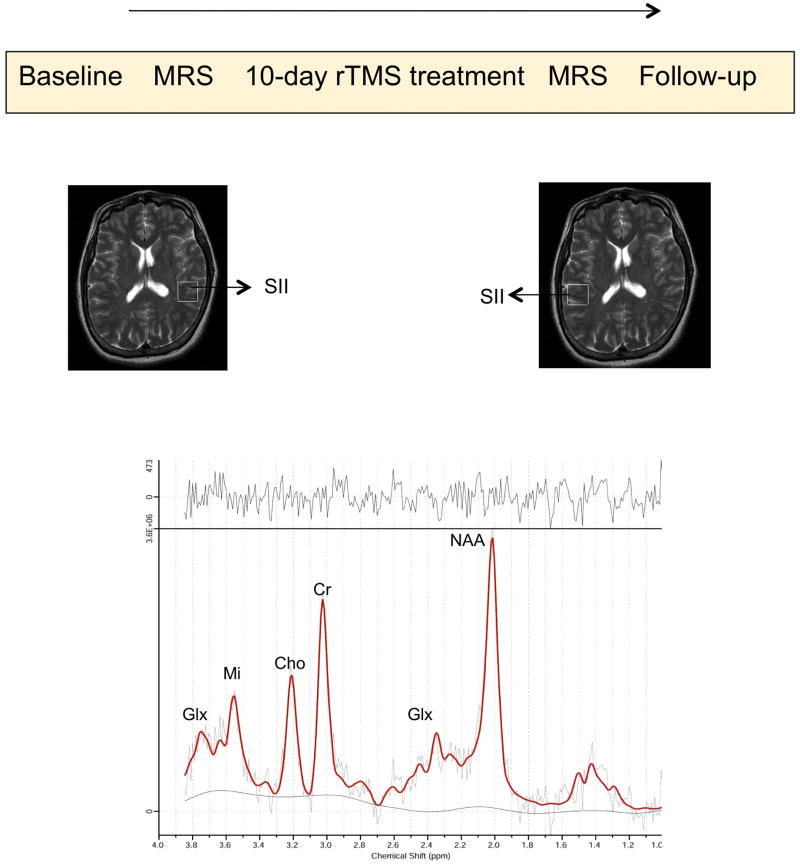
Methods: Here we report findings of a phase II, sham-controlled clinical trial assessing the clinical effects and brain metabolic correlates of a 10-day course of daily sessions of slow-frequency, repetitive transcranial magnetic stimulation (rTMS) targeting the right secondary somatosensory cortex (SII) in patients with chronic pancreatitis and severe visceral pain.
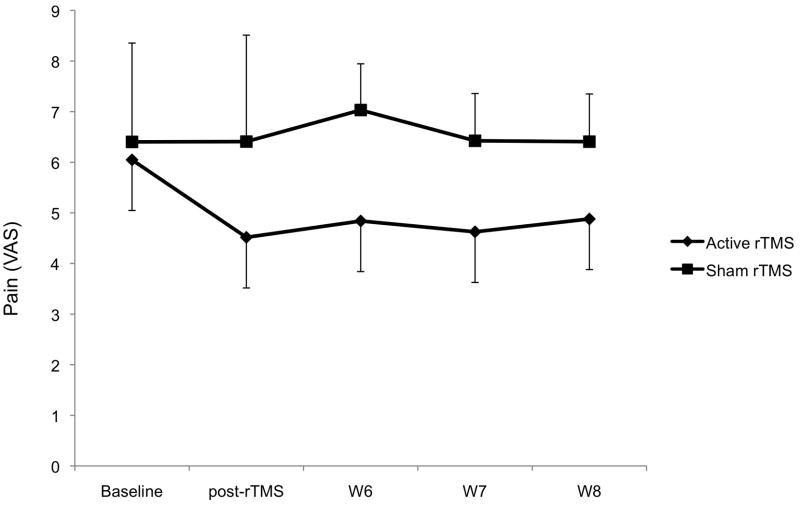
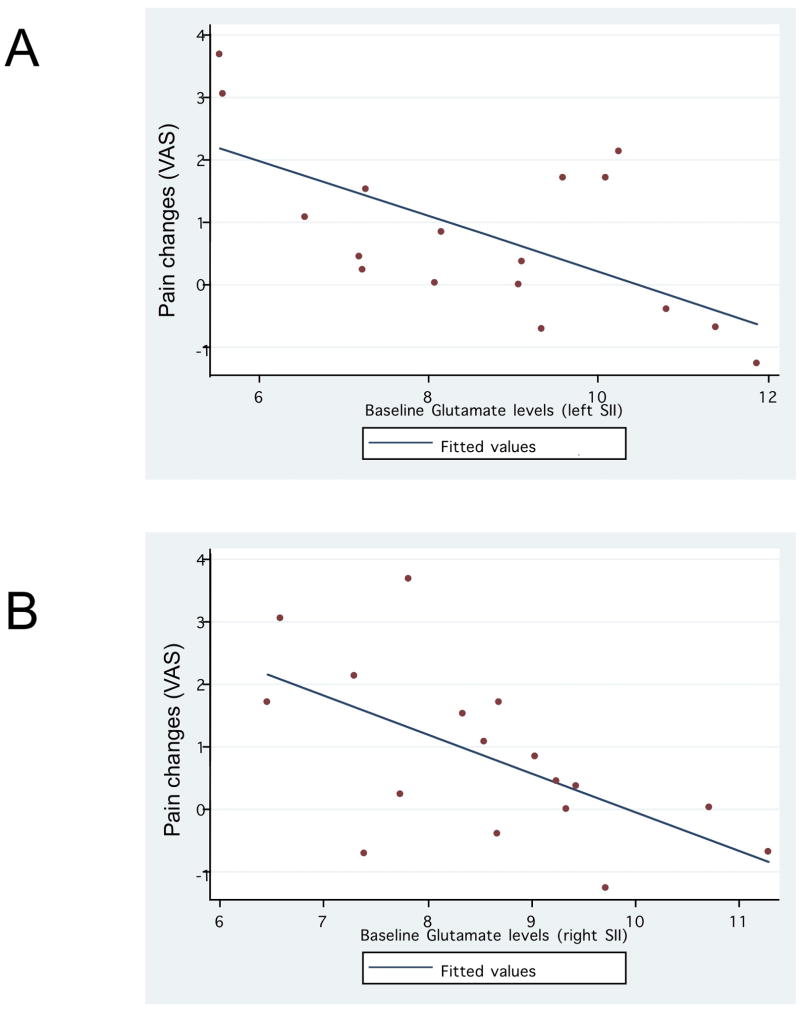
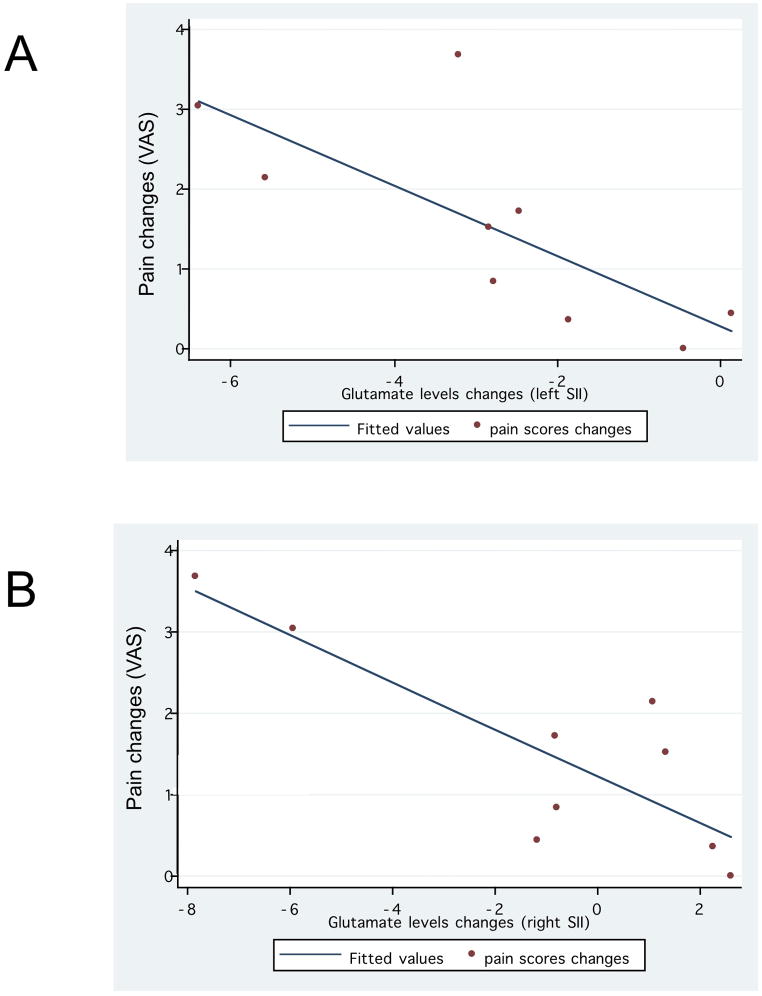
Results: Our results show a significant reduction in pain after real rTMS that lasted for at least 3 weeks following treatment. These clinical changes were correlated with increases in glutamate and N-acetyl aspartate (NAA) levels--neurometabolites associated with cortical activity and brain damage--as measured by in vivo single-voxel proton magnetic resonance spectroscopy (1H-MRS). Adverse effects in the real rTMS group were mild and short-lasting.
Conclusions: Our results support preliminary findings showing that modulation of right SII with rTMS is associated with a significant analgesic effect and that this effect is correlated with an increase in excitatory neurotransmitter levels such as glutamate and NAA.
Copyright © 2010 European Federation of International Association for the Study of Pain Chapters. Published by Elsevier Ltd. All rights reserved.
Conflict of interest statement
Figures
Comment in
-
Repetitive transcranial magnetic stimulation (rTMS) as a tool for the treatment of chronic visceral pain.Eur J Pain. 2011 Jan;15(1):1-2. doi: 10.1016/j.ejpain.2010.10.011. Epub 2010 Nov 20. Eur J Pain. 2011. PMID: 21095148 No abstract available.
References
-
- Afif A, Hoffmann D, Minotti L, Benabid AL, Kahane P. Middle short gyrus of the insula implicated in pain processing. Pain. 2008;138:546–555. - PubMed
-
- Aziz Q, Andersson JL, Valind S, Sundin A, Hamdy S, Jones AK, et al. Identification of human brain loci processing esophageal sensation using positron emission tomography. Gastroenterology. 1997;113:50–59. - PubMed
-
- Behar KL, Rothman DL. In vivo nuclear magnetic resonance studies of glutamate-gamma-aminobutyric acid-glutamine cycling in rodent and human cortex: the central role of glutamine. J Nutr. 2001;131:2498S–2504S. discussion 2523S–2494S. - PubMed
Publication types
MeSH terms
Substances
Grants and funding
LinkOut - more resources
Full Text Sources
Medical
