


Palm oil-derived natural vitamin E alpha-tocotrienol in brain health and disease
- PMID: 20823491
- PMCID: PMC3065441
- DOI: 10.1080/07315724.2010.10719846
Palm oil-derived natural vitamin E alpha-tocotrienol in brain health and disease
Abstract
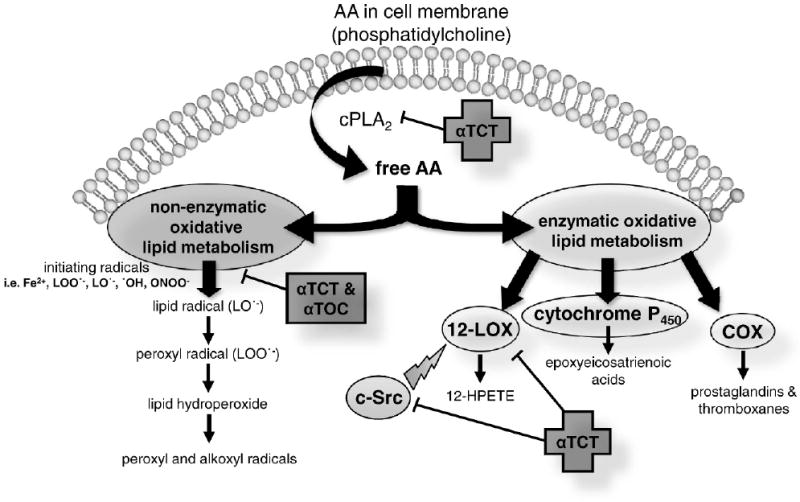
A growing body of research supports that members of the vitamin E family are not redundant with respect to their biological function. Palm oil derived from Elaeis guineensis represents the richest source of the lesser characterized vitamin E, alpha-tocotrienol. One of 8 naturally occurring and chemically distinct vitamin E analogs, alpha-tocotrienol possesses unique biological activity that is independent of its potent antioxidant capacity. Current developments in alpha-tocotrienol research demonstrate neuroprotective properties for the lipid-soluble vitamin in brain tissue rich in polyunsaturated fatty acids (PUFAs). Arachidonic acid (AA), one of the most abundant PUFAs of the central nervous system, is highly susceptible to oxidative metabolism under pathologic conditions. Cleaved from the membrane phospholipid bilayer by cytosolic phospholipase A(2), AA is metabolized by both enzymatic and nonenzymatic pathways. A number of neurodegenerative conditions in the human brain are associated with disturbed PUFA metabolism of AA, including acute ischemic stroke. Palm oil-derived alpha-tocotrienol at nanomolar concentrations has been shown to attenuate both enzymatic and nonenzymatic mediators of AA metabolism and neurodegeneration. On a concentration basis, this represents the most potent of all biological functions exhibited by any natural vitamin E molecule. Despite such therapeutic potential, the scientific literature on tocotrienols accounts for roughly 1% of the total literature on vitamin E, thus warranting further investment and investigation.
Conflict of interest statement
The authors have no conflict of interest to declare.
Figures
References
-
- Kiple KF, Ornelas KC. The Cambridge World History of Food. New York: Cambridge University Press; 2000.
-
- Sundram K, Sambanthamurthi R, Tan YA. Palm fruit chemistry and nutrition. Asia Pac J Clin Nutr. 2003;12:355–362. - PubMed
-
- Edem DO. Palm oil: biochemical, physiological, nutritional, hematological, and toxicological aspects: a review. Plant Foods Hum Nutr. 2002;57:319–341. - PubMed
-
- Sarris A, Food and Agriculture Organization of the United Nations . Medium-Term Prospects for Agricultural Commodities: Projections to the Year 2010. FAO Commodities and Trade Technical Paper, 1. Rome: Food and Agriculture Organization of the United Nations; 2003.
-
- Sundram K, Hayes KC, Siru OH. Dietary palmitic acid results in lower serum cholesterol than does a lauric-myristic acid combination in normolipemic humans. Am J Clin Nutr. 1994;59:841–846. - PubMed
Publication types
MeSH terms
Substances
Grants and funding
LinkOut - more resources
Full Text Sources
Other Literature Sources
Medical
