


Front-of-pack nutrition label stimulates healthier product development: a quantitative analysis
- PMID: 20825645
- PMCID: PMC2945986
- DOI: 10.1186/1479-5868-7-65
Front-of-pack nutrition label stimulates healthier product development: a quantitative analysis
Abstract
Background: In addition to helping consumers make healthier food choices, front-of-pack nutrition labels could encourage companies to reformulate existing products and develop new ones with a healthier product composition. This is the largest study to date to investigate the effect of a nutrition logo on the development of healthier products by food manufacturers.
Methods: A total of 47 food manufacturers joining the Choices Foundation in the Netherlands (response: 39.5%) indicated whether their Choices products were newly developed, reformulated or already complied with the Choices criteria and provided nutrient composition data for their products (n = 821; 23.5% of the available Choices products in August 2009).
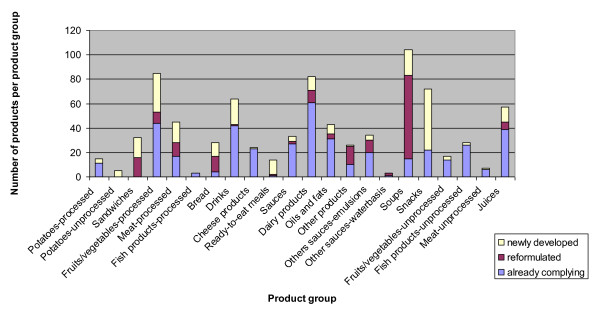
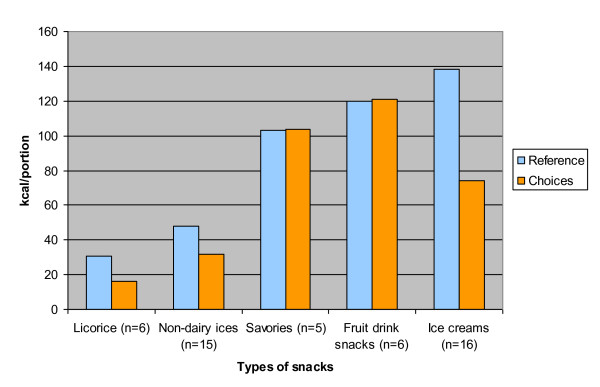
Results: Most products carrying the logo as a result of reformulation and new product development were soups and snacks. Sodium reduction was the most common change found in processed meats, sandwiches, soups and sandwich fillings. Dietary fiber was significantly increased in most newly developed Choices product groups; for example, in fruit juices, processed meats, dairy products, sandwiches and soups. Saturated fatty acids (SAFA) and added sugar were significantly decreased both in reformulated and newly developed dairy products. Caloric content was significantly decreased only in reformulated dairy products, sandwich fillings and in some newly developed snacks.
Conclusions: The results indicate that the Choices logo has motivated food manufacturers to reformulate existing products and develop new products with a healthier product composition, especially where sodium and dietary fiber are concerned.
Figures
References
-
- World Health Organization. Global strategy on diet, physical activity and health. Fifty-seventh World Health Assembly. Geneva: WHO; 2004.
-
- Kinnunen T. The heart symbol: A new food labelling system in Finland. Nutr Bull. 2000;2:335–339. doi: 10.1046/j.1467-3010.2000.00079.x. - DOI
-
- Food Standards Agency. Comprehension and use of UK nutrition signpost labelling schemes. London: Food Standards Agency; 2009.
LinkOut - more resources
Full Text Sources
