


Lifestyle counseling and supplementation with flaxseed or walnuts influence the management of metabolic syndrome
- PMID: 20826632
- PMCID: PMC3361016
- DOI: 10.3945/jn.110.126300
Lifestyle counseling and supplementation with flaxseed or walnuts influence the management of metabolic syndrome
Abstract
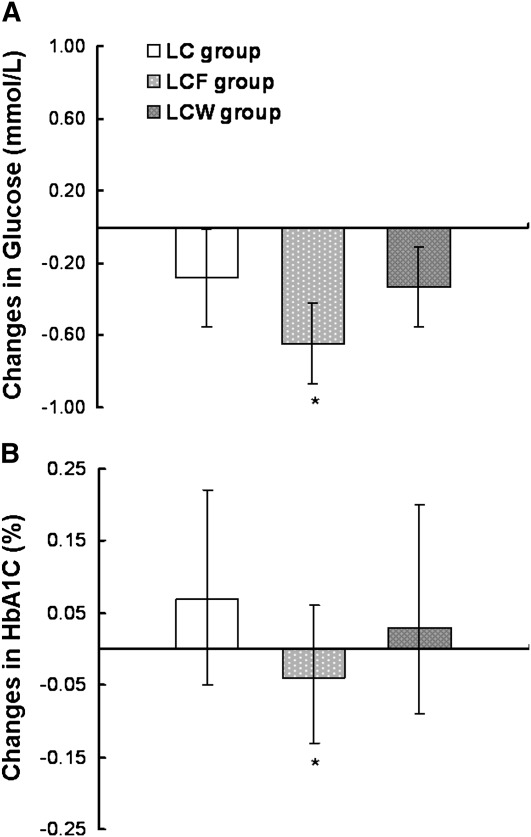
A healthy lifestyle may ameliorate metabolic syndrome (MetS); however, it remains unclear if incorporating nuts or seeds into lifestyle counseling (LC) has additional benefit. A 3-arm, randomized, controlled trial was conducted among 283 participants screened for MetS using the updated National Cholesterol Education Program Adult Treatment Panel III criteria for Asian Americans. Participants were assigned to a LC on the AHA guidelines, LC + flaxseed (30 g/d) (LCF), or LC + walnuts (30 g/d) (LCW) group. After the 12-wk intervention, the prevalence of MetS decreased significantly in all groups: -16.9% (LC), -20.2% (LCF), and -16.0% (LCW). The reversion rate of MetS, i.e. those no longer meeting the MetS criteria at 12 wk, was not significantly different among groups (LC group, 21.1%; LCF group, 26.6%; and LCW group, 25.5%). However, the reversion rate of central obesity was higher in the LCF (19.2%; P = 0.008) and LCW (16.0%; P = 0.04) groups than in the LC group (6.3%). Most of the metabolic variables (weight, waist circumference, serum glucose, total cholesterol, LDL cholesterol, apolipoprotein (Apo) B, ApoE, and blood pressure) were significantly reduced from baseline in all 3 groups. However, the severity of MetS, presented as the mean count of MetS components, was significantly reduced in the LCW group compared with the LC group among participants with confirmed MetS at baseline (P = 0.045). Our results suggest that a low-intensity lifestyle education program is effective in MetS management. Flaxseed and walnut supplementation may ameliorate central obesity. Further studies with larger sample sizes and of longer duration are needed to examine the role of these foods in the prevention and management of MetS.
Trial registration: ClinicalTrials.gov NCT00733772 NCT00742742.
Conflict of interest statement
Author disclosures: H. Wu, A. Pan, Z. Yu, Q. Qi, L. Lu, G. Zhang, D. Yu, G. Zong, Y. Zhou, X. Chen, L. Tang, Y. Feng, H. Zhou, X. Chen, H. Li, and W. Demark-Wahnefried, no conflicts of interest. Drs. Lin and Hu reported receiving research support from the California Walnut Commission for conducting part of this study.
Figures
References
-
- Grundy SM, Cleeman JI, Daniels SR, Donato KA, Eckel RH, Franklin BA, Gordon DJ, Krauss RM, Savage PJ, et al. Diagnosis and management of the metabolic syndrome. An American Heart Association/National Heart, Lung, and Blood Institute Scientific Statement. Executive summary. Cardiol Rev. 2005;13:322–7 - PubMed
-
- Gu D, Reynolds K, Wu X, Chen J, Duan X, Reynolds RF, Whelton PK, He J. Prevalence of the metabolic syndrome and overweight among adults in China. Lancet. 2005;365:1398–405 - PubMed
-
- Andreassi MG. Metabolic syndrome, diabetes and atherosclerosis: influence of gene-environment interaction. Mutat Res. 2009;667:35–43 - PubMed
-
- Krauss RM, Eckel RH, Howard B, Appel LJ, Daniels SR, Deckelbaum RJ, Erdman JW, Jr, Kris-Etherton P, Goldberg IJ, et al. AHA Dietary Guidelines: revision 2000: a statement for healthcare professionals from the Nutrition Committee of the American Heart Association. Circulation. 2000;102:2284–99 - PubMed
Publication types
MeSH terms
Substances
Associated data
Grants and funding
LinkOut - more resources
Full Text Sources
Medical
Research Materials
Miscellaneous
