


Promising outcomes of a national programme for the prevention of Mother-to-Child HIV transmission in Addis Ababa: a retrospective study
- PMID: 20828384
- PMCID: PMC2944274
- DOI: 10.1186/1472-6963-10-267
Promising outcomes of a national programme for the prevention of Mother-to-Child HIV transmission in Addis Ababa: a retrospective study
Abstract
Background: Prevention of Mother-to-Child HIV Transmission (PMTCT) is still the most effective intervention in combating new HIV infections. In 2008, revised national PMTCT guidelines that incorporated new policies on HIV counselling and testing, antiretroviral prophylaxis regimen and infant HIV diagnosis came into effect in Ethiopia. In the present study we have examined trends in PMTCT service utilization and assessed the rate of MTCT in relation to policy changes in the national PMTCT programme.
Methods: Reports from February 2004 to August 2009 were reviewed in 10 sub-cities in Addis Ababa, Ethiopia. The data was collected from May to October 2009.
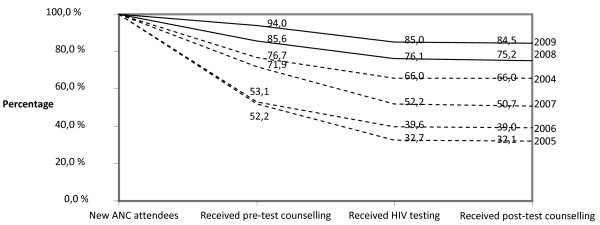
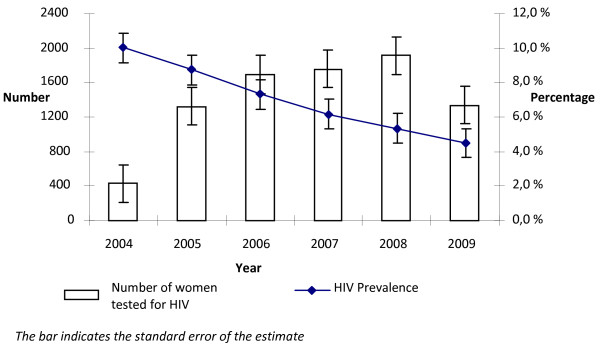
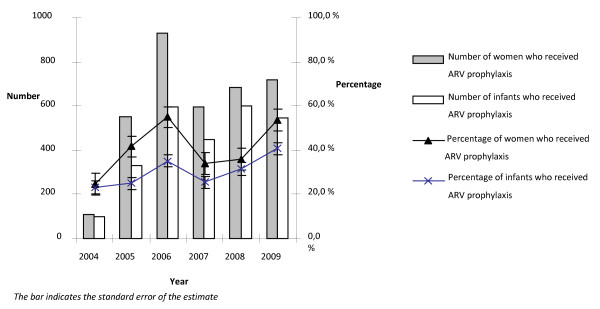
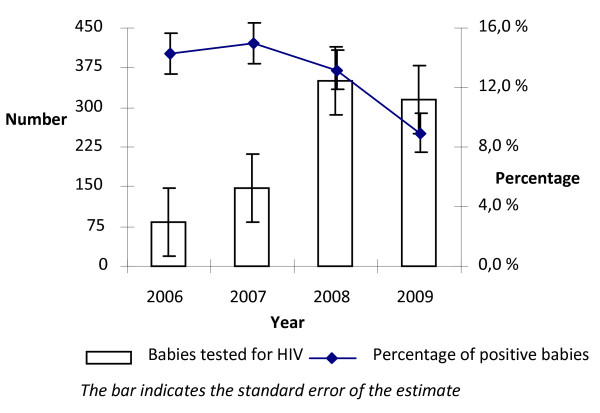
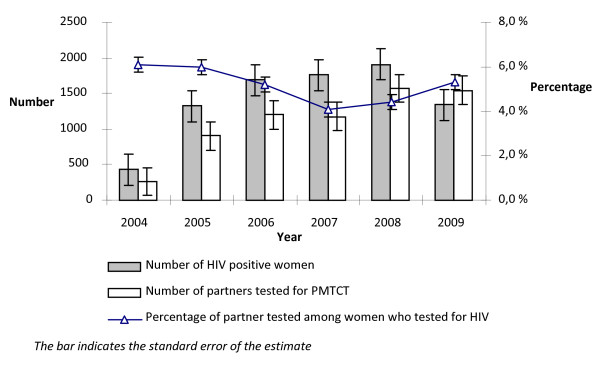
Results: The proportion of women who received HIV counselling and testing among new antenatal care attendees increased from 50.7% (95% CI 50.2-51.2) in 2007 to 84.5% (95% CI 84.1-84.9) in 2009 following the shift to routine opt-out testing. Nevertheless, in 2009 only 53.7% of the positive women and 40.7% of their infants received antiretroviral prophylaxis. The HIV prevalence among antenatal attendees decreased significantly from 10.5% in 2004 to 4.6% in 2009 in parallel to the increased number of women being tested. The HIV positive women were over 18 times (RR 18.5, p < 0.0001) more likely to be referred for treatment, care and support in 2009 than in 2004. The proportion of partners tested for HIV decreased by 14% in 2009 compared to 2004, although the absolute number was increasing year by year. Only 10.6% (95% CI 9.9-11.2) of the HIV positive women completed their follow up to infant HIV testing. The cumulative probability of HIV infection among babies on single dose nevirapine regimen who were tested at >=18 months was 15.0% (95% CI 9.8-22.1) in 2007, whereas it was 8.2% (95% CI 5.55-11.97) among babies on Zidovudine regimen who were tested at >=45 days in 2009.
Conclusion: The paper demonstrates trends in PMTCT service utilization in relation to changing policy. There is marked improvement in HIV counselling and testing service utilization, especially after the policy shift to routine opt-out testing. However, despite policy changes, the ARV prophylaxis uptake, the loss to follow up and the partner testing have remained unchanged across the years. This should be a matter of immediate concern and a topic for further research.
Figures
References
-
- WHO. Antiretroviral drugs for treating pregnant women and preventing HIV infection in infants: towards universal access: recommendations for a public health approach.- 2006 version. WHO: Geneva; 2006. - PubMed
-
- Letvin NL. Virology. Moving forward in HIV vaccine development. Science (New York, N.Y.) 2009;326(5957):1196–8. - PubMed
-
- HAPCO/GAMET. HIV/AIDS in Ethiopia - An Epidemiological Synthesis. Washington DC. 2008.
-
- UNAIDS/WHO. UNAIDS/WHO Policy statement on HIV testing. WHO: Geneva; 2004.
Publication types
MeSH terms
Substances
LinkOut - more resources
Full Text Sources
Medical
