


ICU care associated with symptoms of depression and posttraumatic stress disorder among family members of patients who die in the ICU
- PMID: 20829335
- PMCID: PMC3071273
- DOI: 10.1378/chest.10-0652
ICU care associated with symptoms of depression and posttraumatic stress disorder among family members of patients who die in the ICU
Abstract
Background: Psychologic symptoms of posttraumatic stress disorder (PTSD) and depression are relatively common among family members of patients who die in the ICU. The patient-level risk factors for these family symptoms are not well understood but may help to target future interventions.
Methods: We performed a cohort study of family members of patients who died in the ICU or within 30 h of ICU transfer. Outcomes included self-reported symptoms of PTSD and depression. Predictors included patient demographics and elements of palliative care.
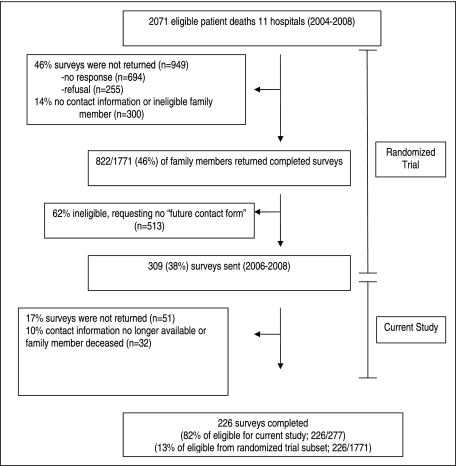
Results: Two hundred twenty-six patients had chart abstraction and family questionnaire data. Family members of older patients had lower scores for PTSD (P = .026). Family members that were present at the time of death (P = .021) and family members of patients with early family conferences (P = .012) reported higher symptoms of PTSD. When withdrawal of a ventilator was ordered, family members reported lower symptoms of depression (P = .033). There were no other patient characteristics or elements of palliative care associated with family symptoms.
Conclusions: Family members of younger patients and those for whom mechanical ventilation is not withdrawn are at increased risk of psychologic symptoms and may represent an important group for intervention. Increased PTSD symptoms among family members present at the time of death may reflect a closer relationship with the patient or more involvement with the patient's ICU care but also suggests that family should be offered the option of not being present.
Comment in
-
Who is at risk for psychological distress? A patient-centered process to identify risk for posttraumatic stress disorder and depression in families of ICU patients.Chest. 2011 Apr;139(4):743-744. doi: 10.1378/chest.10-2488. Chest. 2011. PMID: 21467055 No abstract available.
References
-
- Angus DC, Barnato AE, Linde-Zwirble WT, et al. Robert Wood Johnson Foundation ICU End-Of-Life Peer Group Use of intensive care at the end of life in the United States: an epidemiologic study. Crit Care Med. 2004;32(3):638–643. - PubMed
-
- Azoulay E, Pochard F, Kentish-Barnes N, et al. FAMIREA Study Group Risk of post-traumatic stress symptoms in family members of intensive care unit patients. Am J Respir Crit Care Med. 2005;171(9):987–994. - PubMed
-
- Lautrette A, Darmon M, Megarbane B, et al. A communication strategy and brochure for relatives of patients dying in the ICU. N Engl J Med. 2007;356(5):469–478. - PubMed
-
- Pochard F, Azoulay E, Chevret S, et al. French FAMIREA Group Symptoms of anxiety and depression in family members of intensive care unit patients: ethical hypothesis regarding decision-making capacity. Crit Care Med. 2001;29(10):1893–1897. - PubMed
Publication types
MeSH terms
Grants and funding
LinkOut - more resources
Full Text Sources
Medical
