


Kinin B1 receptor enhances the oxidative stress in a rat model of insulin resistance: outcome in hypertension, allodynia and metabolic complications
- PMID: 20830306
- PMCID: PMC2935380
- DOI: 10.1371/journal.pone.0012622
Kinin B1 receptor enhances the oxidative stress in a rat model of insulin resistance: outcome in hypertension, allodynia and metabolic complications
Abstract
Background: Kinin B(1) receptor (B(1)R) is induced by the oxidative stress in models of diabetes mellitus. This study aims at determining whether B(1)R activation could perpetuate the oxidative stress which leads to diabetic complications.
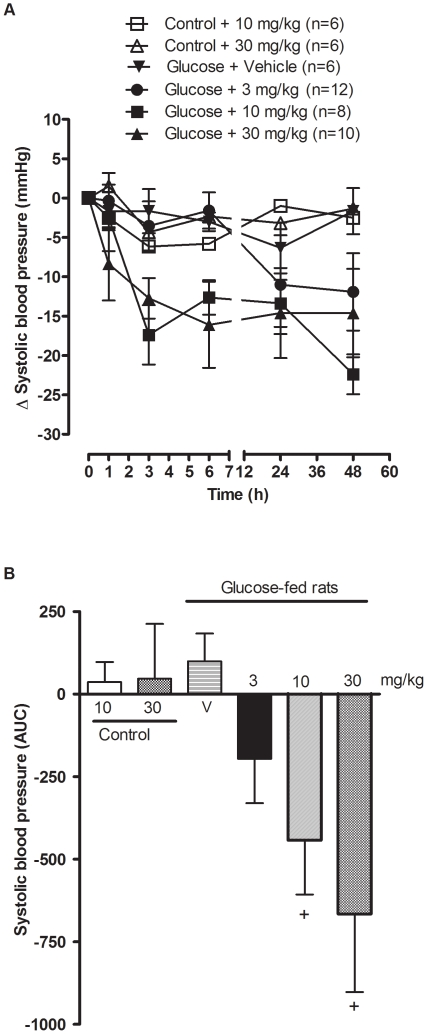
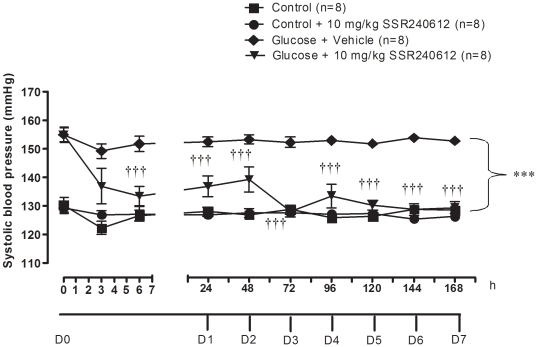
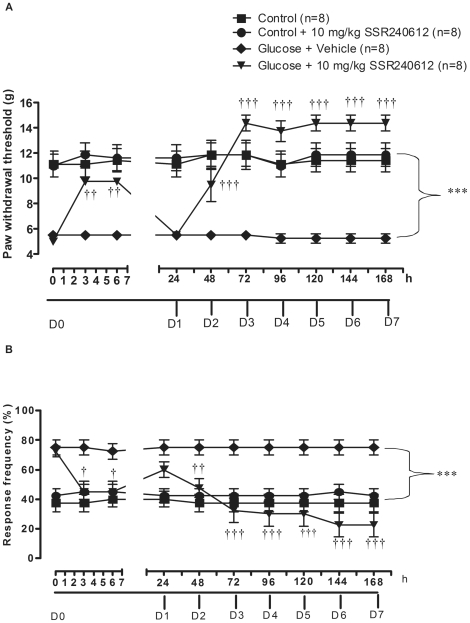
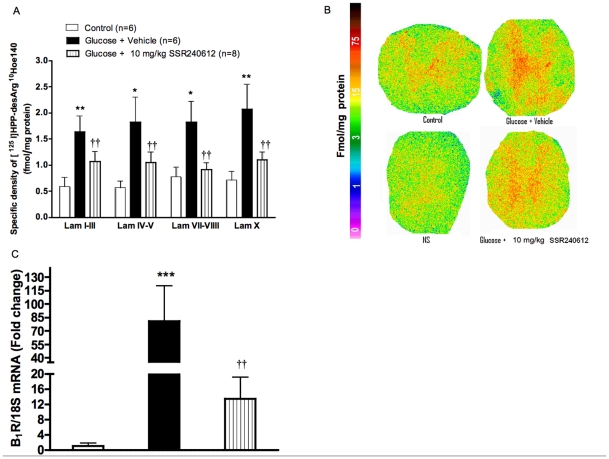
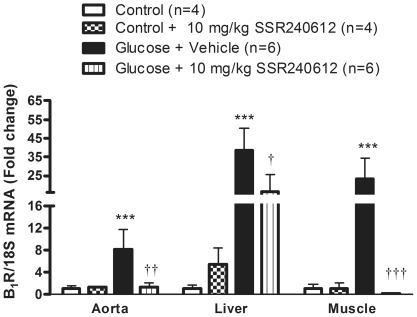
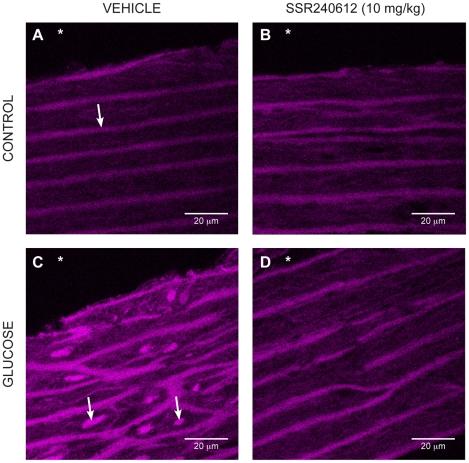
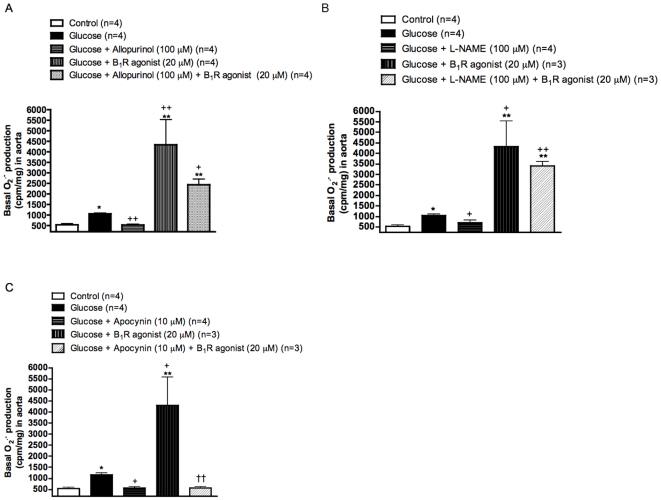
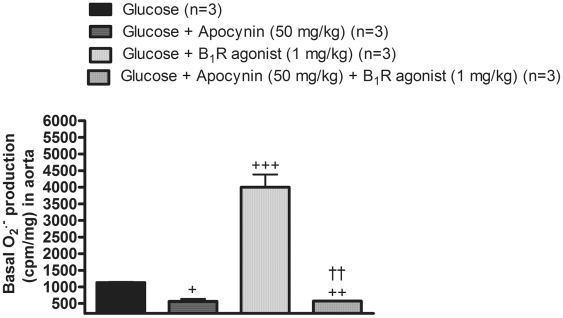
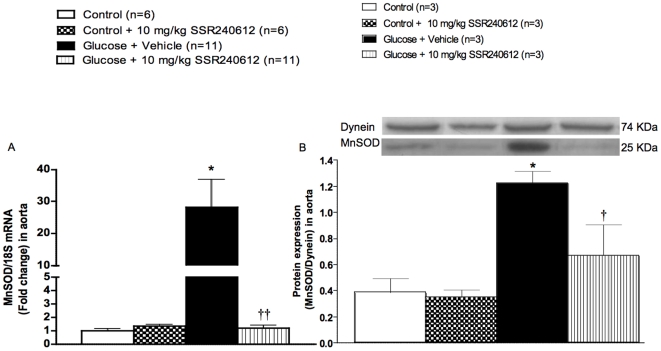
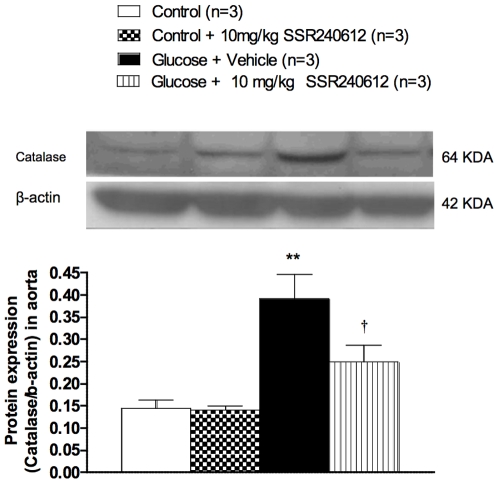
Methods and findings: Young Sprague-Dawley rats were fed with 10% D-Glucose or tap water (controls) for 8-12 weeks. A selective B(1)R antagonist (SSR240612) was administered acutely (3-30 mg/kg) or daily for a period of 7 days (10 mg/kg) and the impact was measured on systolic blood pressure, allodynia, protein and/or mRNA B(1)R expression, aortic superoxide anion (O(2)(*-)) production and expression of superoxide dismutase (MnSOD) and catalase. SSR240612 reduced dose-dependently (3-30 mg/kg) high blood pressure in 12-week glucose-fed rats, but had no effect in controls. Eight-week glucose-fed rats exhibited insulin resistance (HOMA index), hypertension, tactile and cold allodynia and significant increases of plasma levels of glucose and insulin. This was associated with higher aortic levels of O(2)(*-), NADPH oxidase activity, MnSOD and catalase expression. All these abnormalities including B(1)R overexpression (spinal cord, aorta, liver and gastrocnemius muscle) were normalized by the prolonged treatment with SSR240612. The production of O(2)(*-) in the aorta of glucose-fed rats was also measured in the presence and absence of inhibitors (10-100 microM) of NADPH oxidase (apocynin), xanthine oxidase (allopurinol) or nitric oxide synthase (L-NAME) with and without Sar[D-Phe(8)]des-Arg(9)-BK (20 microM; B(1)R agonist). Data show that the greater aortic O(2)(*-) production induced by the B(1)R agonist was blocked only by apocynin.
Conclusions: Activation of kinin B(1)R increased O(2)(*-) through the activation of NADPH oxidase in the vasculature. Prolonged blockade of B(1)R restored cardiovascular, sensory and metabolic abnormalities by reducing oxidative stress and B(1)R gene expression in this model.
Conflict of interest statement
Figures


References
-
- Lungu C, Dias JP, Franca CE, Ongali B, Regoli D, et al. Involvement of kinin B1 receptor and oxidative stress in sensory abnormalities and arterial hypertension in an experimental rat model of insulin resistance. Neuropeptides. 2007;41:375–387. - PubMed
-
- Ismael MA, Talbot S, Carbonneau CL, Beausejour CM, Couture R. Blockade of sensory abnormalities and kinin B(1) receptor expression by N-acetyl-L-cysteine and ramipril in a rat model of insulin resistance. Eur J Pharmacol. 2008;589:66–72. - PubMed
-
- Marceau F, Sabourin T, Houle S, Fortin JP, Petitclerc E, et al. Kinin receptors: functional aspects. Int Immunol. 2002;2:1729–1739. - PubMed
-
- Couture R, Girolami JP. Putative roles of kinin receptors in the therapeutic effects of angiotensin 1-converting enzyme inhibitors in diabetes mellitus. Eur J Pharmacol. 2004;500:467–485. - PubMed
Publication types
MeSH terms
Substances
Grants and funding
LinkOut - more resources
Full Text Sources
Medical
Molecular Biology Databases
Miscellaneous
