


EXercising with Computers in Later Life (EXCELL) - pilot and feasibility study of the acceptability of the Nintendo® WiiFit in community-dwelling fallers
- PMID: 20831836
- PMCID: PMC2945358
- DOI: 10.1186/1756-0500-3-238
EXercising with Computers in Later Life (EXCELL) - pilot and feasibility study of the acceptability of the Nintendo® WiiFit in community-dwelling fallers
Abstract
Background: Falls management programmes have been instituted to attempt to reduce falls. This pilot study was undertaken to determine whether the Nintendo® WiiFit was a feasible and acceptable intervention in community-dwelling older fallers.
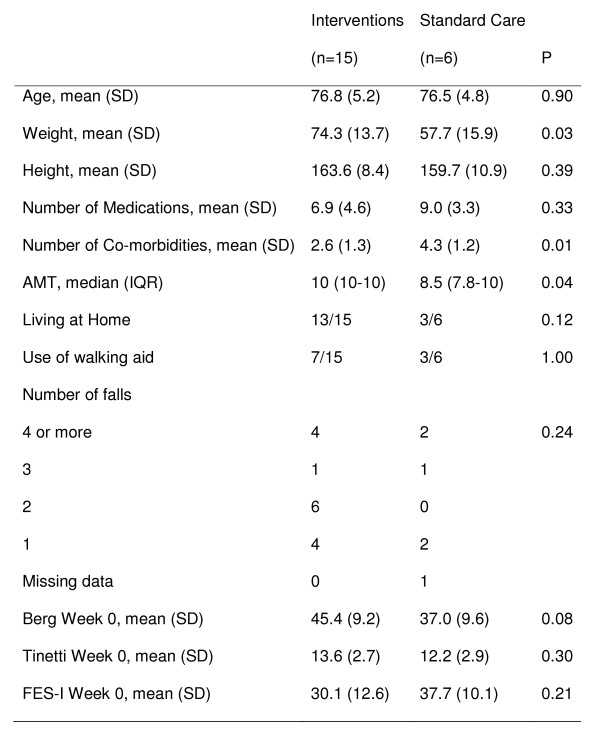
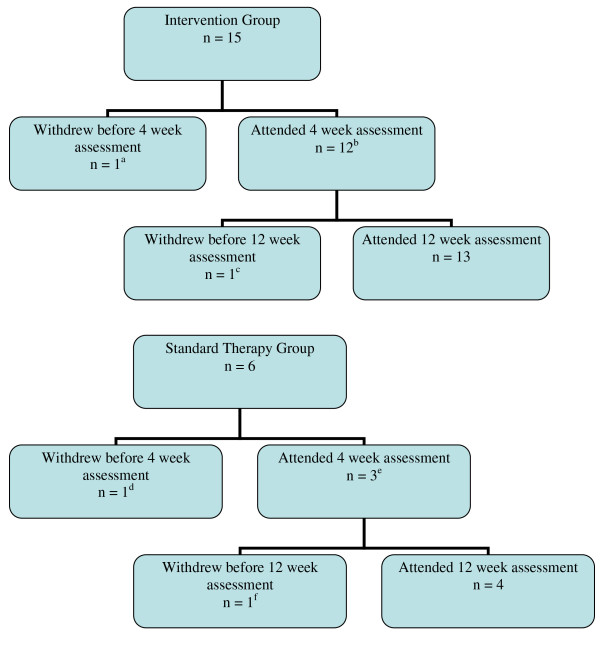
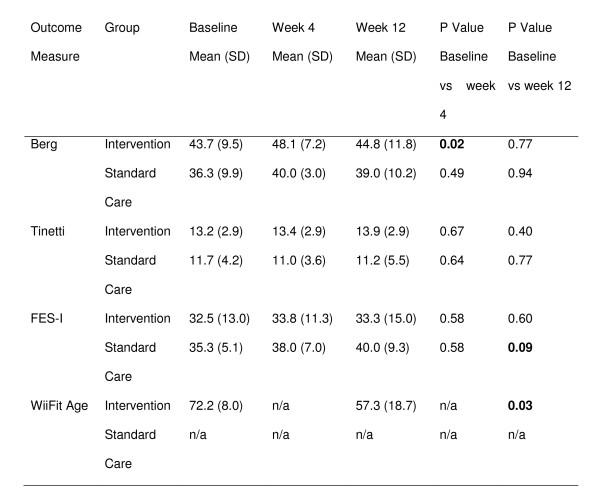
Findings: Community-dwelling fallers over 70 years were recruited and attended for computer-based exercises (n = 15) or standard care (n = 6). Balance and fear of falling were assessed at weeks 0, 4 and 12. Participants were interviewed on completion of the study to determine whether the intervention was acceptable.Eighty percent of participants attended 75% or more of the exercise sessions. An improvement in Berg Score was seen at four weeks (p = 0.02) and in Wii Age at 12 weeks (p = 0.03) in the intervention group. There was no improvement in balance scores in the standard care group.
Conclusion: WiiFit exercise is acceptable in self-referred older people with a history of falls. The WiiFit has the potential to improve balance but further work is required.
Trial registration: ClinicalTrials.gov - NCT01082042.
Figures
References
-
- Tinetti ME, Richman D, Powell L. Falls Efficacy as a Measure of Fear of Falling. Journal of Gerontology. 1990;45(6):239–243. - PubMed
-
- Scottish Government Health Directives. Adding life to years: Report of the Expert Group on Healthcare of Older People. 2002. http://www.sehd.scot.nhs.uk/publications/alty/alty-04.htm
-
- NICE Guideline 21. Falls: The assessment and prevention of falls in older people
Associated data
LinkOut - more resources
Full Text Sources
Medical
