


The BMP signaling pathway at the Drosophila neuromuscular junction and its links to neurodegenerative diseases
- PMID: 20832291
- PMCID: PMC3095363
- DOI: 10.1016/j.conb.2010.08.014
The BMP signaling pathway at the Drosophila neuromuscular junction and its links to neurodegenerative diseases
Abstract
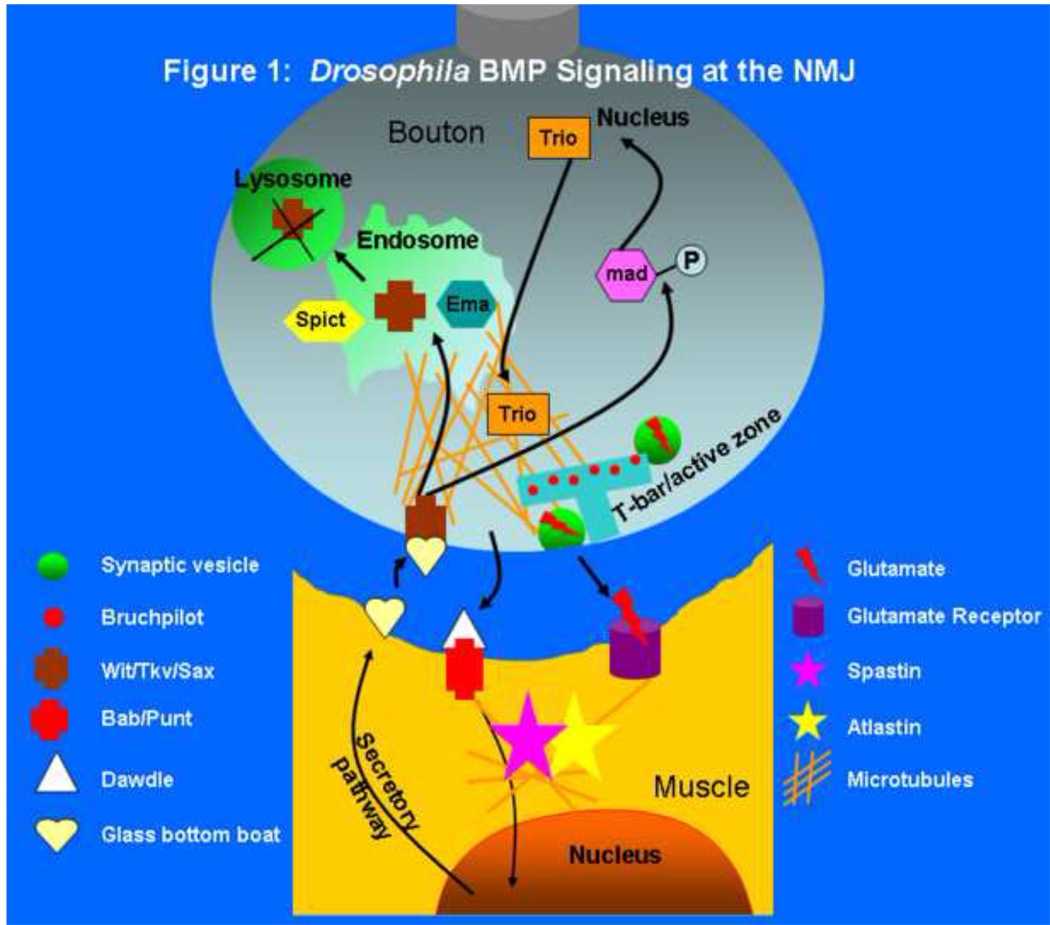
The Drosophila neuromuscular junction (NMJ) has recently provided new insights into the roles of various proteins in neurodegenerative diseases including Amyotrophic Lateral Sclerosis (ALS), Spinal Muscular Atrophy (SMA), Multiple Sclerosis (MS) Hereditary Spastic Paraplegia (HSP), and Huntington's Disease (HD). Several developmental signaling pathways including WNT, MAPK and BMP/TGF-β signaling play important roles in the formation and growth of the Drosophila NMJ. Studies of the fly homologues of genes that cause neurodegenerative disease at the NMJ have resulted in a better understanding of the roles of these proteins in vivo. These studies may shed light on the pathological mechanisms of these diseases, with implications for reduced BMP/TGF-β signaling in ALS, SMA and HD and increased signaling in HSP and MS.
Copyright © 2010 Elsevier Ltd. All rights reserved.
References
-
- Ruiz-Canada VBaC., editor. The Fly Neuromuscular Junction: Structure and Function. Academic Press; 2006.
-
- Collins CA, DiAntonio A. Synaptic development: insights from Drosophila. Curr Opin Neurobiol. 2007;17:35–42. - PubMed
-
- Venken KJ, Bellen HJ. Transgenesis upgrades for Drosophila melanogaster. Development. 2007;134:3571–3584. - PubMed
Publication types
MeSH terms
Substances
Grants and funding
LinkOut - more resources
Full Text Sources
Medical
Molecular Biology Databases
Miscellaneous
