


The glutaredoxin GLRX-21 functions to prevent selenium-induced oxidative stress in Caenorhabditis elegans
- PMID: 20833709
- PMCID: PMC2984526
- DOI: 10.1093/toxsci/kfq273
The glutaredoxin GLRX-21 functions to prevent selenium-induced oxidative stress in Caenorhabditis elegans
Abstract
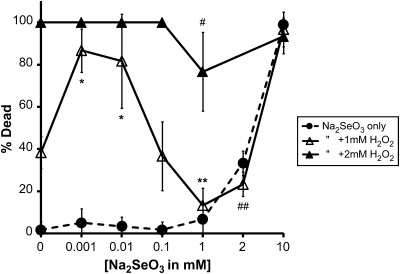
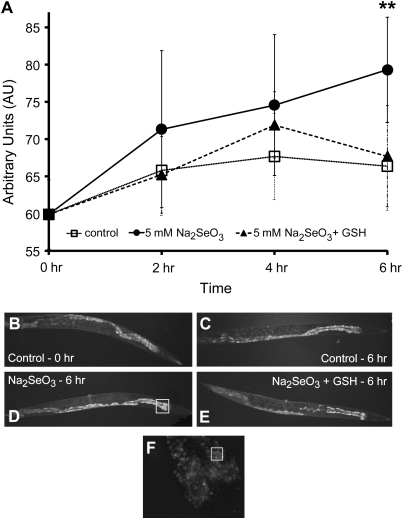
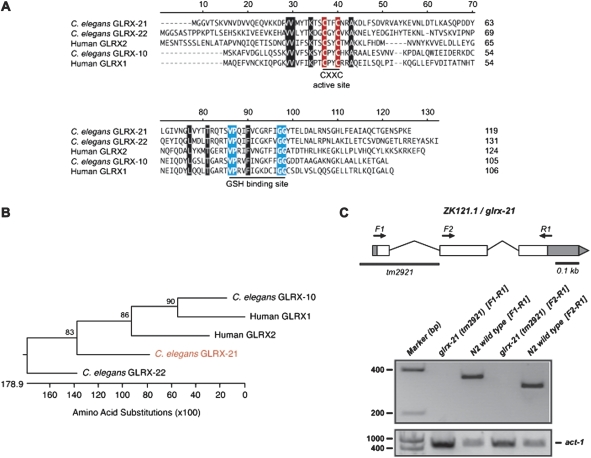
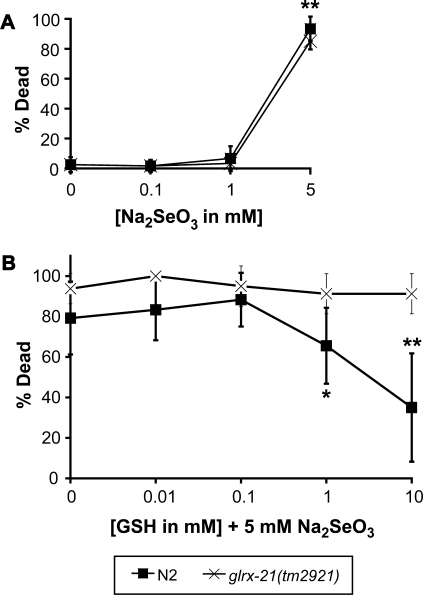
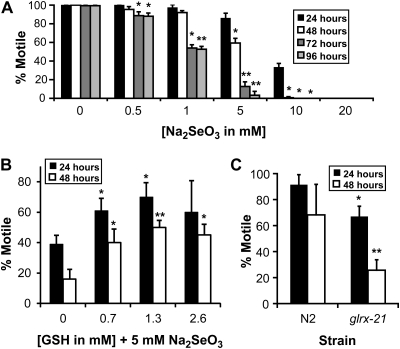
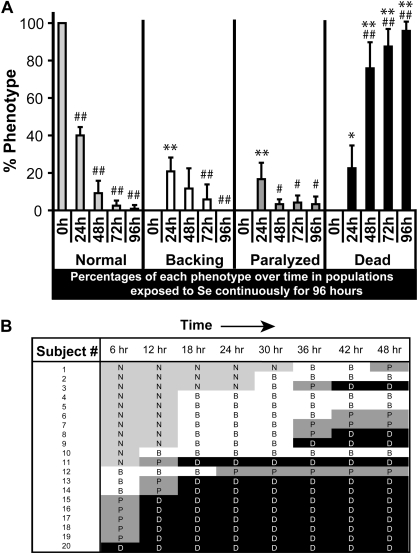
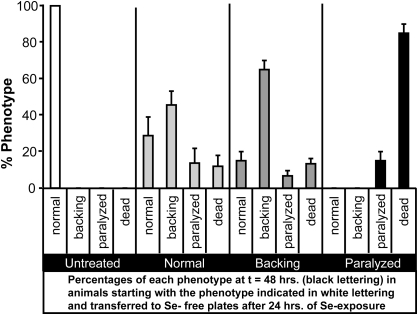
Selenium is an essential micronutrient that functions as an antioxidant. Yet, at higher concentrations, selenium is pro-oxidant and toxic. In extreme cases, exposures to excess selenium can lead to death or selenosis, a syndrome characterized by teeth, hair and nail loss, and nervous system alterations. Recent interest in selenium as an anti- tumorigenic agent has reemphasized the need to understand the mechanisms underlying the cellular consequences of increased selenium exposure. We show here, that in the nematode, Caenorhabditis elegans, selenium has a concentration range in which it functions as an antioxidant, but beyond this range it exhibits a dose- and time-dependent lethality. Oxidation-induced fluorescence emitted by the dye, carboxy-H(2)DCFDA, indicative of reactive oxygen species formation was significantly higher in animals after a brief exposure to 5mM sodium selenite. Longer-term exposures lead to a progressive selenium-induced motility impairment that could be partially prevented by coincident exposure to the cellular antioxidant-reduced glutathione. The C elegans glrx-21 gene belongs to the family of glutaredoxins (glutathione-dependent oxidoreductases) and the glrx-21(tm2921) allele is a null mutation that renders animals hypersensitive for the selenium-induced motility impairment, but not lethality. In addition, the lethality of animals with the tm2921 mutation exposed to selenium was unaffected by the addition of reduced glutathione, suggesting that GLRX-21 is required for glutathione to moderate this selenium-induced lethality. Our findings provide the first description of selenium-induced toxicity in C elegans and support its use as a model for elucidating the mechanisms of selenium toxicity.
Figures
References
-
- Ammar EM, Couri D. Acute toxicity of sodium selenite and selenomethionine in mice after icv or iv administration. Neurotoxicology. 1981;2:383–386. - PubMed
-
- Anderson GL, Cole RD, Williams PL. Assessing behavioral toxicity with Caenorhabditis elegans. Environ. Toxicol. Chem. 2004;23:1235–1240. - PubMed
-
- Batist G, Katki AG, Klecker RW, Jr, Myers CE. Selenium-induced cytotoxicity of human leukemia cells: interaction with reduced glutathione. Cancer Res. 1986;46:5482–5485. - PubMed
-
- Battin EE, Brumaghim JL. Antioxidant activity of sulfur and selenium: a review of reactive oxygen species scavenging, glutathione peroxidase, and metal-binding antioxidant mechanisms. Cell Biochem. Biophys. 2009;55:1–23. - PubMed
-
- Björnstedt M, Hamberg M, Kumar S, Xue J, Holmgren A. Human thioredoxin reductase directly reduces lipid hydroperoxides by NADPH and selenocystine strongly stimulates the reaction via catalytically generated selenols. J. Biol. Chem. 1995;270:11761–11764. - PubMed
Publication types
MeSH terms
Substances
Grants and funding
LinkOut - more resources
Full Text Sources
Other Literature Sources
Medical
Research Materials
