


Microbial communities and functional genes associated with soil arsenic contamination and the rhizosphere of the arsenic-hyperaccumulating plant Pteris vittata L
- PMID: 20833780
- PMCID: PMC2976218
- DOI: 10.1128/AEM.00500-10
Microbial communities and functional genes associated with soil arsenic contamination and the rhizosphere of the arsenic-hyperaccumulating plant Pteris vittata L
Abstract
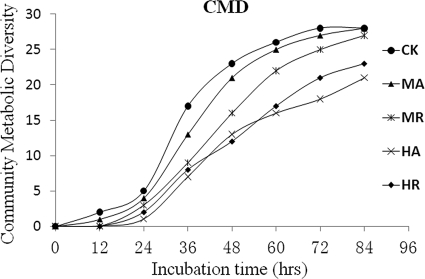
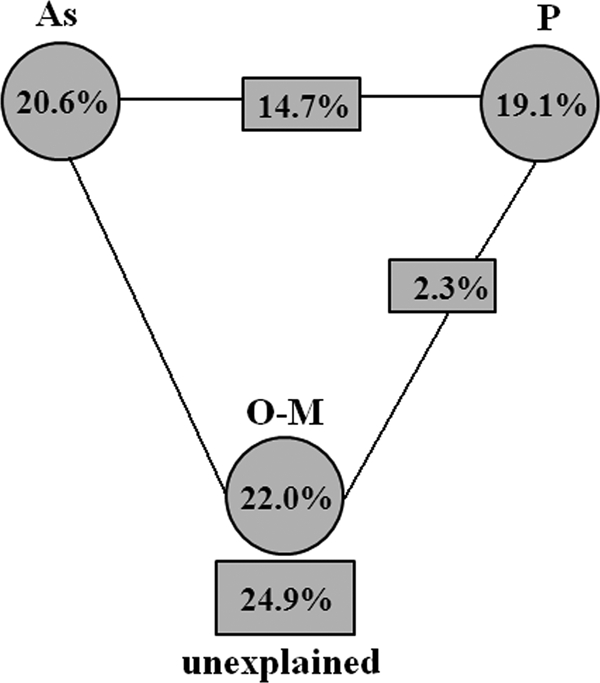
To understand how microbial communities and functional genes respond to arsenic contamination in the rhizosphere of Pteris vittata, five soil samples with different arsenic contamination levels were collected from the rhizosphere of P. vittata and nonrhizosphere areas and investigated by Biolog, geochemical, and functional gene microarray (GeoChip 3.0) analyses. Biolog analysis revealed that the uncontaminated soil harbored the greatest diversity of sole-carbon utilization abilities and that arsenic contamination decreased the metabolic diversity, while rhizosphere soils had higher metabolic diversities than did the nonrhizosphere soils. GeoChip 3.0 analysis showed low proportions of overlapping genes across the five soil samples (16.52% to 45.75%). The uncontaminated soil had a higher heterogeneity and more unique genes (48.09%) than did the arsenic-contaminated soils. Arsenic resistance, sulfur reduction, phosphorus utilization, and denitrification genes were remarkably distinct between P. vittata rhizosphere and nonrhizosphere soils, which provides evidence for a strong linkage among the level of arsenic contamination, the rhizosphere, and the functional gene distribution. Canonical correspondence analysis (CCA) revealed that arsenic is the main driver in reducing the soil functional gene diversity; however, organic matter and phosphorus also have significant effects on the soil microbial community structure. The results implied that rhizobacteria play an important role during soil arsenic uptake and hyperaccumulation processes of P. vittata.
Figures


References
-
- Arai, Y., D. L. Sparks, and J. A. Davis. 2004. Effects of dissolved carbonate on arsenate adsorption and surface speciation at the hematite-water interface. Environ. Sci. Technol. 38:817-824. - PubMed
-
- Cao, X., L. Q. Ma, and A. Shiralipour. 2003. Effects of compost and phosphate amendments on arsenic mobility in soils and arsenic uptake by the hyperaccumulator, Pteris vittata L. Environ. Pollut. 126:157-167. - PubMed
-
- Cao, X., L. Q. Ma, and C. Tu. 2004. Antioxidative responses to arsenic in the arsenic-hyperaccumulator Chinese brake fern (Pteris vittata L.). Environ. Pollut. 128:317-325. - PubMed
-
- Clarke, K. R., and M. Ainsworth. 1993. A method of linking multivariate community structure to environmental variables. Mar. Ecol. Prog. Ser. 92:205-219.
Publication types
MeSH terms
Substances
LinkOut - more resources
Full Text Sources
Molecular Biology Databases
