


A genome-wide association study for myopia and refractive error identifies a susceptibility locus at 15q25
- PMID: 20835236
- PMCID: PMC4115148
- DOI: 10.1038/ng.664
A genome-wide association study for myopia and refractive error identifies a susceptibility locus at 15q25
Abstract
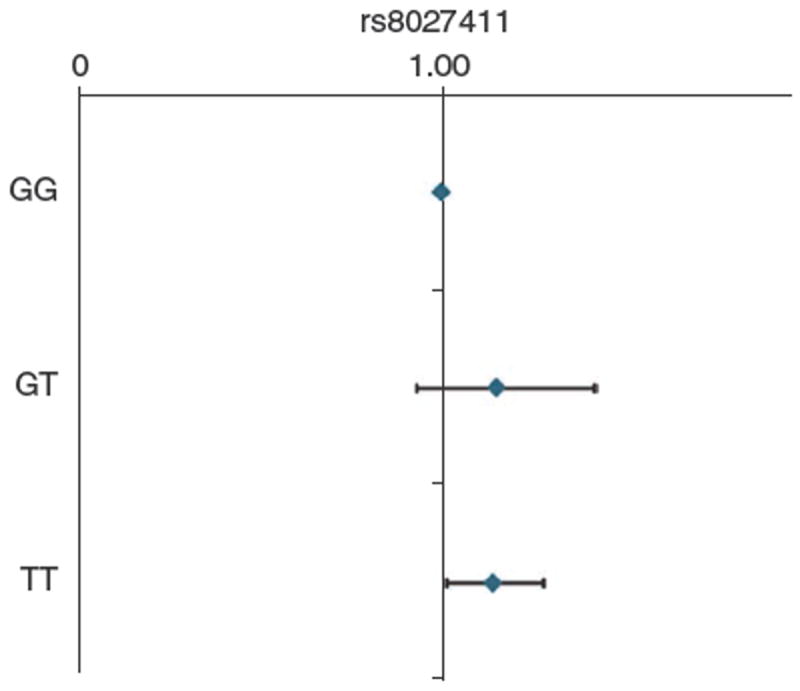
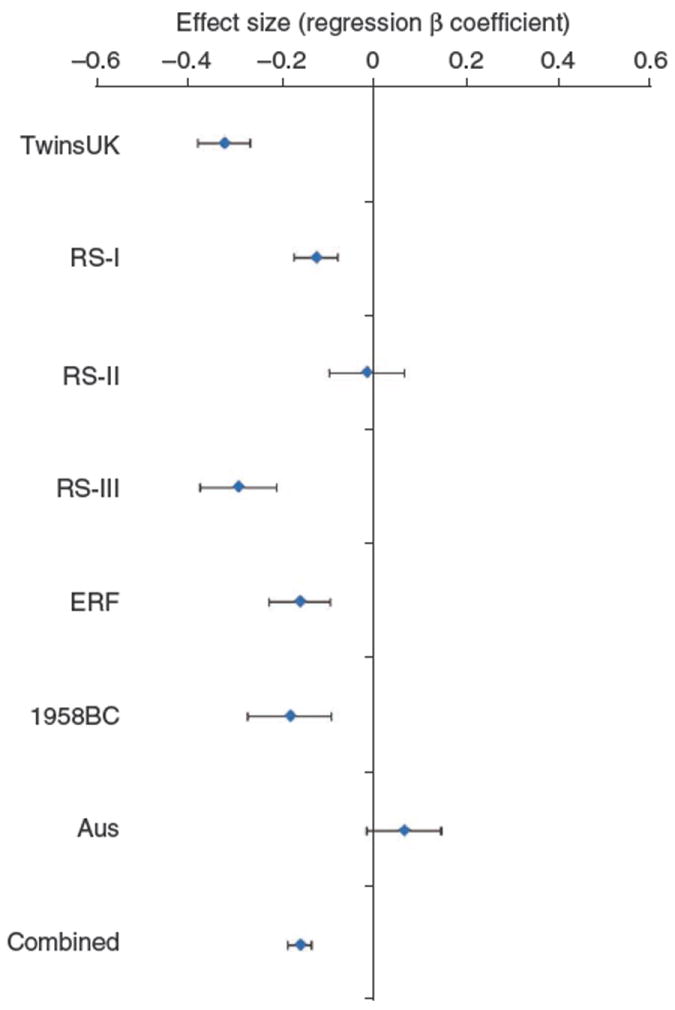
Myopia and hyperopia are at opposite ends of the continuum of refraction, the measure of the eye's ability to focus light, which is an important cause of visual impairment (when aberrant) and is a highly heritable trait. We conducted a genome-wide association study for refractive error in 4,270 individuals from the TwinsUK cohort. We identified SNPs on 15q25 associated with refractive error (rs8027411, P = 7.91 × 10⁻⁸). We replicated this association in six adult cohorts of European ancestry with a combined 13,414 individuals (combined P = 2.07 × 10⁻⁹). This locus overlaps the transcription initiation site of RASGRF1, which is highly expressed in neurons and retina and has previously been implicated in retinal function and memory consolidation. Rasgrf1(-/-) mice show a heavier average crystalline lens (P = 0.001). The identification of a susceptibility locus for refractive error on 15q25 will be important in characterizing the molecular mechanism responsible for the most common cause of visual impairment.
Conflict of interest statement
The authors declare no competing financial interests.
Figures

References
-
- Morgan I, Rose K. How genetic is school myopia? Prog Retin Eye Res. 2005;24:1–38. - PubMed
-
- Wu HM, et al. Does education explain ethnic differences in myopia prevalence? A population-based study of young adult males in Singapore. Optom Vis Sci. 2001;78:234–239. - PubMed
-
- Rein DB, et al. The economic burden of major adult visual disorders in the United States. Arch Ophthalmol. 2006;124:1754–1760. - PubMed
-
- Bamashmus MA, Matlhaga B, Dutton GN. Causes of blindness and visual impairment in the West of Scotland. Eye. 2004;18:257–261. - PubMed
Publication types
MeSH terms
Substances
Grants and funding
LinkOut - more resources
Full Text Sources
Other Literature Sources
Molecular Biology Databases
