


Type II odontoid fractures in the elderly: an evidence-based narrative review of management
- PMID: 20835875
- PMCID: PMC3030710
- DOI: 10.1007/s00586-010-1507-6
Type II odontoid fractures in the elderly: an evidence-based narrative review of management
Abstract
Considerable controversy exists regarding the optimal management of elderly patients with type II odontoid fractures. There is uncertainty regarding the consequences of non-union. The best treatment remains unclear because of the morbidity associated with prolonged cervical immobilisation versus the risks of surgical intervention. The objective of the study was to evaluate the published literature and determine the current evidence for the management of type II odontoid fractures in elderly. A search of the English language literature from January 1970 to date was performed using Medline and the following keywords: odontoid, fractures, cervical spine and elderly. The search was supplemented by cross-referencing between articles. Case reports and review articles were excluded although some were referred to in the discussion. Studies in patients aged 65 years with a minimum follow-up of 12 months were selected. One-hundred twenty-six articles were reviewed. No class I study was identified. There were two class II studies and the remaining were class III. Significant variability was found in the literature regarding mortality and morbidity rates in patients treated with and without halo vest immobilisation. In recent years several authors have claimed satisfactory results with anterior odontoid screw fixation while others have argued that this may lead to increased complications in this age group. Lately, the posterior cervical (Goel-Harms) construct has also gained popularity amongst surgeons. There is insufficient evidence to establish a standard or guideline for odontoid fracture management in elderly. While most authors agree that cervical immobilisation yields satisfactory results for type I and III fractures in the elderly, the optimal management for type II fractures remain unsolved. A prospective randomised controlled trial is recommended.
Figures
References
-
- Aebi M, Etter C, Coscia M. Fractures of the odontoid process. Treatment with anterior screw fixation. Spine. 1989;14:1065–1070. - PubMed
-
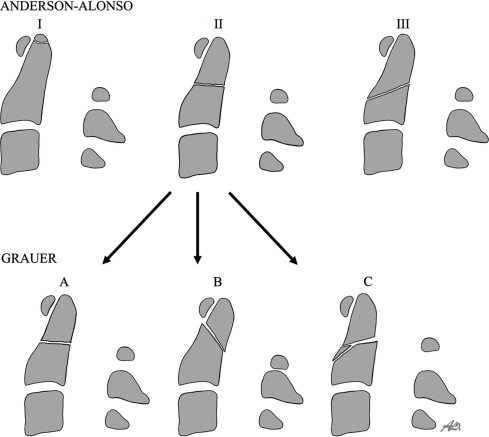
- Anderson LD, D’Alonzo RT. Fractures of the odontoid process of the axis. J Bone Joint Surg Am. 1974;56:1663–1674. - PubMed
-
- Apfelbaum RI, Lonser RR, Veres R, Casey A. Direct anterior screw fixation for recent and remote odontoid fractures. J Neurosurg. 2000;93:227–236. - PubMed
-
- Appuzo ML, Heiden JS, Weiss MH, Ackerson TT, Harvey JP, Kurze T. Acute fractures of the odontoid process. An analysis of 45 cases. J Neurosurg. 1978;48(1):85–91. - PubMed
Publication types
MeSH terms
LinkOut - more resources
Full Text Sources
Medical
