


Adenosine-to-inosine RNA editing
- PMID: 20835992
- PMCID: PMC2946787
- DOI: 10.1002/wsbm.10
Adenosine-to-inosine RNA editing
Abstract
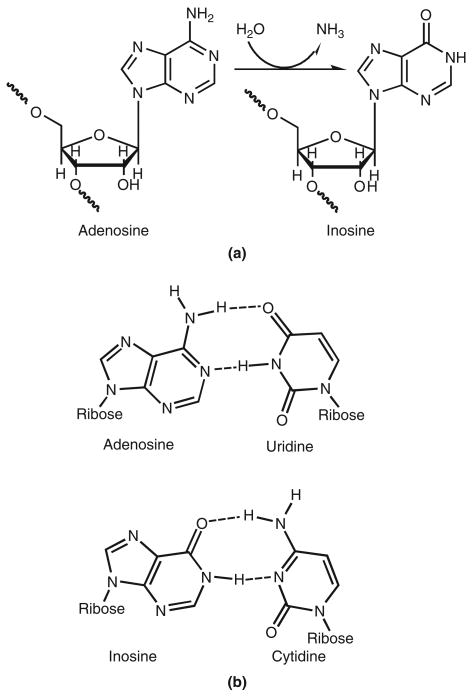
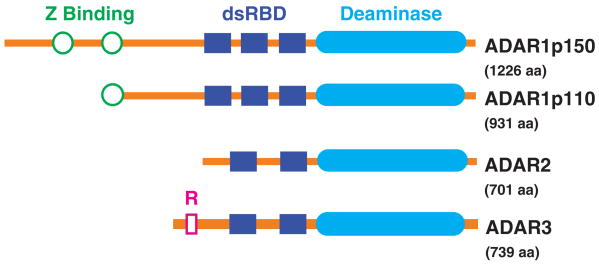
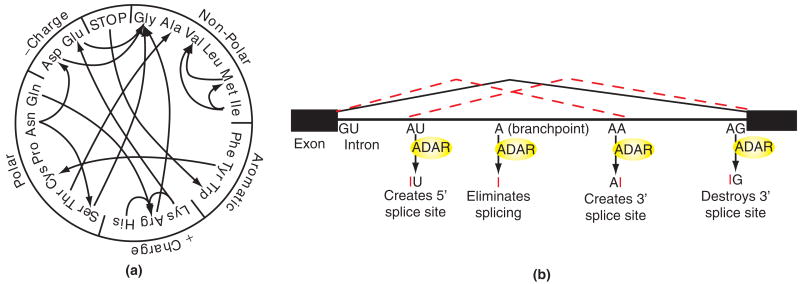
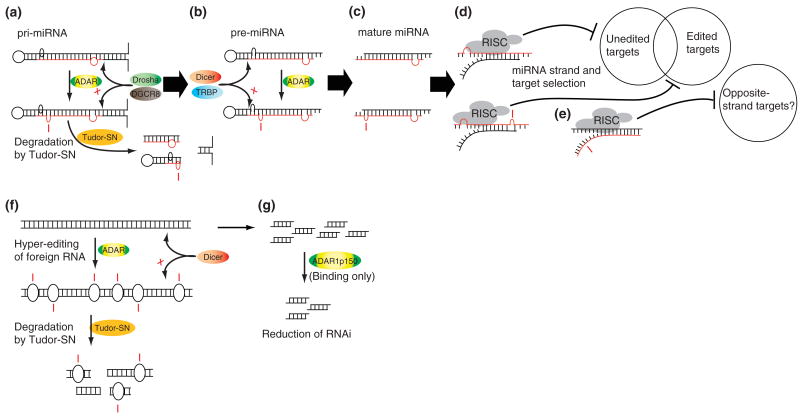
Ribonucleic acid (RNA) editing is a mechanism that generates RNA and protein diversity, which is not directly encoded in the genome. The most common type of RNA editing in vertebrates is the conversion of adenosine to inosine in double-stranded RNA which occurs in the higher eukaryotes. This editing is carried out by the family of adenosine deaminase acting on RNA (ADAR) proteins. The most-studied substrates of ADAR proteins undergo editing which is very consistent, highly conserved, and functionally important. However, editing causes changes in protein-coding regions only at a small proportion of all editing sites. The vast majority of editing sites are in noncoding sequences. This includes microRNAs, as well as the introns and 3' untranslated regions of messenger RNAs, which play important roles in the RNA-mediated regulation of gene expression.
Figures
References
-
- International Human Genome Sequencing Consortium. Finishing the euchromatic sequence of the human genome. Nature. 2004;431:931–945. - PubMed
-
- Valente L, Nishikura K. ADAR gene family and A-to-I RNA editing: diverse roles in posttranscriptional gene regulation. Prog Nucleic Acid Res Mol Biol. 2005;79:299–338. - PubMed
-
- Gerber AP, Keller W. RNA editing by base deamination: more enzymes, more targets, new mysteries. Trends Biochem Sci. 2001;26:376–384. - PubMed
-
- Levanon EY, Eisenberg E, Yelin R, Nemzer S, Halleger M. Systematic identification of abundant A-to-I editing sites in the human transcriptome. Nat Biotechnol. 2004;22:1001–1005. - PubMed
Publication types
MeSH terms
Substances
Grants and funding
LinkOut - more resources
Full Text Sources
Other Literature Sources
Research Materials
