


Gene-silencing reveals the functional significance of pheromone biosynthesis activating neuropeptide receptor (PBAN-R) in a male moth
- PMID: 20837549
- PMCID: PMC2947893
- DOI: 10.1073/pnas.1008812107
Gene-silencing reveals the functional significance of pheromone biosynthesis activating neuropeptide receptor (PBAN-R) in a male moth
Abstract
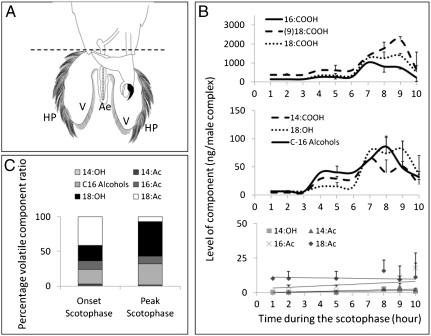
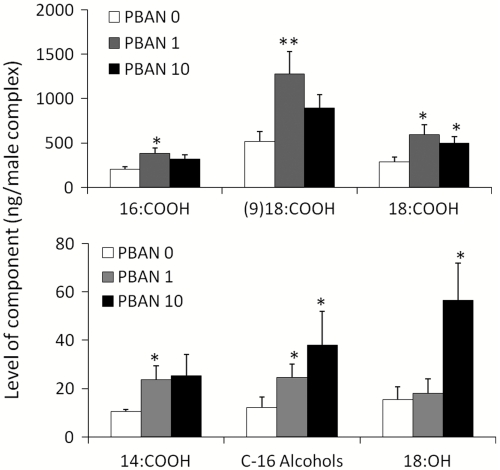
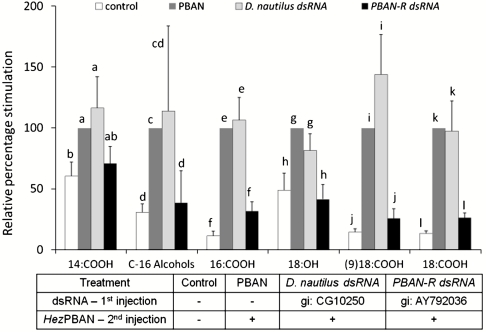
The role of pheromone biosynthesis activating neuropeptide (PBAN) in the regulation of pheromone biosynthesis of several female moth species is well elucidated, but its role in the males has been a mystery for over two decades since its discovery from both male and female central nervous systems. In previous studies we have identified the presence of the gene transcript for the PBAN-G-protein coupled receptor (PBAN-R) in Helicoverpa armigera male hair-pencil-aedaegus complexes (male complexes), a tissue structurally homologous to the female pheromone gland. Moreover, we showed that this transcript is up-regulated during pupal-adult development, analogous to its regulation in the female pheromone-glands, thereby indicating a likely functional gene. Here we argue in favor of PBAN's role in regulating the free fatty-acid components (myristic, palmitic, stearic, and oleic acids) and alcohol components (hexadecanol, cis-11 hexadecanol, and octadecanol) in male complexes. We demonstrate the diel periodicity in levels of male components, with peak titers occurring during the 7th-9th h in the scotophase, coincident with female pheromone production. In addition, we show significant stimulation of component levels by synthetic HezPBAN. Furthermore, we confirm PBAN's function in this tissue through knockdown of the PBAN-R gene using RNAi-mediated gene-silencing. Injections of PBAN-R dsRNA into the male hemocoel significantly inhibited levels of the various male components by 58%-74%. In conclusion, through gain and loss of function we revealed the functionality of the PBAN-R and the key components that are up-regulated by PBAN.
Conflict of interest statement
The authors declare no conflict of interest.
Figures
References
-
- Rafaeli A. Neuroendocrine control of pheromone biosynthesis in moths. Int Rev Cytol. 2002;213:49–92. - PubMed
-
- Rafaeli A. Pheromone biosynthesis activating neuropeptide (PBAN): regulatory role and mode of action. Gen Comp Endocrinol. 2009;162:69–78. - PubMed
-
- Rafaeli A, et al. Spatial distribution and differential expression of the receptor for pheromone-biosynthesis-activating neuropeptide (PBAN-R) at the protein and gene levels in tissues of adult Helicoverpa armigera (Lepidoptera: Noctuidae) Insect Mol Biol. 2007;16:287–293. - PubMed
-
- Tsfadia O, et al. Pheromone biosynthetic pathways: PBAN-regulated rate-limiting steps and differential expression of desaturase genes in moth species. Insect Biochem Mol Biol. 2008;38:552–567. - PubMed
Publication types
MeSH terms
Substances
LinkOut - more resources
Full Text Sources
Other Literature Sources
