3-Hydroxy-3-methylglutaryl-coenzyme A reductase inhibitors in the treatment of central nervous system diseases
- PMID: 20837848
- PMCID: PMC3138553
- DOI: 10.1001/archneurol.2010.199
3-Hydroxy-3-methylglutaryl-coenzyme A reductase inhibitors in the treatment of central nervous system diseases
Abstract
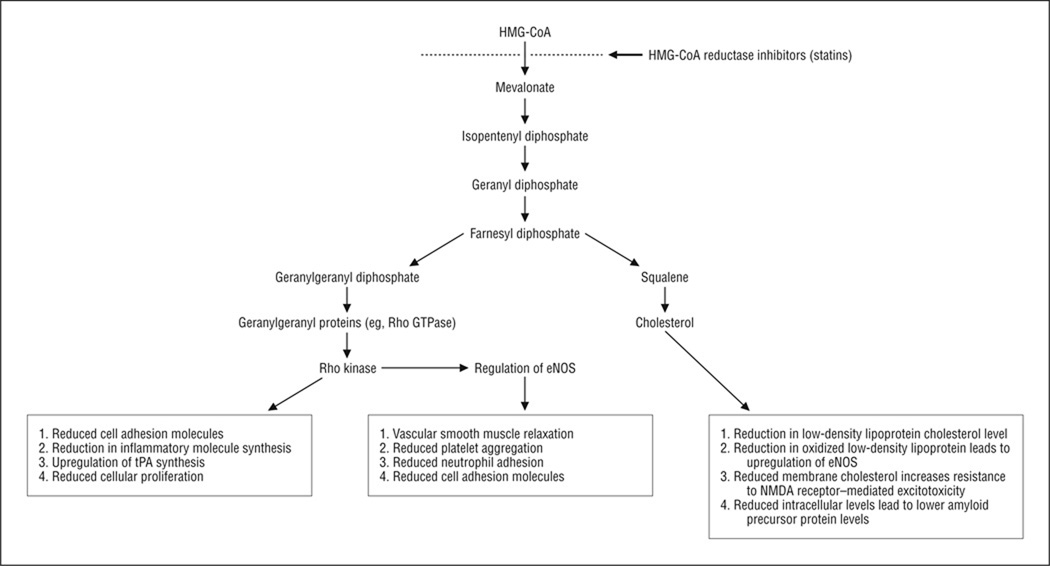
3-Hydroxy-3-methylglutaryl-coenzyme A (HMG-CoA) reductase inhibitors (statins) are among the most prescribed medications in the United States. Statins act on the rate-limiting step in cholesterol biosynthesis (the conversion of HMG-CoA to mevalonate) and are effective in treating dyslipidemia. However, statins decrease other downstream products of the mevalonate pathway, and it is via these pathways that statins may affect inflammation, nitric oxide synthesis, the coagulation cascade, and other processes. Through these pleiotropic effects, statins may have an effect on neurologic diseases, including ischemic and hemorrhagic stroke, Alzheimer disease, Parkinson disease, and multiple sclerosis. This article reviews the basic biochemistry of statins as it relates to these pleiotropic effects, the potential role of statins in several neurologic disorders, and the results of clinical trials performed for several of these conditions.
Figures
References
-
- Goldstein JL, Brown MS. Regulation of the mevalonate pathway. Nature. 1990;343(6257):425–430. - PubMed
-
- Stüve O, Youssef S, Steinman L, Zamvil SS. Statins as potential therapeutic agents in neuroinflammatory disorders. Curr Opin Neurol. 2003;16(3):393–401. - PubMed
-
- Collins R, Armitage J, Parish S, Sleight P, Peto R Heart Protection Study Collaborative Group. Effects of cholesterol-lowering with simvastatin on stroke and other major vascular events in 20536 people with cerebrovascular disease or other high-risk conditions. Lancet. 2004;363(9411):757–767. - PubMed
-
- Ovbiagele B, Saver JL, Bang H, et al. VISP Study Investigators. Statin treatment and adherence to national cholesterol guidelines after ischemic stroke. Neurology. 2006;66(8):1164–1170. - PubMed
-
- Amarenco P, Bogousslavsky J, Callahan A, III, et al. Stroke Prevention by Aggressive Reduction in Cholesterol Levels (SPARCL) Investigators. High-dose atorvastatin after stroke or transient ischemic attack. N Engl J Med. 2006;355(6):549–559. - PubMed
Publication types
MeSH terms
Substances
Grants and funding
LinkOut - more resources
Full Text Sources
Other Literature Sources
Medical