Drug-induced regulation of target expression
- PMID: 20838579
- PMCID: PMC2936514
- DOI: 10.1371/journal.pcbi.1000925
Drug-induced regulation of target expression
Abstract
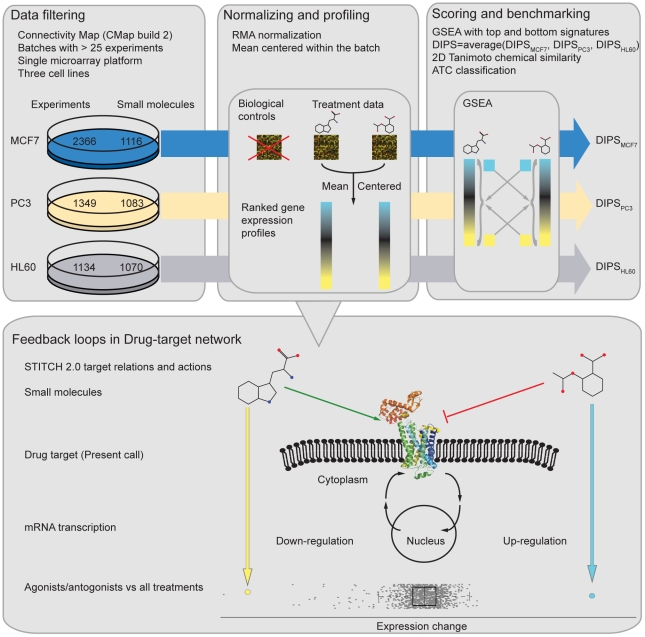
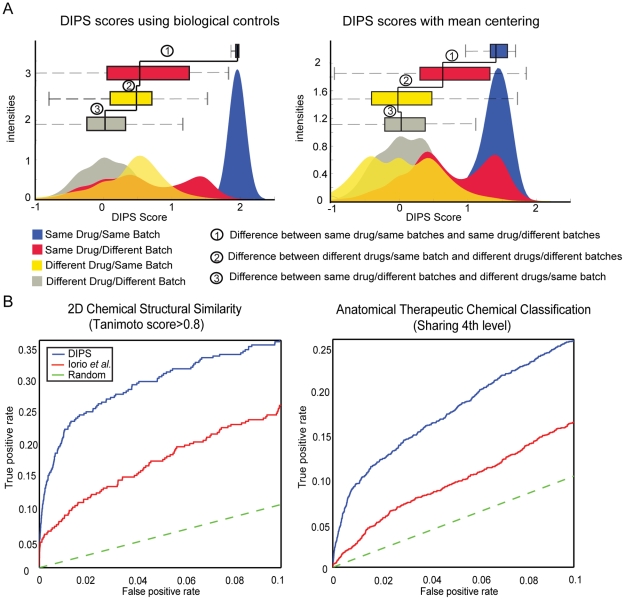
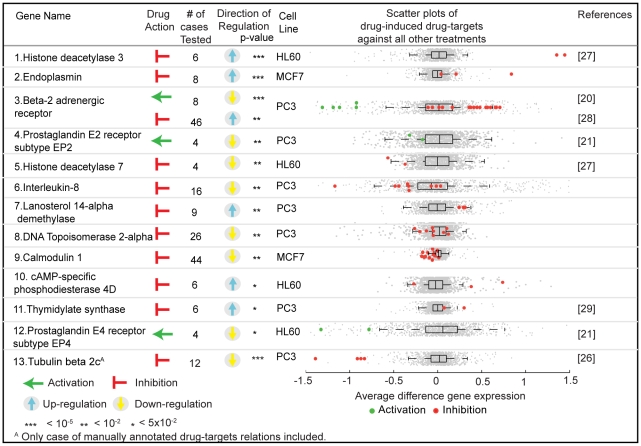
Drug perturbations of human cells lead to complex responses upon target binding. One of the known mechanisms is a (positive or negative) feedback loop that adjusts the expression level of the respective target protein. To quantify this mechanism systems-wide in an unbiased way, drug-induced differential expression of drug target mRNA was examined in three cell lines using the Connectivity Map. To overcome various biases in this valuable resource, we have developed a computational normalization and scoring procedure that is applicable to gene expression recording upon heterogeneous drug treatments. In 1290 drug-target relations, corresponding to 466 drugs acting on 167 drug targets studied, 8% of the targets are subject to regulation at the mRNA level. We confirmed systematically that in particular G-protein coupled receptors, when serving as known targets, are regulated upon drug treatment. We further newly identified drug-induced differential regulation of Lanosterol 14-alpha demethylase, Endoplasmin, DNA topoisomerase 2-alpha and Calmodulin 1. The feedback regulation in these and other targets is likely to be relevant for the success or failure of the molecular intervention.
Conflict of interest statement
The authors have declared that no competing interests exist.
Figures
References
-
- Lamb J, Crawford ED, Peck D, Modell JW, Blat IC, et al. The Connectivity Map: using gene-expression signatures to connect small molecules, genes, and disease. Science. 2006;313:1929–1935. - PubMed
-
- Hopkins AL, Groom CR. The druggable genome. Nat Rev Drug Discov. 2002;1:727–730. - PubMed
-
- Drews J. Genomic sciences and the medicine of tomorrow. Nat Biotechnol. 1996;14:1516–1518. - PubMed
-
- Kitano H. A robustness-based approach to systems-oriented drug design. Nat Rev Drug Discov. 2007;6:202–210. - PubMed
-
- Stelling J, Sauer U, Szallasi Z, Doyle FJ, 3rd, Doyle J. Robustness of cellular functions. Cell. 2004;118:675–685. - PubMed
Publication types
MeSH terms
Substances
LinkOut - more resources
Full Text Sources
Other Literature Sources