


Intrinsic depot-specific differences in the secretome of adipose tissue, preadipocytes, and adipose tissue-derived microvascular endothelial cells
- PMID: 20841607
- PMCID: PMC2992760
- DOI: 10.2337/db10-0483
Intrinsic depot-specific differences in the secretome of adipose tissue, preadipocytes, and adipose tissue-derived microvascular endothelial cells
Abstract
Objective: Visceral adipose tissue (VAT) is more closely linked to insulin resistance than subcutaneous adipose tissue (SAT). We conducted a quantitative analysis of the secretomes of VAT and SAT to identify differences in adipokine secretion that account for the adverse metabolic consequences of VAT.
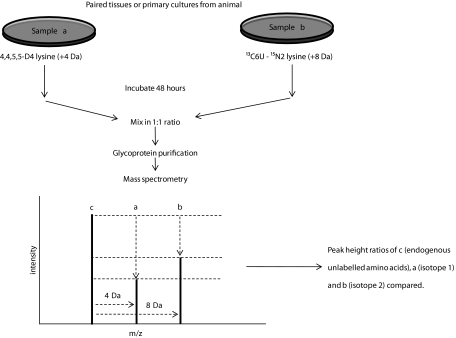
Research design and methods: We used lectin affinity chromatography followed by comparison of isotope-labeled amino acid incorporation rates to quantitate relative differences in the secretomes of VAT and SAT explants. Because adipose tissue is composed of multiple cell types, which may contribute to depot-specific differences in secretion, we isolated preadipocytes and microvascular endothelial cells (MVECs) and compared their secretomes to those from whole adipose tissue.
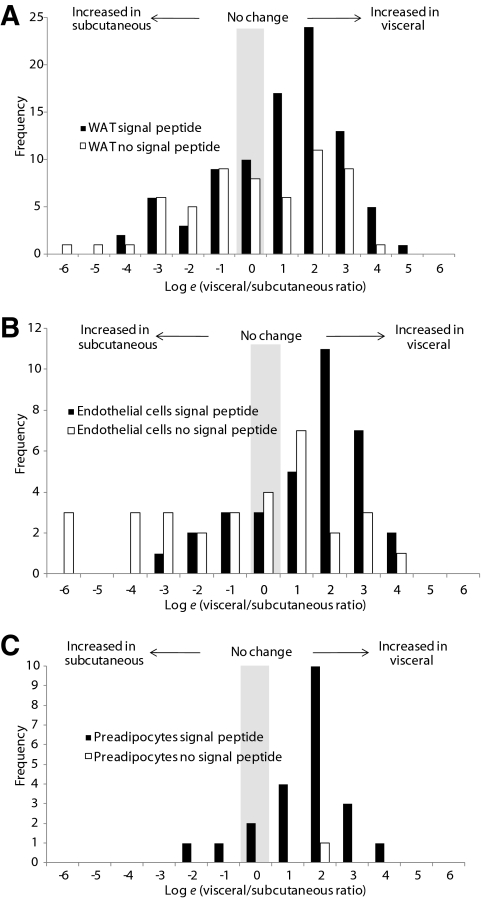
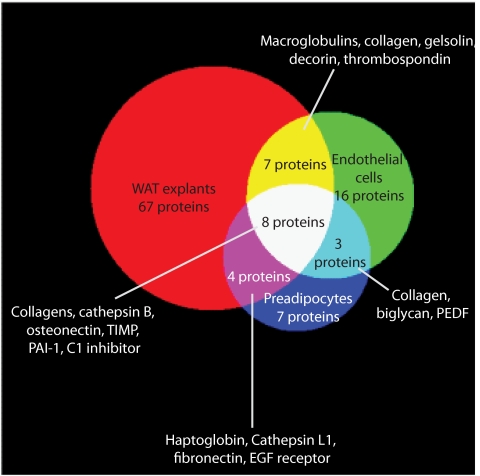
Results: Although there were no discrete depot-specific differences in the secretomes from whole adipose tissue, preadipocytes, or MVECS, VAT exhibited an overall higher level of protein secretion than SAT. More proteins were secreted in twofold greater abundance from VAT explants compared with SAT explants (59% versus 21%), preadipocytes (68% versus 0%), and MVECs (62% versus 15%). The number of proteins in the whole adipose tissue secretome was greater than the sum of its cellular constituents. Finally, almost 50% of the adipose tissue secretome was composed of factors with a role in angiogenesis.
Conclusions: VAT has a higher secretory capacity than SAT, and this difference is an intrinsic feature of its cellular components. In view of the number of angiogenic factors in the adipose tissue secretome, we propose that VAT represents a more readily expandable tissue depot.
Figures
References
-
- Carey DG, Jenkins AB, Campbell LV, Freund J, Chisholm DJ: Abdominal fat and insulin resistance in normal and overweight women: Direct measurements reveal a strong relationship in subjects at both low and high risk of NIDDM. Diabetes 1996;45:633–638 - PubMed
-
- Björntorp P: Abdominal obesity and risk. Clin Exp Hypertens A 1990;12:783–794 - PubMed
-
- Kissebah AH, Vydelingum N, Murray R, Evans DJ, Hartz AJ, Kalkhoff RK, Adams PW: Relation of body fat distribution to metabolic complications of obesity. J Clin Endocrinol Metab 1982;54:254–260 - PubMed
-
- Vague J: The degree of masculine differentiation of obesities: a factor determining predisposition to diabetes, atherosclerosis, gout, and uric calculous disease. Am J Clin Nutr 1956;4:20–34 - PubMed
Publication types
MeSH terms
Substances
LinkOut - more resources
Full Text Sources
Research Materials
