


Intensive care diaries reduce new onset post traumatic stress disorder following critical illness: a randomised, controlled trial
- PMID: 20843344
- PMCID: PMC3219263
- DOI: 10.1186/cc9260
Intensive care diaries reduce new onset post traumatic stress disorder following critical illness: a randomised, controlled trial
Abstract
Introduction: Patients recovering from critical illness have been shown to be at risk of developing Post Traumatic Stress disorder (PTSD). This study was to evaluate whether a prospectively collected diary of a patient's intensive care unit (ICU) stay when used during convalescence following critical illness will reduce the development of new onset PTSD.
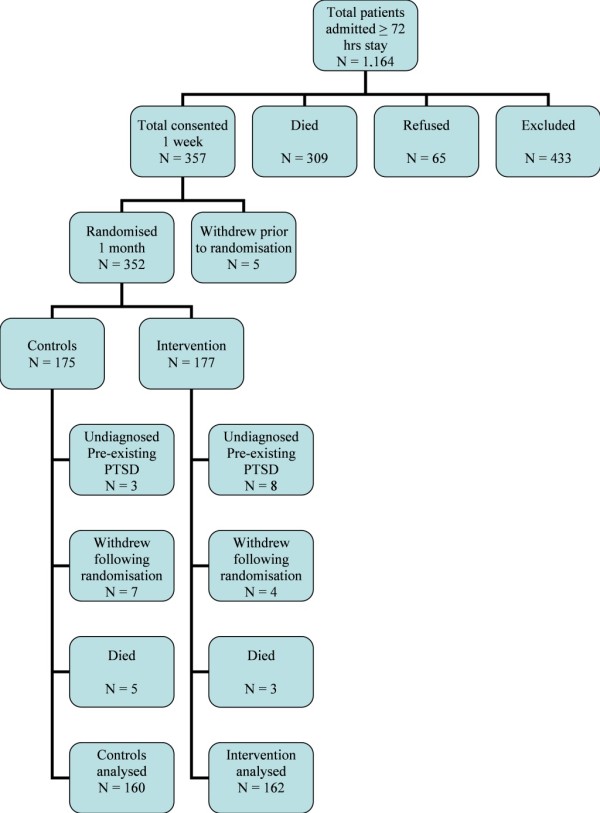
Methods: Intensive care patients with an ICU stay of more than 72 hours were recruited to a randomised controlled trial examining the effect of a diary outlining the details of the patients ICU stay on the development of acute PTSD. The intervention patients received their ICU diary at 1 month following critical care discharge and the final assessment of the development of acute PTSD was made at 3 months.
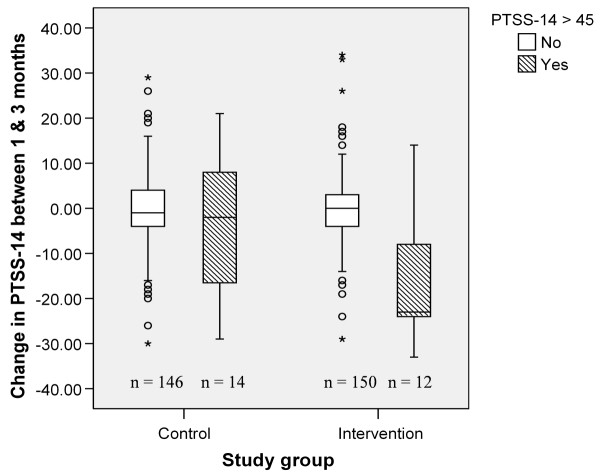
Results: 352 patients were randomised to the study at 1 month. The incidence of new cases of PTSD was reduced in the intervention group compared to the control patients (5% versus 13%, P = 0.02).
Conclusions: The provision of an ICU diary is effective in aiding psychological recovery and reducing the incidence of new PTSD.
Trial registration: NCT00912613.
Figures
References
-
- American Psychiatric Association. Diagnostic and statistical manual of mental disorders - revised. 4. Washington, DC: American Psychiatric Association; 2000.
-
- Foa EB, Keane TM, Friedman MJ. Effective treatments for PTSD. New York: Guildford Press; 2000. p. 5.
Publication types
MeSH terms
Associated data
LinkOut - more resources
Full Text Sources
Other Literature Sources
Medical
