


Current Issues Regarding Complementary and Alternative Medicine (CAM) in the United States: Part 1: The Widespread Use of CAM and the Need for Better-Informed Health Care Professionals to Provide Patient Counseling
- PMID: 20844696
- PMCID: PMC2935644
Item in Clipboard
Current Issues Regarding Complementary and Alternative Medicine (CAM) in the United States: Part 1: The Widespread Use of CAM and the Need for Better-Informed Health Care Professionals to Provide Patient Counseling
P T.
2010 Aug.
No abstract available
Figures
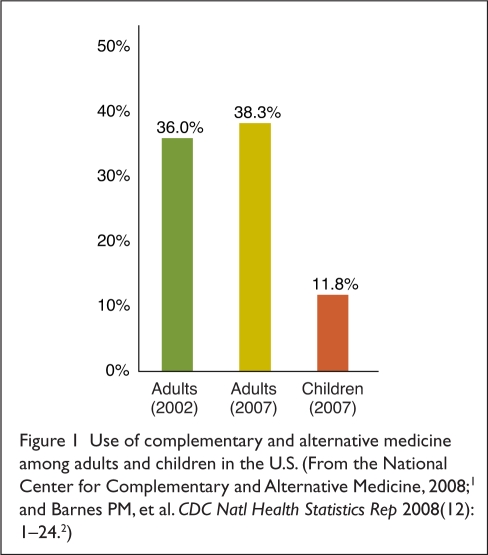
Use of complementary and alternative medicine among adults and children in the U.S. (From the National Center for Complementary and Alternative Medicine, 2008; and Barnes PM, et al. CDC Natl Health Statistics Rep 2008(12): 1–24.2)
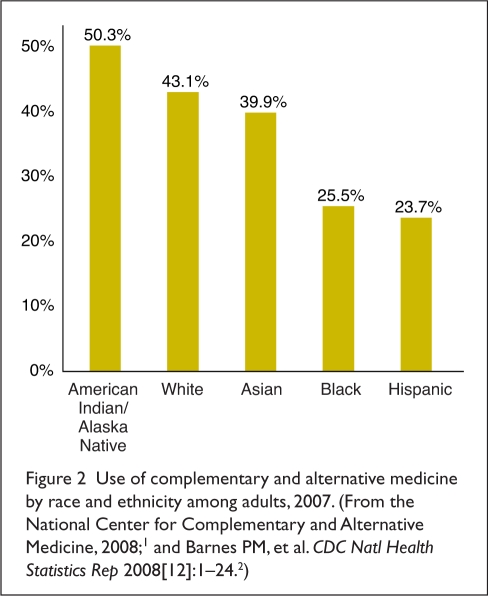
Use of complementary and alternative medicine by race and ethnicity among adults, 2007. (From the National Center for Complementary and Alternative Medicine, 2008; and Barnes PM, et al. CDC Natl Health Statistics Rep 2008[12]:1–24.2)
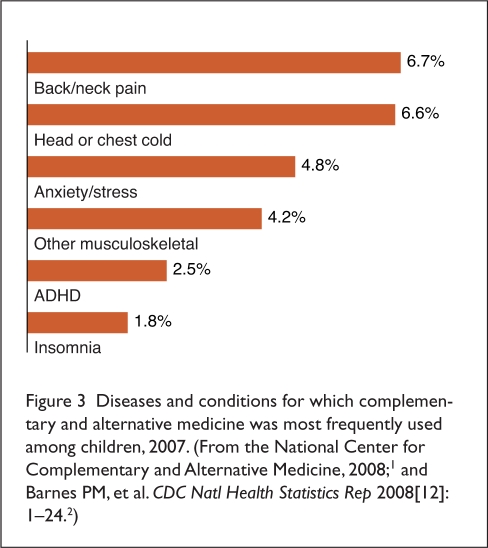
Diseases and conditions for which complementary and alternative medicine was most frequently used among children, 2007. (From the National Center for Complementary and Alternative Medicine, 2008; and Barnes PM, et al. CDC Natl Health Statistics Rep 2008[12]: 1–24.2)
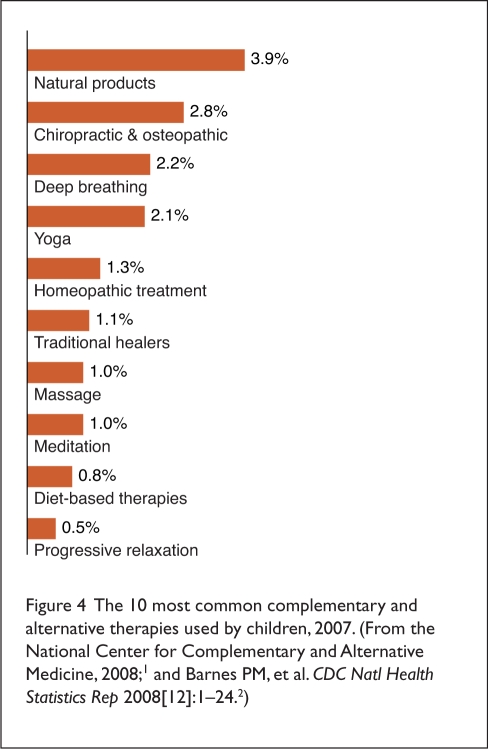
The 10 most common complementary and alternative therapies used by children, 2007. (From the National Center for Complementary and Alternative Medicine, 2008; and Barnes PM, et al. CDC Natl Health Statistics Rep 2008[12]:1–24.2)
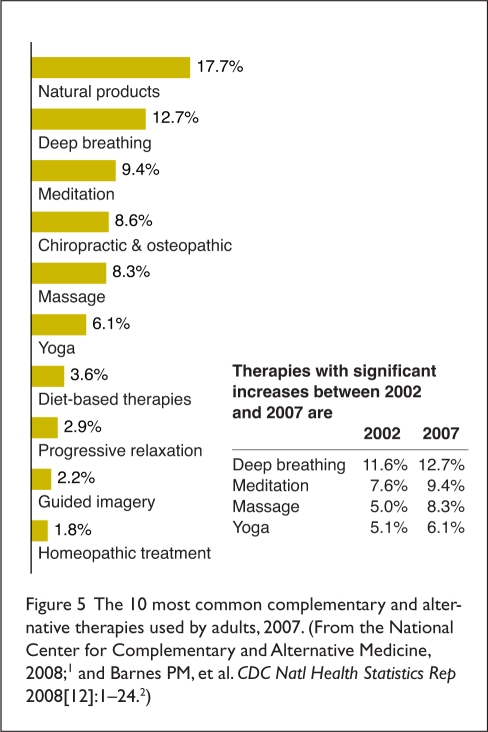
The 10 most common complementary and alternative therapies used by adults, 2007. (From the National Center for Complementary and Alternative Medicine, 2008; and Barnes PM, et al. CDC Natl Health Statistics Rep 2008[12]:1–24.2)
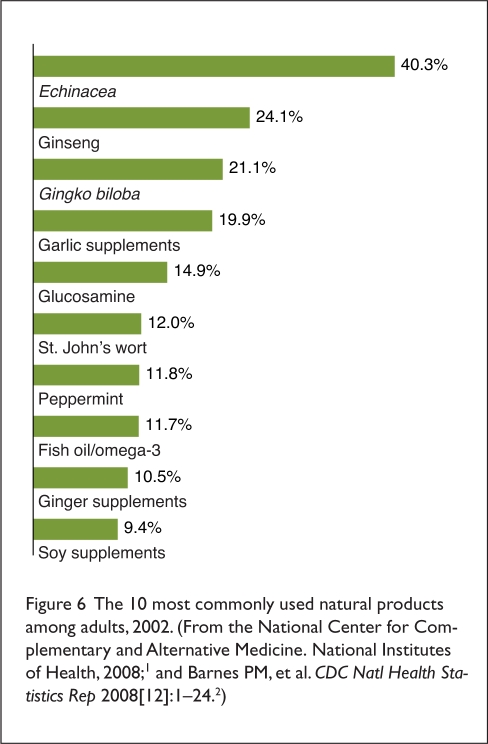
The 10 most commonly used natural products among adults, 2002. (From the National Center for Complementary and Alternative Medicine. National Institutes of Health, 2008; and Barnes PM, et al. CDC Natl Health Statistics Rep 2008[12]:1–24.2)
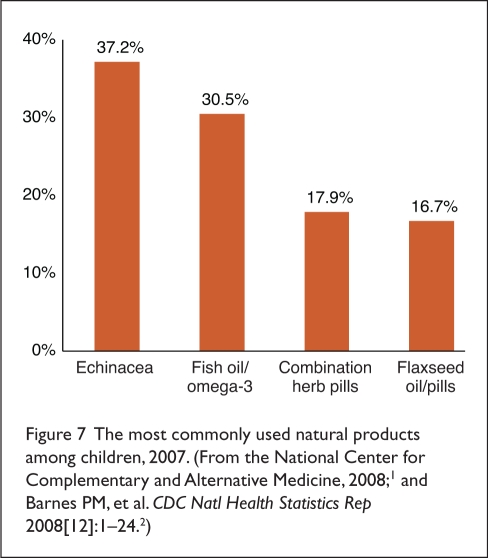
The most commonly used natural products among children, 2007. (From the National Center for Complementary and Alternative Medicine, 2008; and Barnes PM, et al. CDC Natl Health Statistics Rep 2008[12]:1–24.2)
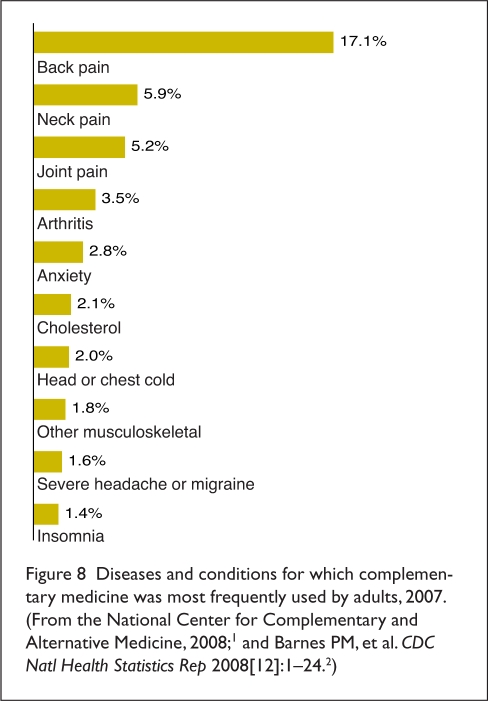
Diseases and conditions for which complementary medicine was most frequently used by adults, 2007. (From the National Center for Complementary and Alternative Medicine, 2008; and Barnes PM, et al. CDC Natl Health Statistics Rep 2008[12]:1–24.2)
References
-
- National Center for Complementary and Alternative Medicine (NCCAM) The Use of Complementary and Alternative Medicine in the United States Bethesda, Md: National Institutes of Health; December2008. Available at: http://nccam.nih.gov/news/camstats/2007/camsurvey_fs1.htm Accessed June 15, 2010.
-
- Barnes PM, Bloom B, Nahin R. Complementary and alternative medicine use among adults and children: United States, 2007. CDC Natl Health Statistics Rep. 2008;(12):1–24. - PubMed
LinkOut - more resources
Full Text Sources