Cost-related immunosuppressive medication nonadherence among kidney transplant recipients
- PMID: 20847093
- PMCID: PMC2994095
- DOI: 10.2215/CJN.04220510
Cost-related immunosuppressive medication nonadherence among kidney transplant recipients
Abstract
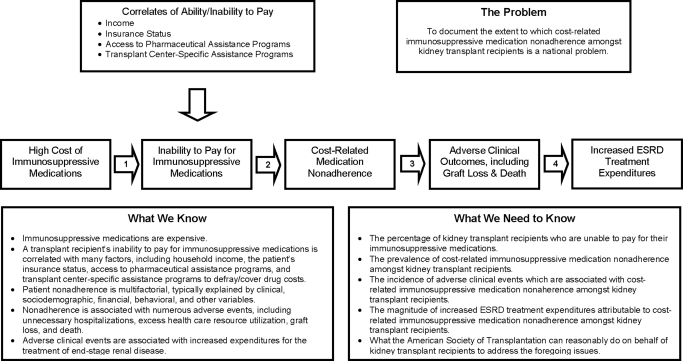
Background and objectives: Immunosuppressive medications are essential in preventing kidney transplant rejection. Continuous insurance coverage for outpatient immunosuppressive medications remains a major issue. The objective of this study was to establish the prevalence and consequences of cost-related immunosuppressive medication nonadherence.
Design, setting, participants, & measurements: A descriptive survey of all U.S. kidney transplant programs (n = 254) was conducted. The response rate for the survey exceeded 99%. The main outcome measures included the following: transplant recipient concerns related to medication costs, ability to pay for medications, medication nonadherence and its consequences, and failure of transplant centers to place patients on the transplant waiting list.
Results: Continuous insurance coverage for outpatient immunosuppressive drugs is a problem having potentially grave consequences for the majority of kidney transplant recipients. More than 70% of kidney transplant programs report that their patients have an extremely or very serious problem paying for their medications. About 47% of the programs indicate that more than 40% of their patients are having difficulty paying for their immunosuppressive medications. In turn, 68% of the programs report deaths and graft losses attributable to cost-related immunosuppressive medication nonadherence. Some of the problems identified here are more significant for adult than pediatric patients.
Conclusions: The prevalence and consequences of cost-related immunosuppressive medication nonadherence among kidney transplant recipients have now been documented. The results presented here should serve as the necessary impetus for the development of health care policies supporting Medicare coverage of immunosuppressive medications for the life of the transplanted kidney.
Figures
References
-
- Task Force on Organ Transplantation: Report to the Secretary and the Congress on Immunosuppressive Therapies. Rockville, MD, Office of Organ Transplantation, Health Resources and Services Administration, Department of Health and Human Services, October 1985
-
- Task Force on Organ Transplantation: Organ Transplantation: Issues and Recommendations. Rockville, MD, Office of Organ Transplantation, Health Resources and Services Administration, Department of Health and Human Services, April 1986
-
- Kolata G: Drug transforms transplant medicine. Science 221: 40–42, 1983 - PubMed
-
- Macek C: Cyclosporine's acceptance heralds new era in immunpharmacology. JAMA 250: 449–455, 1983 - PubMed
-
- Evans RW: Kidney transplantation and cyclosporine. N Engl J Med 311: 127, 1984 - PubMed
MeSH terms
Substances
Grants and funding
LinkOut - more resources
Full Text Sources
Medical