


Older hip fracture patients: three groups with different needs
- PMID: 20849652
- PMCID: PMC2955032
- DOI: 10.1186/1471-2318-10-65
Older hip fracture patients: three groups with different needs
Abstract
Background: Norway, and particularly Oslo, has the highest reported incidence of hip fractures in the world. It is increasingly common to care for older hip fracture patients in orthogeriatric units where orthopaedic care is combined with interdisciplinary geriatric care. The characteristics and needs of older hip fracture patients are poorly described. The aim of this paper is to describe the characteristics of these patients in order to better understand their need for care and rehabilitation.
Methods: This is an observational study based on a quality register for all patients 65+ years in an orthogeriatric unit who are operated for a hip fracture. The unit covers 250,000 inhabitants in Oslo. Patient data were collected in the aim of quality control. The quality database includes demographic, medical, and functional data collected from routine assessment by the interdisciplinary team.
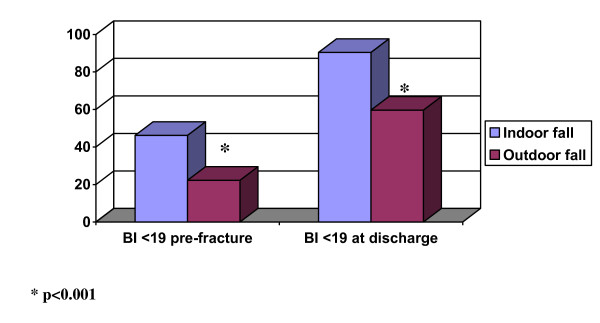
Results: From January 2007 to September 2009, 1010 patients, included 241 (24%) from long-term care institutions, were enrolled in the database. Mean age was 85.1 years (SD 7.1), 76% were female, and 83% had experienced an indoor fall. Chronic diseases were registered in 88%, and 38% of the community-dwelling patients had pre-fracture cognitive impairment defined as IQCODE-SF > 3.6. Complications were observed in 51% of the patients, of which the most common were a need for blood transfusion, delirium, and urinary tract infections. Post-operative orthopaedic infections were rare (3.1%). Patients from long-term care were older, (87 vs. 84 years, p < 0.001), more had American Society of Anaesthesiologists (ASA) score >/= 3 (67% vs. 48%, p < 0.001) and a higher number of chronic medical conditions (mean 2.2 vs. 1.6, p < 0.001). Among community-dwelling patients, those who had fallen indoors were older, more often female, had ASA score >/= 3, chronic medical conditions, impairment in pre-fracture ADL and cognitive function, and more complications during hospital stay.
Conclusions: Older hip fracture patients in this orthogeriatric unit may be divided into three groups; patients who are relatively fit and have experienced outdoors falls (17%), frail community-dwelling patients who have fallen indoors (59%), and patients from long-term care institutions (24%). Different caring pathways are needed for these groups.
Figures
References
-
- Ministry of Health and Care Services. Stortingsmelding nr.43 (1999-2000). Om akuttmedisinsk beredskap. Det Kongelige Sosial- og Helsedepartement. 2000.
-
- Handoll HH, Cameron ID, Mak JC, Finnegan TP. Multidisciplinary rehabilitation for older people with hip fractures. Cochrane Database Syst Rev. 2009;7(4):CD007125. - PubMed
-
- Lundström M, Edlund A, Lundström G, Gustafson Y. Reorganization of nursing and medical care to reduce the incidence of postoperative delirium and improve rehabilitation outcome in elderly patients treated for femoral neck fractures. Scand J Caring Sci. 1999;13:193–200. doi: 10.1080/02839319950162561. - DOI - PubMed
-
- Stenvall M, Olofsson B, Nyberg L, Lundström M, Gustafson Y. Improved performance in activities of daily living and mobility after a multidisclipinary postoperative rehabilitation in older people with femoral neck fracture: A randomized controlled trial with 1-year follow up. J Rehabil Med. 2007;39:232–238. doi: 10.2340/16501977-0045. - DOI - PubMed
Publication types
MeSH terms
LinkOut - more resources
Full Text Sources
Medical
