


Central carbon metabolism of Plasmodium parasites
- PMID: 20849882
- PMCID: PMC3004993
- DOI: 10.1016/j.molbiopara.2010.09.001
Central carbon metabolism of Plasmodium parasites
Abstract
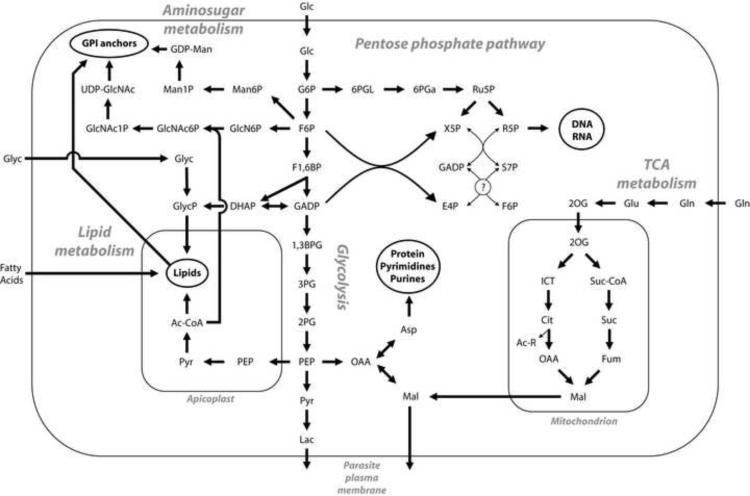
The central role of metabolic perturbation to the pathology of malaria, the promise of antimetabolites as antimalarial drugs and a basic scientific interest in understanding this fascinating example of highly divergent microbial metabolism has spurred a major and concerted research effort towards elucidating the metabolic network of the Plasmodium parasites. Central carbon metabolism, broadly comprising the flow of carbon from nutrients into biomass, has been a particular focus due to clear and early indications that it plays an essential role in this network. Decades of painstaking efforts have significantly clarified our understanding of these pathways of carbon flux, and this foundational knowledge, coupled with the advent of advanced analytical technologies, have set the stage for the development of a holistic, network-level model of plasmodial carbon metabolism. In this review we summarize the current state of knowledge regarding central carbon metabolism and suggest future avenues of research. We focus primarily on the blood stages of Plasmodium falciparum, the most lethal of the human malaria parasites, but also integrate results from simian, avian and rodent models of malaria that were a major focus of early investigations into plasmodial metabolism.
Copyright © 2010 Elsevier B.V. All rights reserved.
Figures
References
-
- Scheibel LW, Pflaum WK. Carbohydrate metabolism in Plasmodium knowlesi. Comparative biochemistry and physiology. 1970;37:543.
-
- Sherman IW, Ruble JA, Ting IP. Plasmodium lophurae: (U-14C)-glucose catabolism by free Plasmodia and duckling host erythrocytes. Exp Parasitol. 1969;25:181–92. - PubMed
-
- Shakespeare PG, Trigg PI, Kyd SI, Tappenden L. Glucose metabolism in the simian malaria parasite Plasmodium knowlesi: activities of the glycolytic and pentose phosphate pathways during the intraerythrocytic cycle. Ann Trop Med Parasitol. 1979;73:407–15. - PubMed
-
- Rock RC. Incorporation of 14 C-labelled fatty acids into lipids of rhesus erythrocytes and Plasmodium knowlesi in vitro. Comp Biochem Physiol B. 1971;40:893–906. - PubMed
-
- Rock RC. Incorporation of 14 C-labelled non-lipid precursors into lipid of Plasmodium knowlesi in vitro. Comp Biochem Physiol B. 1971;40:657–69. - PubMed
Publication types
MeSH terms
Substances
Grants and funding
LinkOut - more resources
Full Text Sources
Other Literature Sources
