


PERK in beta cell biology and insulin biogenesis
- PMID: 20850340
- PMCID: PMC2991375
- DOI: 10.1016/j.tem.2010.08.005
PERK in beta cell biology and insulin biogenesis
Abstract
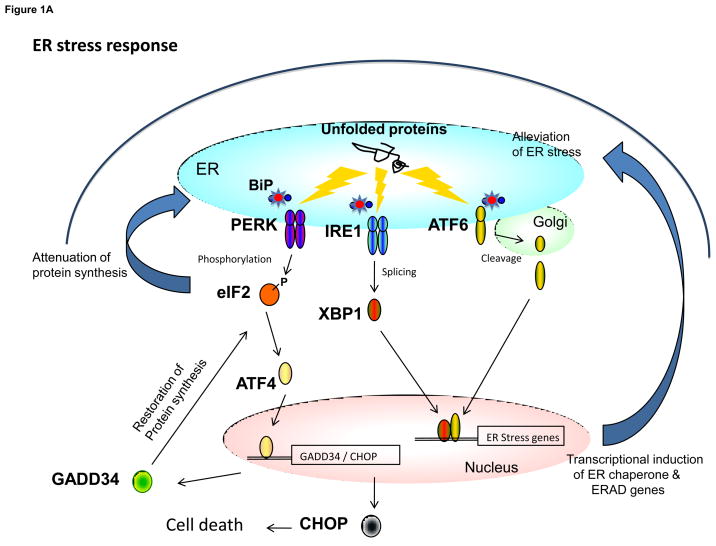
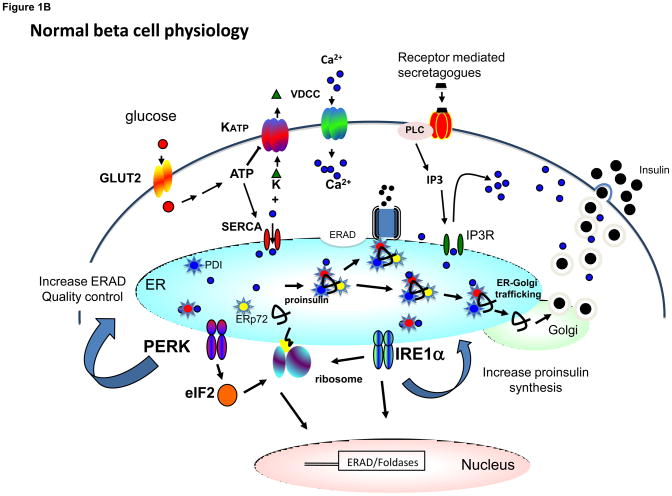
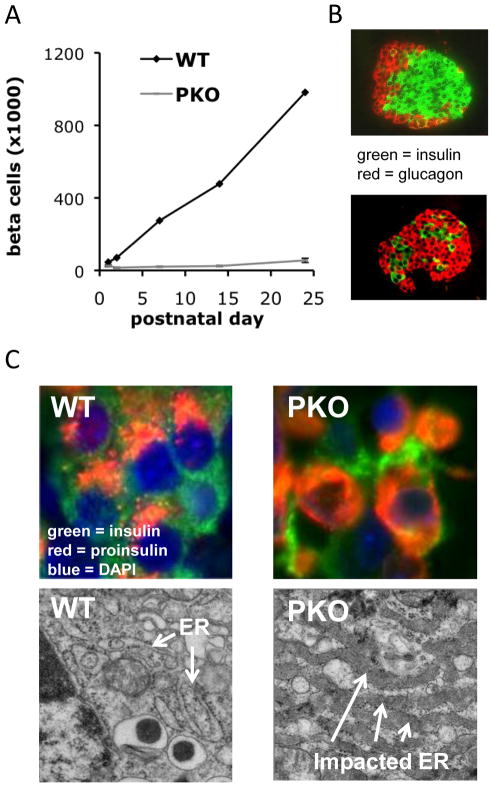
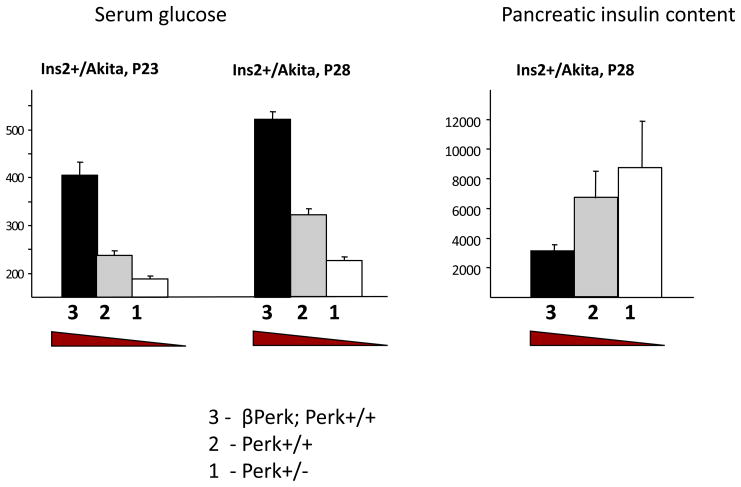
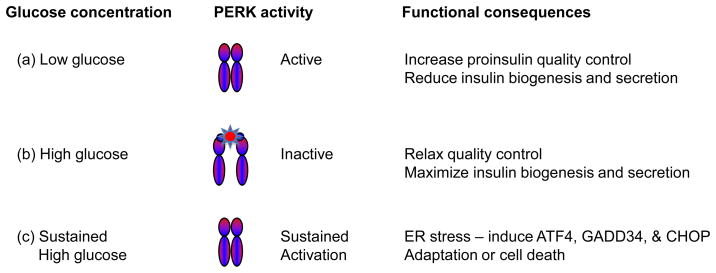
PERK (EIF2AK3) was originally discovered as a major component of the unfolded protein response (UPR). PERK deficiency results in permanent neonatal diabetes, which was initially thought to be caused by a failure to regulate ER stress in insulin-secreting beta cells, culminating in beta cell death. However, subsequent studies found that low beta cell mass was a result of reduced cell proliferation, rather than increased apoptosis. Genetic and cellular studies of Perk-deficient beta cells showed that PERK was crucially required for ER functions including proinsulin trafficking and quality control, unrelated to the ER stress pathway. Under normal physiological conditions, changes in ER calcium levels, mediated by glucose and other insulin secretagogues, regulate PERK activity for the purpose of controlling insulin biogenesis.
Copyright © 2010 Elsevier Ltd. All rights reserved.
Figures
References
-
- Munro S, Pelham HR. An Hsp70-like protein in the ER: identity with the 78 kd glucose-regulated protein and immunoglobulin heavy chain binding protein. Cell. 1986;46:291–300. - PubMed
-
- Welch WJ, Garrels JI, Thomas GP, Lin JJ, Feramisco JR. Biochemical characterization of the mammalian stress proteins and identification of two stress proteins as glucose- and Ca2+-ionophore-regulated proteins. J Biol Chem. 1983;258:7102–7111. - PubMed
Publication types
MeSH terms
Substances
Grants and funding
LinkOut - more resources
Full Text Sources
Other Literature Sources
Medical
