Social cognitive mediators of adolescent smoking cessation: results from a large randomized intervention trial
- PMID: 20853929
- PMCID: PMC2975668
- DOI: 10.1037/a0019800
Social cognitive mediators of adolescent smoking cessation: results from a large randomized intervention trial
Abstract
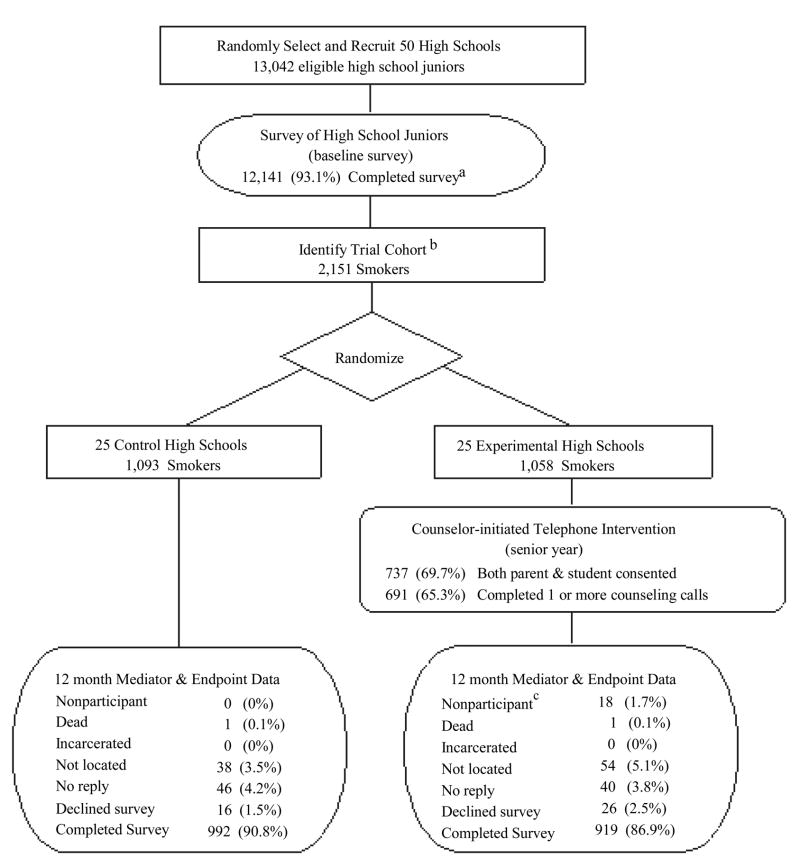
Only one prior study has examined why adolescent smoking cessation interventions are effective. To address this understudied and important issue, we examined whether a large adolescent smoking cessation intervention trial's outcomes were mediated by social cognitive theory processes. In a randomized trial (N = 2,151), counselors proactively delivered a telephone intervention to senior year high school smokers. Mediators and smoking status were self-reported at 12-months postintervention eligibility (88.8% retention). At least 6-months abstinence was the outcome. Among all enrolled smokers, increased self-efficacy to resist smoking in (a) social and (b) stressful situations together statistically mediated 55.6% of the intervention's effect on smoking cessation (p < .001). Among baseline daily smokers, increased self-efficacy to resist smoking in stressful situations statistically mediated 56.9% of the intervention's effect (p < .001). Self-efficacy to resist smoking is a possible mediator of the intervention's effect on smoking cessation.
Figures
References
-
- Baer JS, Kivlahan DR, Donovan DM. Integrating skills training and motivational therapies. Implications for the treatment of substance dependence. Journal of Substance Abuse Treatment. 1999;17(1–2):15–23. - PubMed
-
- Bandura A. Social Foundations of Thought and Action: A Social Cognitive Theory. Englewood Cliffs, NJ: Prentice-Hall; 1986.
-
- Baron RM, Kenny DA. The moderator-mediator variable distinction in social psychological research: Conceptual, strategic and statistical considerations. Journal of Personality and Social Psychology. 1986;51:1173–1182. - PubMed
-
- Centers for Disease Control and Prevention. Youth risk behavior surveillance-United States, 2007. MMWR Morbidity &Mortality Weekly Report. 2008;57(SS-4):11–14. 37–38, 61–66. - PubMed