


Reference values for B cell subpopulations from infancy to adulthood
- PMID: 20854328
- PMCID: PMC2996594
- DOI: 10.1111/j.1365-2249.2010.04206.x
Reference values for B cell subpopulations from infancy to adulthood
Abstract
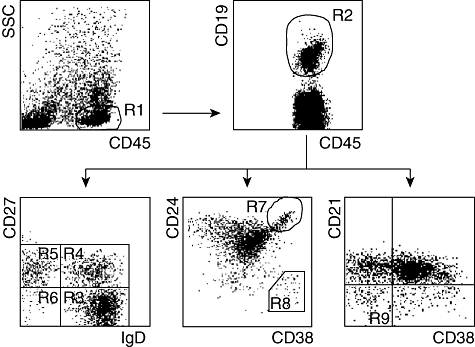
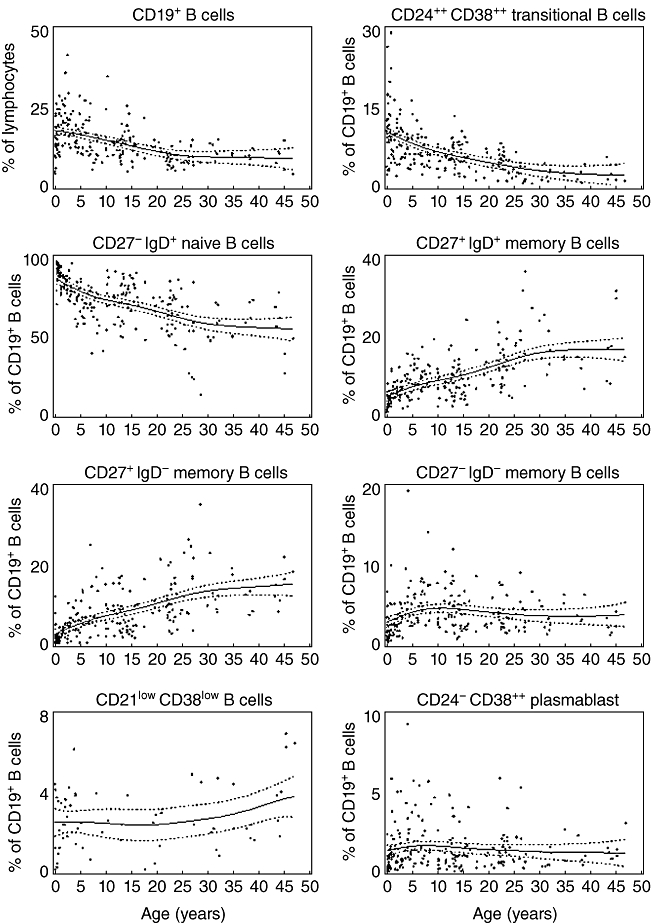
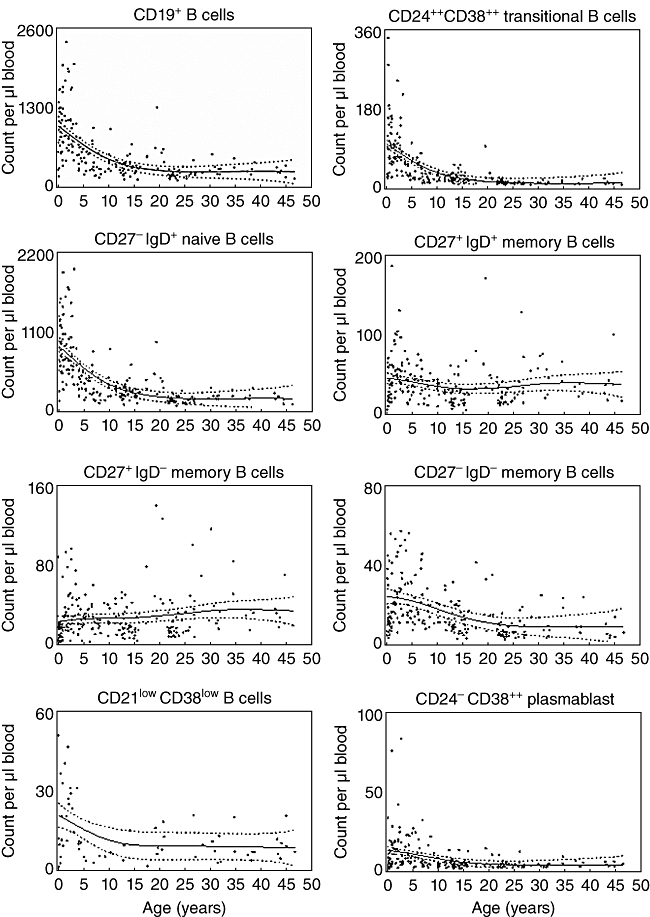
The composition of the peripheral blood lymphocyte compartment underlies developmental changes during ontogeny. Recently, several new B cell populations have been characterized which were suggested to develop in an age-dependent manner. However, age-dependent reference values for distinct B cell populations have rarely been reported. Therefore, we have characterized developmental changes in peripheral B cell populations from infancy to adulthood in order to define age-dependent reference values. Using a flow cytometric approach we analysed the frequencies as well as the absolute counts of naive, switched and non-switched memory B cells, CD27-negative memory B cells, transitional B cells as well as CD21(low) CD38(low) B cells from neonates up to the age of 50 years. Most of the B cell subsets showed age-dependent developmental changes: while the peripheral B cell pool during infancy is characterized predominantly by transitional and naive B cells, the fraction of switched and non-switched memory B cells increases gradually with age. CD21(low) CD38(low) B cells as well as plasmablasts do not exhibit developmental changes. In summary, we could demonstrate particular changes in the peripheral blood B cell compartment during ontogeny. This study provides reference values of different B cell subpopulations offering comparability for studies addressing disturbed peripheral B cell development in immunodeficiency, autoimmunity or B cell reconstitution following cell-depleting therapies.
© 2010 The Authors; Clinical and Experimental Immunology © 2010 British Society for Immunology.
Figures
References
-
- Conley ME, Dobbs AK, Farmer DM, et al. Primary B cell immunodeficiencies: comparisons and contrasts. Annu Rev Immunol. 2009;27:199–227. - PubMed
-
- Yanaba K, Bouaziz JD, Matsushita T, Magro CM, St Clair EW, Tedder TF. B-lymphocyte contributions to human autoimmune disease. Immunol Rev. 2008;223:284–99. - PubMed
-
- Manz RA, Hauser AE, Hiepe F, Radbruch A. Maintenance of serum antibody levels. Annu Rev Immunol. 2005;23:367–86. - PubMed
Publication types
MeSH terms
Substances
LinkOut - more resources
Full Text Sources
Other Literature Sources
Medical
Research Materials
Miscellaneous
