


Milnacipran: a unique antidepressant?
- PMID: 20856597
- PMCID: PMC2938282
- DOI: 10.2147/NDT.S11777
Milnacipran: a unique antidepressant?
Abstract
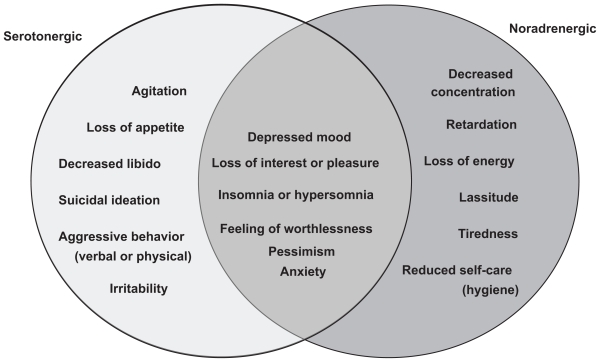
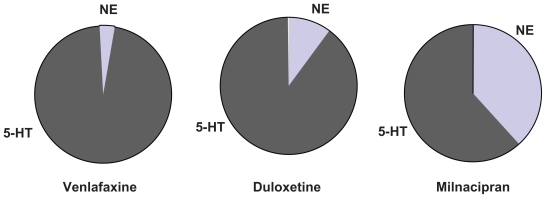
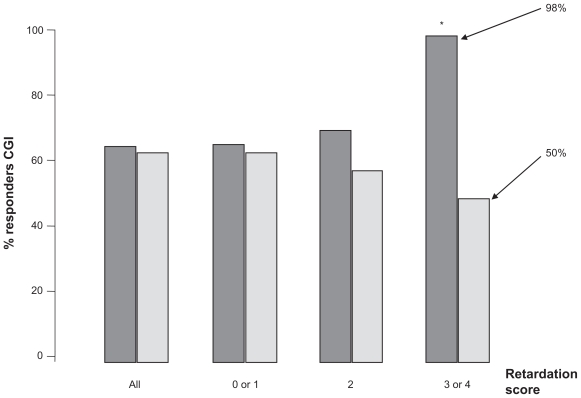
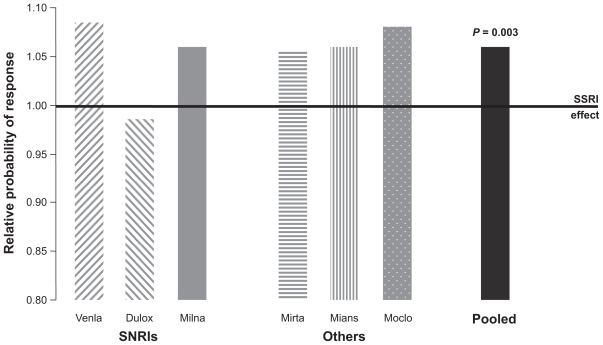
Tricyclic antidepressants (TCAs) are among the most effective antidepressants available, although their poor tolerance at usual recommended doses and toxicity in overdose make them difficult to use. While selective serotonin reuptake inhibitors (SSRIs) are better tolerated than TCAs, they have their own specific problems, such as the aggravation of sexual dysfunction, interaction with coadministered drugs, and for many, a discontinuation syndrome. In addition, some of them appear to be less effective than TCAs in more severely depressed patients. Increasing evidence of the importance of norepinephrine in the etiology of depression has led to the development of a new generation of antidepressants, the serotonin and norepinephrine reuptake inhibitors (SNRIs). Milnacipran, one of the pioneer SNRIs, was designed from theoretic considerations to be more effective than SSRIs and better tolerated than TCAs, and with a simple pharmacokinetic profile. Milnacipran has the most balanced potency ratio for reuptake inhibition of the two neurotransmitters compared with other SNRIs (1:1.6 for milnacipran, 1:10 for duloxetine, and 1:30 for venlafaxine), and in some studies milnacipran has been shown to inhibit norepinephrine uptake with greater potency than serotonin (2.2:1). Clinical studies have shown that milnacipran has efficacy comparable with the TCAs and is superior to SSRIs in severe depression. In addition, milnacipran is well tolerated, with a low potential for pharmacokinetic drug-drug interactions. Milnacipran is a first-line therapy suitable for most depressed patients. It is frequently successful when other treatments fail for reasons of efficacy or tolerability.
Keywords: SNRI; antidepressant efficacy; milnacipran; tolerability.
Figures
References
-
- Bauer M, Bschor T, Pfennig A, et al. World Federation of Societies of Biological Psychiatry (WFSBP) Guidelines for Biological Treatment of Unipolar Depressive Disorders in Primary Care. World J Biol Psychiatry. 2007;8(2):67–104. - PubMed
-
- Nutt DJ. Relationship of neurotransmitters to the symptoms of major depressive disorder. J Clin Psychiatry. 2008;69(Suppl E1):4–7. - PubMed
-
- Kasper S, Zohar J, Stein DJ, editors. Decision-Making in Psychopharmacology. London: Martin Dunitz; 2002.
-
- Koenig AM, Thase ME. First-line pharmacotherapies for depression – what is the best choice. Pol Arch Med Wewn. 2009;119:7–8. 478–486. - PubMed
LinkOut - more resources
Full Text Sources
