


Comparative genome analysis reveals an absence of leucine-rich repeat pattern-recognition receptor proteins in the kingdom Fungi
- PMID: 20856863
- PMCID: PMC2939053
- DOI: 10.1371/journal.pone.0012725
Comparative genome analysis reveals an absence of leucine-rich repeat pattern-recognition receptor proteins in the kingdom Fungi
Abstract
Background: In plants and animals innate immunity is the first line of defence against attack by microbial pathogens. Specific molecular features of bacteria and fungi are recognised by pattern recognition receptors that have extracellular domains containing leucine rich repeats. Recognition of microbes by these receptors induces defence responses that protect hosts against potential microbial attack.
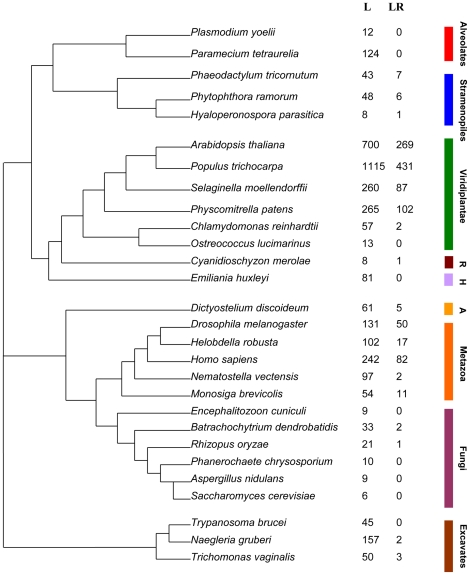
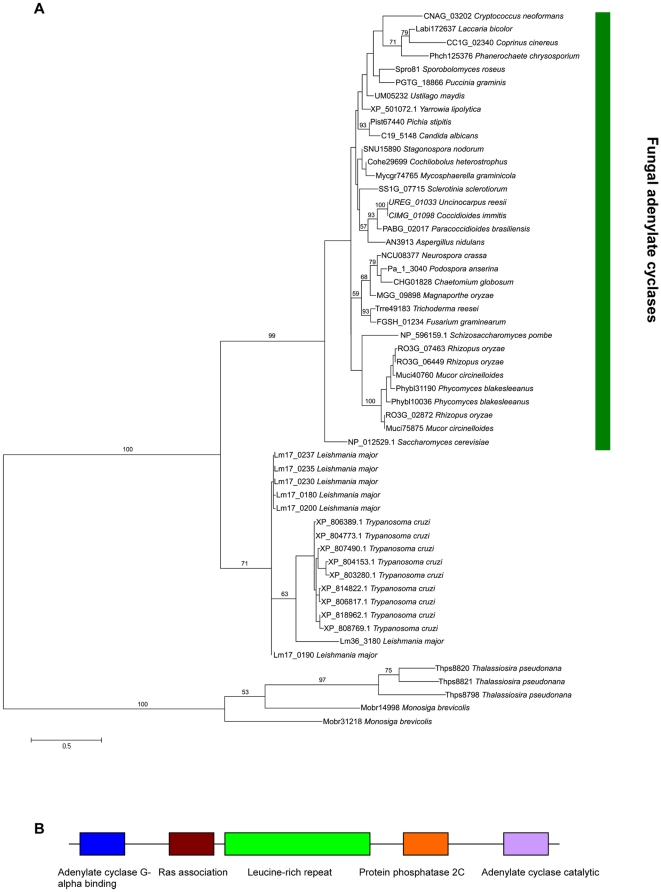
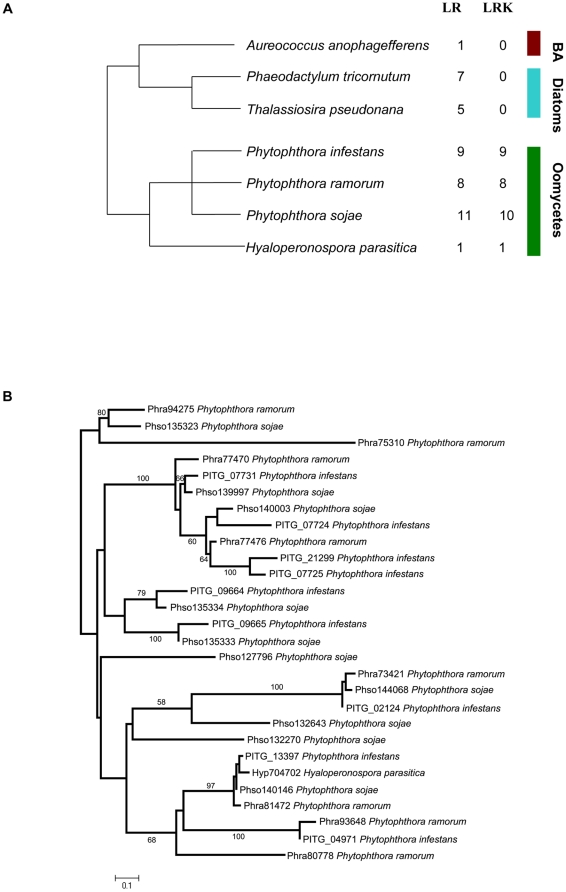
Methodology/principal findings: A survey of genome sequences from 101 species, representing a broad cross-section of the eukaryotic phylogenetic tree, reveals an absence of leucine rich repeat-domain containing receptors in the fungal kingdom. Uniquely, however, fungi possess adenylate cyclases that contain distinct leucine rich repeat-domains, which have been demonstrated to act as an alternative means of perceiving the presence of bacteria by at least one fungal species. Interestingly, the morphologically similar osmotrophic oomycetes, which are taxonomically distant members of the stramenopiles, possess pattern recognition receptors with similar domain structures to those found in plants.
Conclusions: The absence of pattern recognition receptors suggests that fungi may possess novel classes of pattern-recognition receptor, such as the modified adenylate cyclase, or instead rely on secretion of anti-microbial secondary metabolites for protection from microbial attack. The absence of pattern recognition receptors in fungi, coupled with their abundance in oomycetes, suggests this may be a unique characteristic of the fungal kingdom rather than a consequence of the osmotrophic growth form.
Conflict of interest statement
Figures
References
-
- Nürnberger T, Brunner F, Kemmerling B, Piater L. Innate immunity in plants and animals: striking similarities and obvious differences. Immunol Rev. 2004;198:249–266. - PubMed
-
- Zipfel C, Felix G. Plants and animals: a different taste for microbes? Curr Opin Plant Biol. 2005;8:353–360. - PubMed
-
- Arnold DL, Jackson RW, Waterfield NR, Mansfield JW. Evolution of microbial virulence: the benefits of stress. Trends Genet. 2007;23:293–300. - PubMed
-
- Kobe B, Kajava AV. The leucine-rich repeat as a protein recognition motif. Curr Opin Struct Biol. 2001;11:725–732. - PubMed
-
- Takeda K, Akira S. Toll-like receptors in innate immunity. Int Immunol. 2005;17:1–14. - PubMed
Publication types
MeSH terms
Substances
Grants and funding
LinkOut - more resources
Full Text Sources
Medical
