


Impact of repeated four-monthly anthelmintic treatment on Plasmodium infection in preschool children: a double-blind placebo-controlled randomized trial
- PMID: 20858280
- PMCID: PMC3161357
- DOI: 10.1186/1471-2334-10-277
Impact of repeated four-monthly anthelmintic treatment on Plasmodium infection in preschool children: a double-blind placebo-controlled randomized trial
Abstract
Background: Helminth infections can alter susceptibility to malaria. Studies need to determine whether or not deworming programs can impact on Plasmodium infections in preschool children.
Methods: A double-blind placebo-controlled randomised trial was conducted to investigate the impact of anthelmintic treatment on Plasmodium infection in children aged 12-59 months. Children were randomly assigned to receive either albendazole or placebo every four months for 12 months with a follow-up at 14 months.
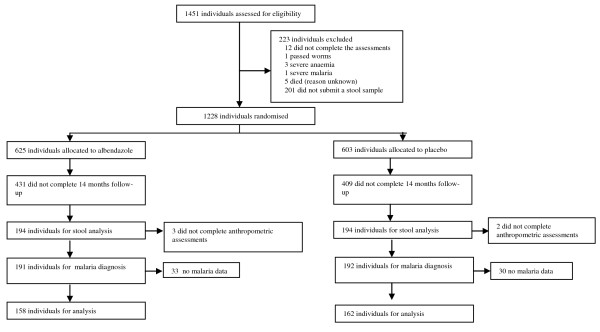
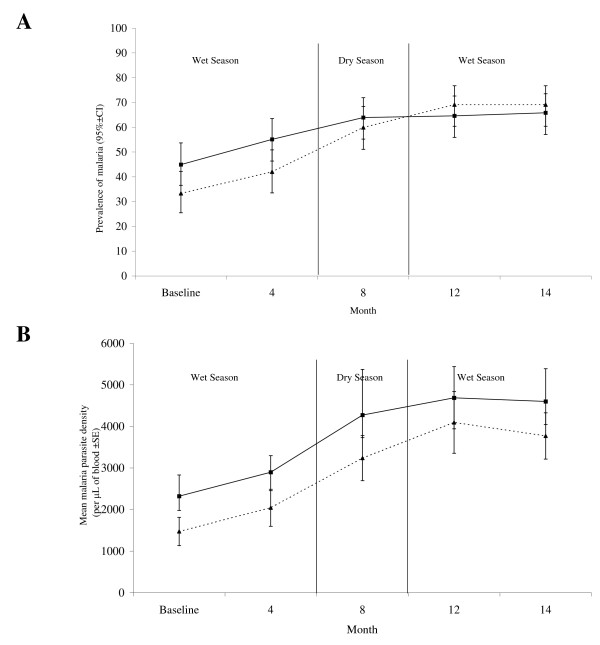
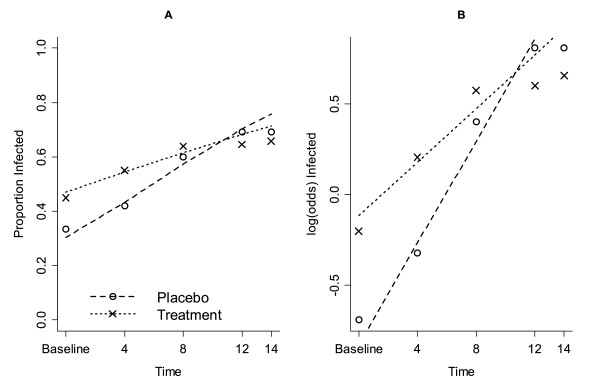
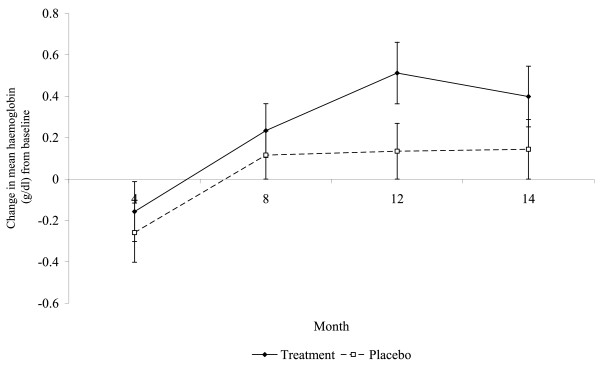
Results: 320 Children (out of 1228, 26.1%) complied with all the follow-up assessments. Plasmodium prevalence and mean Plasmodium parasite density was significantly higher in the treatment group (44.9% and 2319 ± SE 511) compared to the placebo group (33.3% and 1471 ± 341) at baseline. The odds of having Plasmodium infection increased over time for children in both the placebo and treatment groups, however this increase was significantly slower for children in the treatment group (P = 0.002). By month 14, mean Plasmodium density had increased by 156% in the placebo group and 98% in the treatment group but the rate of change in Plasmodium density was not significantly different between the groups. The change from baseline in haemoglobin had a steeper increase among children in the treatment group when compared to the placebo group but this was not statistically significant.
Conclusions: Repeated four-monthly anthelminthic treatments for 14 months resulted in a significantly lower increase in the prevalence of Plasmodium infection in preschool children which coincided with a reduction in both the prevalence and intensity of A. lumbricoides infections.
Trial registration: Current controlled trials ISRCTN44215995.
Figures
References
-
- Brutus L, Watier L, Briand V, Hanitrasoamampionona V, Razanatsoarilala H, Cot M. Parasitic co-infections: does Ascaris lumbricoides protect against Plasmodium falciparum infection? American Journal of Tropical Medicine and Hygiene. 2006;75(2):194–198. - PubMed
Publication types
MeSH terms
Substances
Associated data
LinkOut - more resources
Full Text Sources
Medical
