


Review
doi: 10.1007/978-3-642-13443-2_6.
Xanthines as adenosine receptor antagonists
Affiliations
- PMID: 20859796
- PMCID: PMC3882893
- DOI: 10.1007/978-3-642-13443-2_6
Item in Clipboard
Review
Xanthines as adenosine receptor antagonists
Handb Exp Pharmacol.
2011.
Abstract
The natural plant alkaloids caffeine and theophylline were the first adenosine receptor (AR) antagonists described in the literature. They exhibit micromolar affinities and are non-selective. A large number of derivatives and analogues were subsequently synthesized and evaluated as AR antagonists. Very potent antagonists have thus been developed with selectivity for each of the four AR subtypes.
Figures
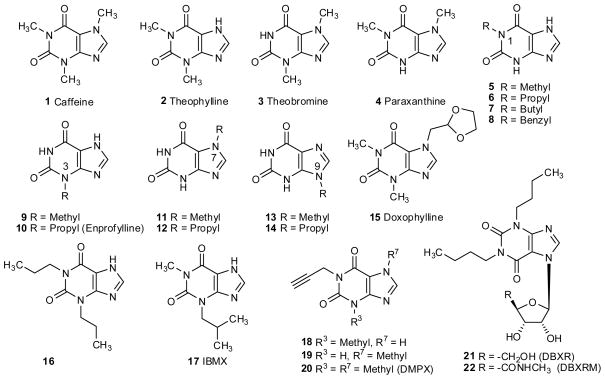
8-Unsubstituted xanthine derivatives
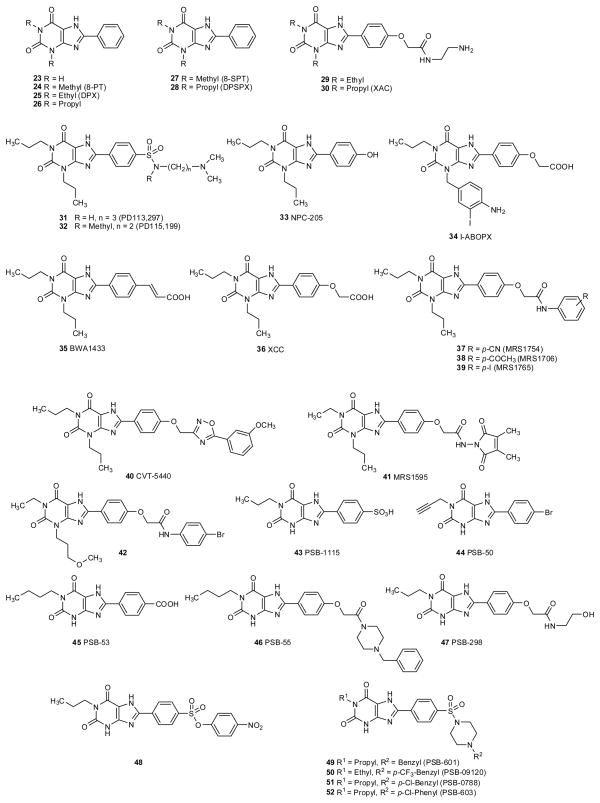
8-Phenyl- and 8-phenylalkyl-substituted xanthines and heteroaromatically substituted derivatives
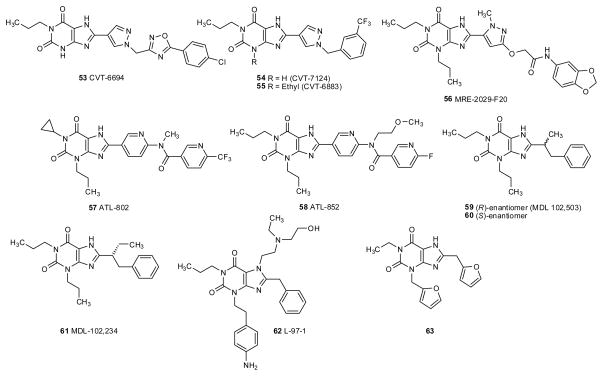
8-Phenyl- and 8-phenylalkyl-substituted xanthines and heteroaromatically substituted derivatives
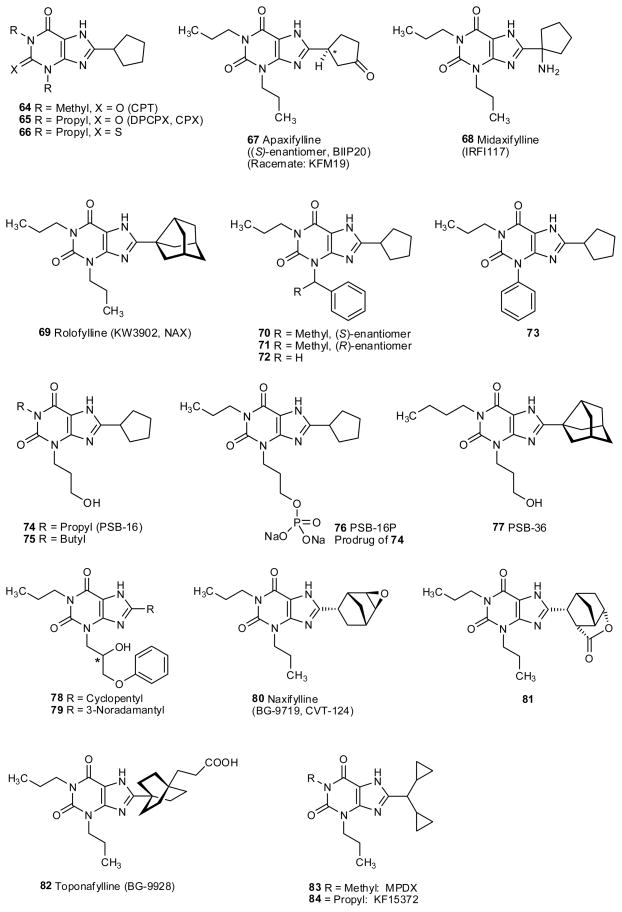
8-Cycloalkylxanthines
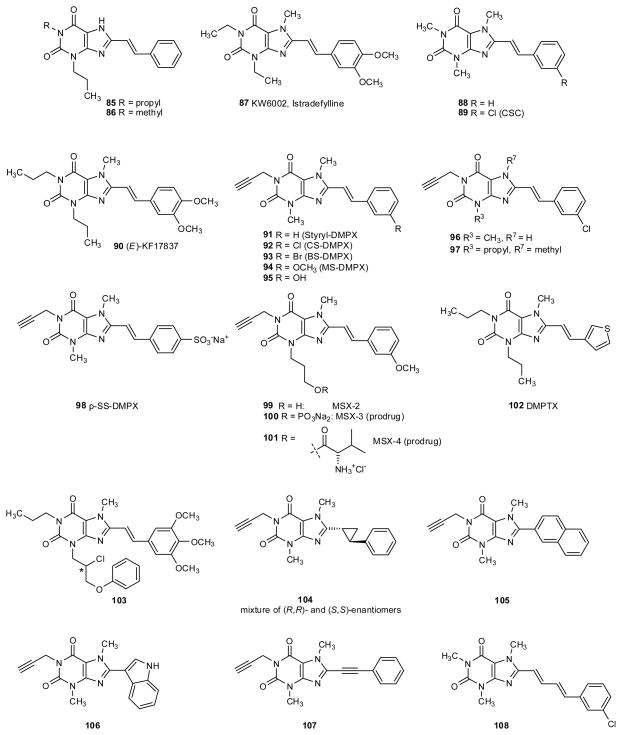
8-Styrylxanthines and configurationally stable analogs
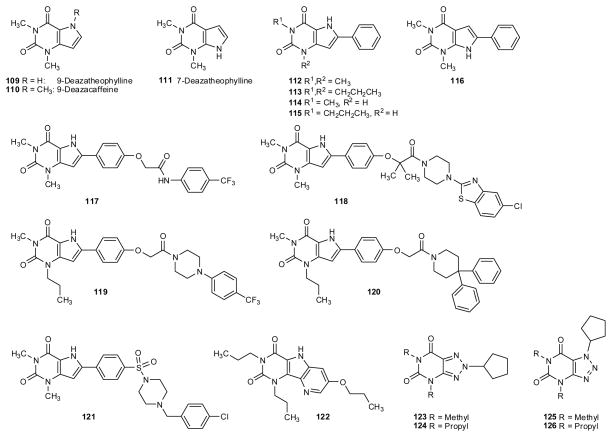
Deazaxanthines and azaxanthines
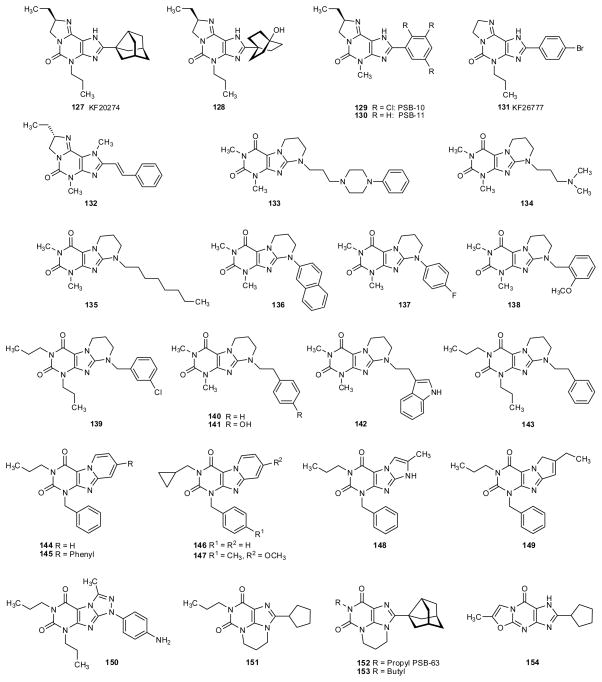
Tricyclic xanthine derivatives
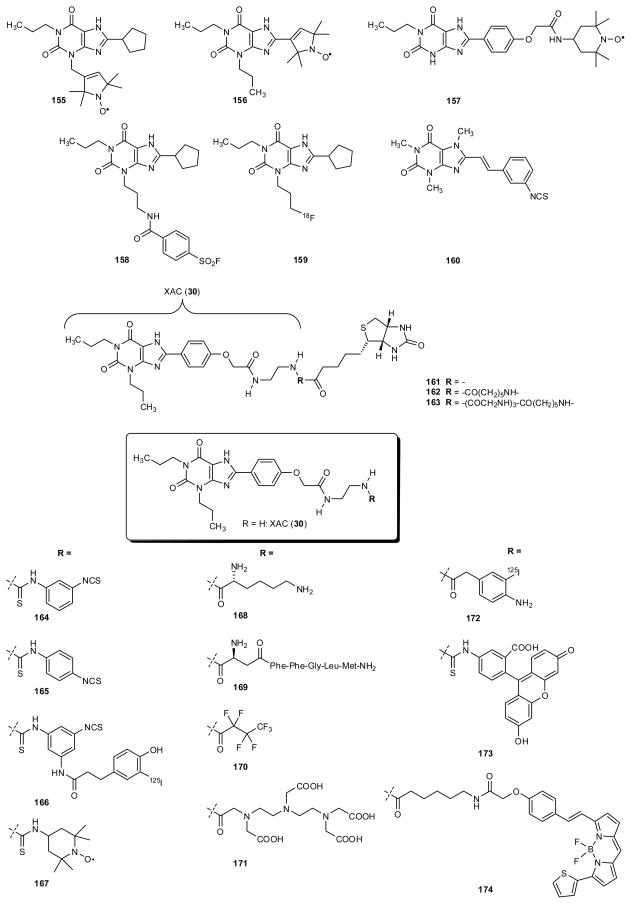
Functionalized xanthines as molecular probes
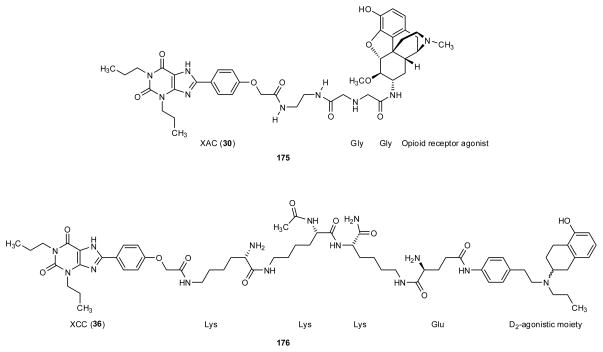
Functionalized xanthines as molecular probes
References
-
- Abo-Salem OM, Hayallah AM, Bilkei-Gorzo A, Filipek B, Zimmer A, Müller CE. Antinociceptive effects of novel A2B adenosine receptor antagonists. J Pharmacol Exp Ther. 2004;308:358–366. - PubMed
-
- Antoniou K, Daifoti-Papadopoulou Z, Hyphantis T, Papathanasiou G, Bekris E, Marselos M, Panlilio L, Müller CE, Goldberg SR, Ferré S. A detailed behavioural analysis of the acute motor effects of caffeine in the rat: involvement of adenosine A1 and A2A receptors. Psychopharmacology. 2005;183:154–162. - PubMed
-
- Akkari R, Burbiel JC, Hockemeyer J, Müller CE. Recent progress in the development of adenosine receptor ligands as antiinflammatory drugs. Curr Top Med Chem. 2006;6:1375–1399. - PubMed
-
- Auchampach JA, Jin X, Wan TC, Caughey GH, Linden J. Canine mast cell adenosine receptors: cloning and expression of the A3 receptor and evidence that degranulation is mediated by the A2B receptor. Mol Pharmacol. 1997;52:846–860. - PubMed
Publication types
MeSH terms
Substances
Grants and funding
LinkOut - more resources
Full Text Sources
Other Literature Sources
Research Materials
