. 2010 Sep 20;5(9):e12799.
doi: 10.1371/journal.pone.0012799.

Altered metabolism and persistent starvation behaviors caused by reduced AMPK function in Drosophila

Affiliations

Altered metabolism and persistent starvation behaviors caused by reduced AMPK function in Drosophila

Erik C Johnson et al. PLoS One. .

Abstract

Organisms must utilize multiple mechanisms to maintain energetic homeostasis in the face of limited nutrient availability. One mechanism involves activation of the heterotrimeric AMP-activated protein kinase (AMPK), a cell-autonomous sensor to energetic changes regulated by ATP to AMP ratios. We examined the phenotypic consequences of reduced AMPK function, both through RNAi knockdown of the gamma subunit (AMPKγ) and through expression of a dominant negative alpha (AMPKα) variant in Drosophila melanogaster. Reduced AMPK signaling leads to hypersensitivity to starvation conditions as measured by lifespan and locomotor activity. Locomotor levels in flies with reduced AMPK function were lower during unstressed conditions, but starvation-induced hyperactivity, an adaptive response to encourage foraging, was significantly higher than in wild type. Unexpectedly, total dietary intake was greater in animals with reduced AMPK function yet total triglyceride levels were lower. AMPK mutant animals displayed starvation-like lipid accumulation patterns in metabolically key liver-like cells, oenocytes, even under fed conditions, consistent with a persistent starved state. Measurements of O(2) consumption reveal that metabolic rates are greater in animals with reduced AMPK function. Lastly, rapamycin treatment tempers the starvation sensitivity and lethality associated with reduced AMPK function. Collectively, these results are consistent with models that AMPK shifts energy usage away from expenditures into a conservation mode during nutrient-limited conditions at a cellular level. The highly conserved AMPK subunits throughout the Metazoa, suggest such findings may provide significant insight for pharmaceutical strategies to manipulate AMPK function in humans.


Conflict of interest statement

Competing Interests: The authors have declared that no competing interests exist.

Figures

Figure 1
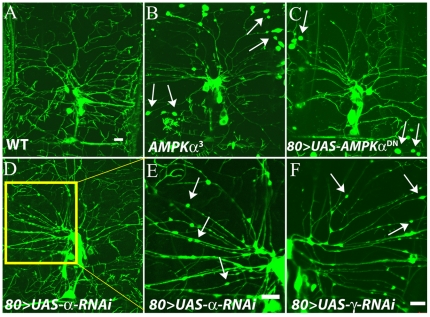
Figure 1. Expressing either dominant negative AMPKα or RNAi targeting αor γ subunits phenocopies a null allele of the AMPK α subunit.
Representative confocal images from animals specifically expressing an actin-GFP construct in class IV multi-dendritic sensory neurons in larval Drosophila, with different levels of AMPK function. (A) Normal dendritic morphology of animals with wild-type AMPK. (B) Dendritic morphology in animals with an AMPKα subunit null mutation (8): note the large varicosities on neuronal dendrites. (C) Animals expressing the dominant negative alpha subunit variant which phenocopies the null mutant, showing the same abnormal varicosities (white arrows). (Scale bar = 10 µm) (D) Animals expressing an RNAi targeting the alpha subunit also phenocopies the null mutant, but with smaller varicosities (E) Inset of D. F. Animals expressing RNAi targeting the gamma subunit also, but more weakly, phenocopies the null mutant (A–E) 22°C (F) 29°C.
Figure 2
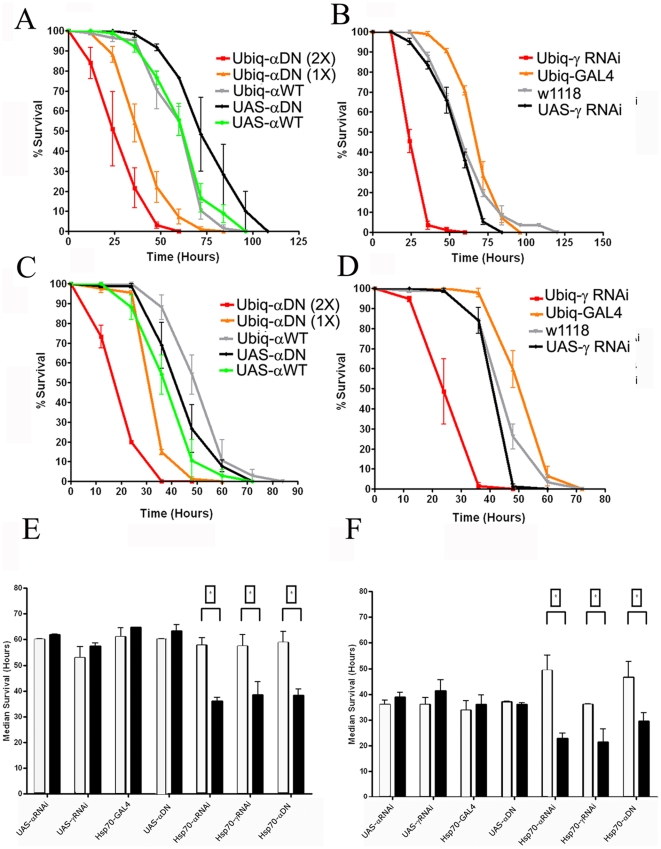
Figure 2. Reduction of AMPK function causes a reduced lifespan under starvation.
Survival curves from adult females (A) and males (C) expressing either one or two copies of the AMPKDN transgenes under the control of the Ubiq-GAL4 driver. Expression of these transgenes reduced lifespan compared to the parental controls or animals expressing a wild-type α subunit. Survival curves of adult females (B) and males (D) expressing an RNAi element targeting the gamma subunit. The lifespan of these animals was significantly shorter than the parental lines or the w1118 genetic background control (p<0.05, ANOVA). (E) Female and (F) male adult induction of the AMPK-interfering transgenes significantly reduces median lifespan (* indicate significant differences between non-induced (unfilled bars) and induced (filled bars) median survival (p<0.05, two-tailed T-test)).
Figure 3
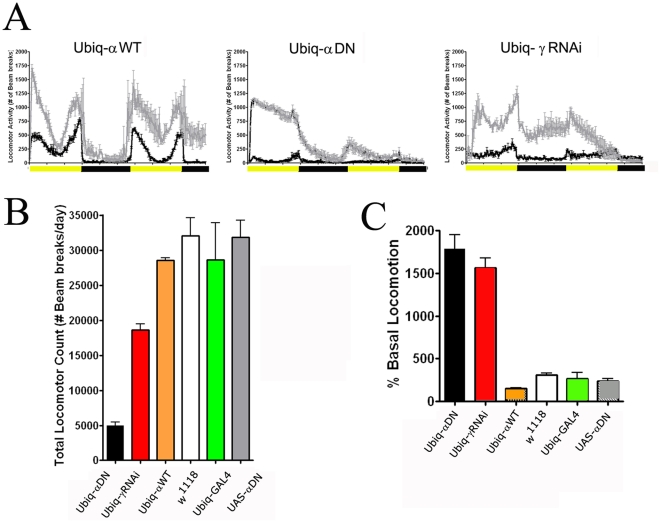
Figure 3. Locomotor activity and starvation-induced hyperactivity is altered as a consequence of reduced AMPK signaling.
Locomotor activity measured during fed (black line) and starved conditions (gray line) in female animals (A) either expressing the wild-type α subunit (left), the dominant negative α transgene (middle), and the γ RNAi element (right) for forty-eight hours. Quantification of total locomotion during fed conditions (B) and the magnitude of starvation-induced hyperactivity (C). Measurements of locomotor activity were initiated at ZT0 (lights on) and flies were maintained in a 12∶12 LD (light-dark) cycle (shaded and dark bars). (B) Expression of either the α dominant negative or the γ RNAi element lead to reduced locomotor activity during the fed state (ANOVA, P<0.05). (C) Both the γ RNAi element and the α dominant negative variant caused greater levels of starvation-induced activity relative to basal locomotion (ANOVA, P<0.05).
Figure 4
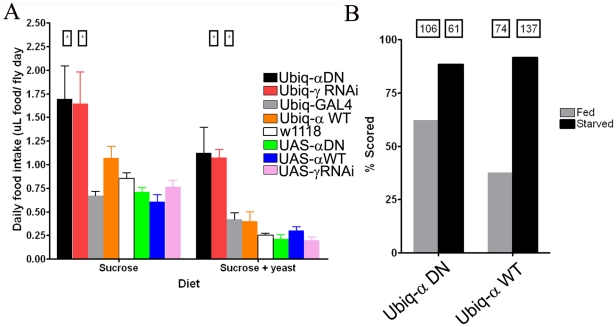
Figure 4. Altered feeding behaviors in animals with decreased AMPK function.
(A) Daily food intake in adult Drosophila with different AMPK functional levels with a sucrose diet (left) or a yeast-sucrose diet (right). Males and females showed no difference in food intake and data was pooled. Six trials consisting of three trials each were measured for one day. Asterisks denote statistical significance (ANOVA, p<0.05) compared to all other genetic controls. (B) Abdominal scoring in animals expressing either a wild-type or the dominant negative alpha subunit following either 12 hours of fed conditions (grey bars) or starvation (black bars). Numbers in boxes represent the total number of flies scored for a particular genotype. Animals were given two hours of exposure to the food with the dye and then anaesthetized and abdomens were scored for blue-dye. A G-test for statistical significance showed no differences in scoring of animals between genotypes under prior starvation conditions (p>0.05), whereas the amount of individuals actively feeding following the fed conditions were different between genotypes (p<0.01).
Figure 5
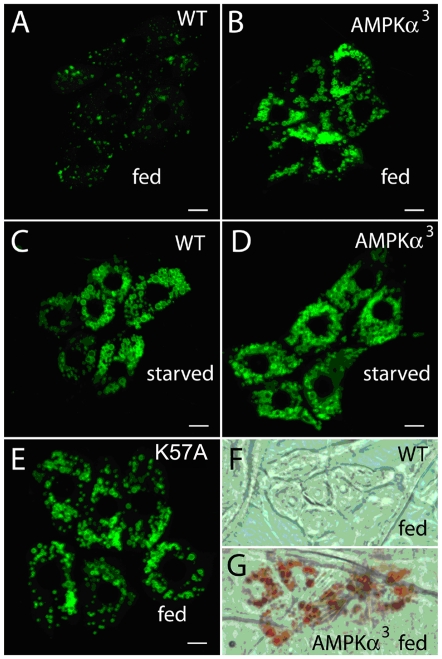
Figure 5. Abnormal lipid accumulation in oenocytes in animals with reduced AMPK.
Oenocytes in the larva are a specialized cell type that functions similar to mammalian liver and accumulates lipids during starvation (13). We introduced a LSD2-GFP fusion to oenocytes to observe the size and quantity of lipids in oenocytes in genetic backgrounds differing in AMPK function. In wild-type animals under fed conditions, the LSD2-GFP labeled lipid droplets were small and not prominent (A), whereas in the starved state, both the size and number of lipid droplets increase (C). In contrast, in AMPKα deficient larvae, there was no difference between the fed and starved states (B and D) and these closely resemble the starved state of wild-type animals. This phenotype was also exhibited in animals expressing the dominant negative AMPK subunit in oenocytes (E). Likewise, the amount of Oil-O red staining was notably absent in wild-type animals during fed conditions (F) but labeled significantly more droplets in animals lacking AMPK function during the fed state (G).
Figure 6
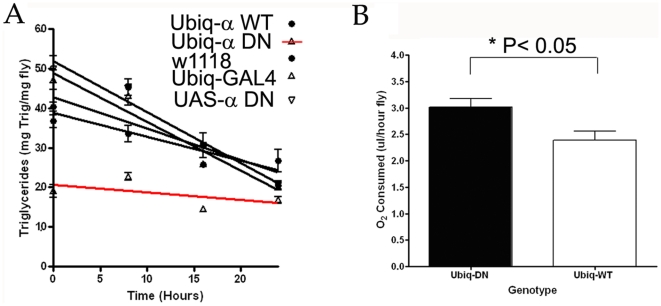
Figure 6. Altered metabolism in animals with reduced AMPK function.
We quantified total triglyceride levels in adult females with different levels of AMPK function (A). Animals expressing the dominant negative construct under the control of the Ubiq-GAL4 driver, show significantly lower triglyceride levels during fed conditions (Time 0). We also tested oxygen consumption in animals expressing either the dominant negative or a wild-type alpha subunit (B). Animals expressing the dominant negative have higher O2 consumption than animals expressing a wild-type alpha subunit.
Figure 7
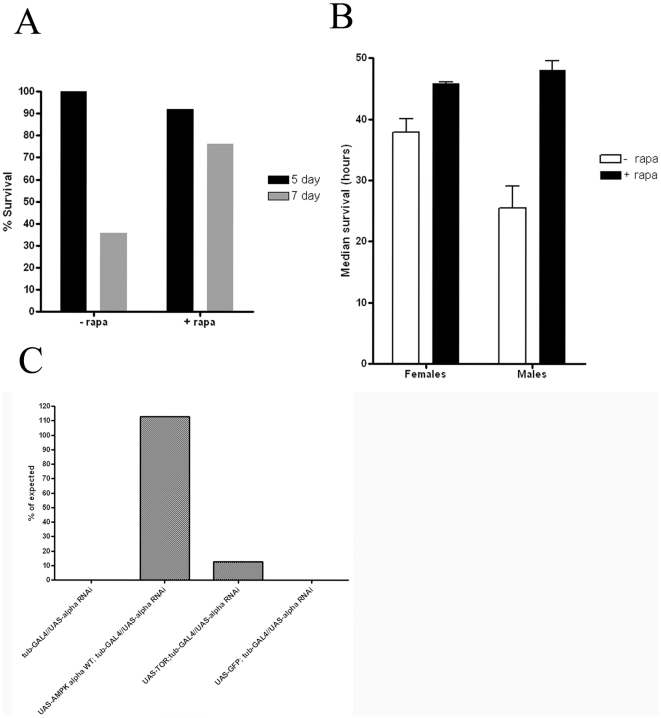
Figure 7. Rapamycin increases survival rates caused by reduced AMPK function.
(A) We fed AMPKα mutant larvae rapamycin and evaluated survival. The majority of the lethal effects of the AMPKα mutation occur during the 5th and 7th day of the third instar. Incorporation of rapamycin reduced this lethality during this timeframe. (B) Likewise, rapamycin feeding for three days prior to starvation improved survival of adult animals expressing the dominant negative variant. (C) Introduction of a TOR dominant negative partially rescues lethality associated with the alpha RNAi.

References

    1. Winder W, Thomson D. Cellular energy sensing and signaling by AMP-activated protein kinase. Cell Biochem Biophys. 2007;47:332–47. - PubMed
    1. Long YC, Zierath JR. AMP-activated protein kinase signaling in metabolic regulation. J Clin Invest. 2006;116:1776–83. - PMC - PubMed
    1. Riek U, Scholz R, Konarev P, Rufer A, Suter M, et al. Structural properties of AMP-activated protein kinase: dimerization, molecular shape, and changes upon ligand binding. J Biol Chem. 2008;283:18331–43. - PubMed
    1. Birk JB, Wojtaszewski JF. Predominant alpha2/beta2/gamma3 AMPK activation during exercise in human skeletal muscle. J Physiol. 2006;577:1021–32. - PMC - PubMed
    1. Pan DA, Hardie DG. A homologue of AMP-activated protein kinase in Drosophila melanogaster is sensitive to AMP and is activated by ATP depletion. Biochem J. 2002;367:179–86. - PMC - PubMed

Publication types

Substances