


Artemisinin‐induced dormancy in plasmodium falciparum: duration, recovery rates, and implications in treatment failure
- PMID: 20863228
- PMCID: PMC2949454
- DOI: 10.1086/656476
Artemisinin‐induced dormancy in plasmodium falciparum: duration, recovery rates, and implications in treatment failure
Abstract
Background: Despite the remarkable activity of artemisinin and its derivatives, monotherapy with these agents has been associated with high rates of recrudescence. The temporary arrest of the growth of ring-stage parasites (dormancy) after exposure to artemisinin drugs provides a plausible explanation for this phenomenon.
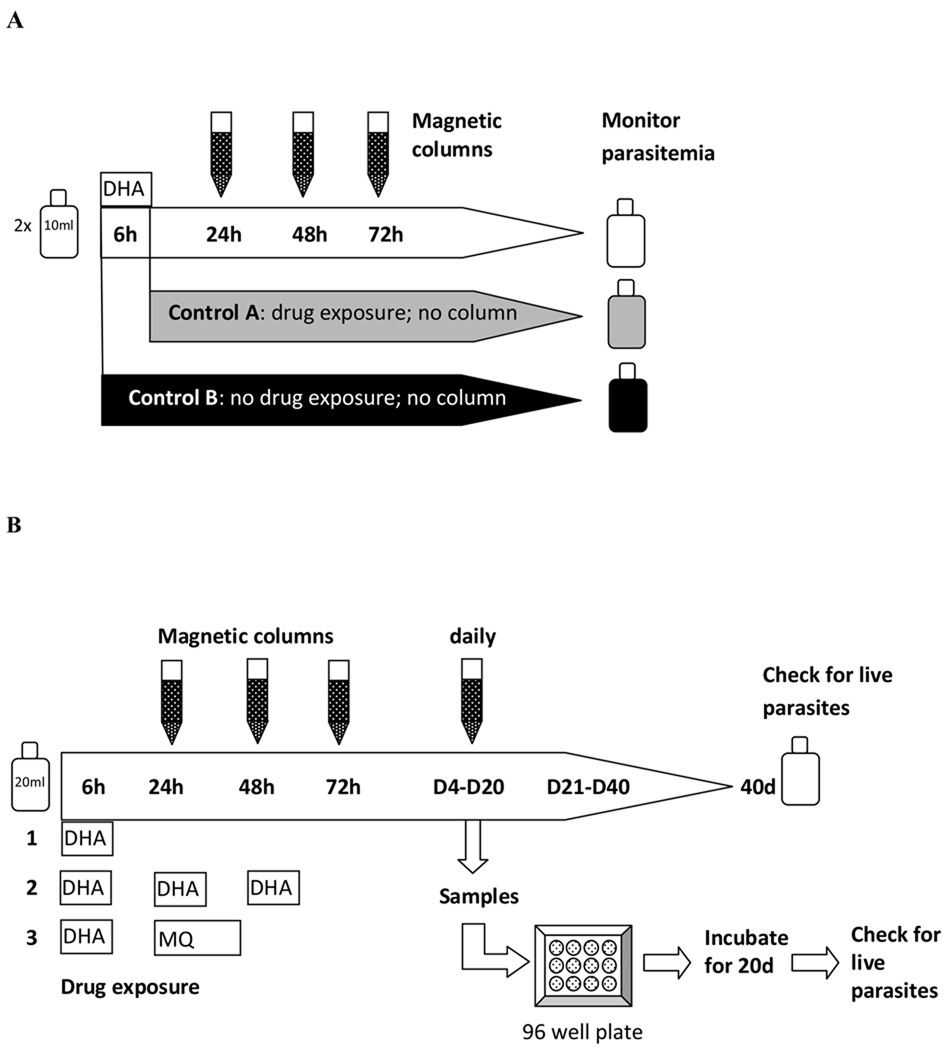
Methods: Ring-stage parasites of several Plasmodium falciparum lines were exposed to different doses of dihydroartemisinin (DHA) alone or in combination with mefloquine. For each regime, the proportion of recovering parasites was determined daily for 20 days.
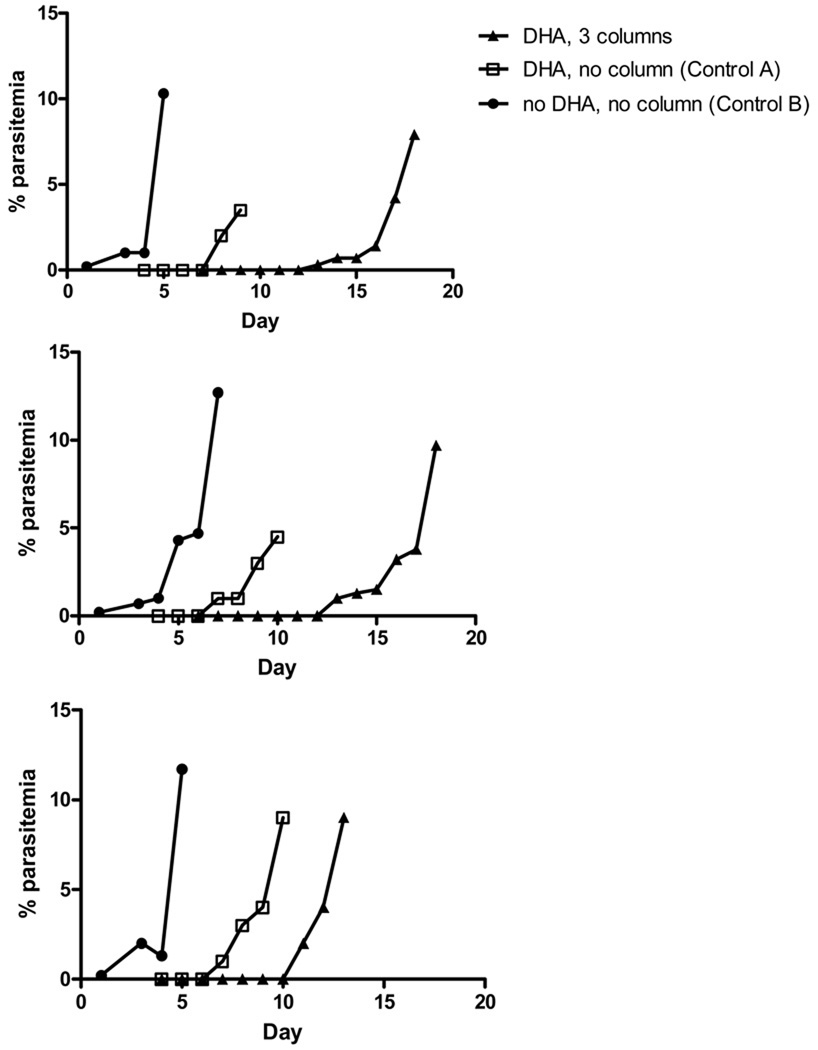
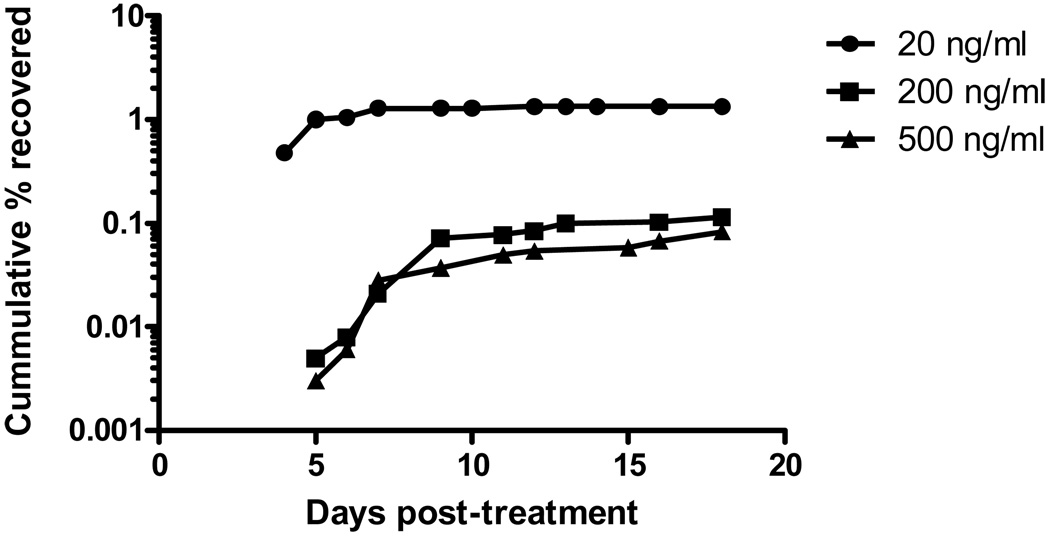
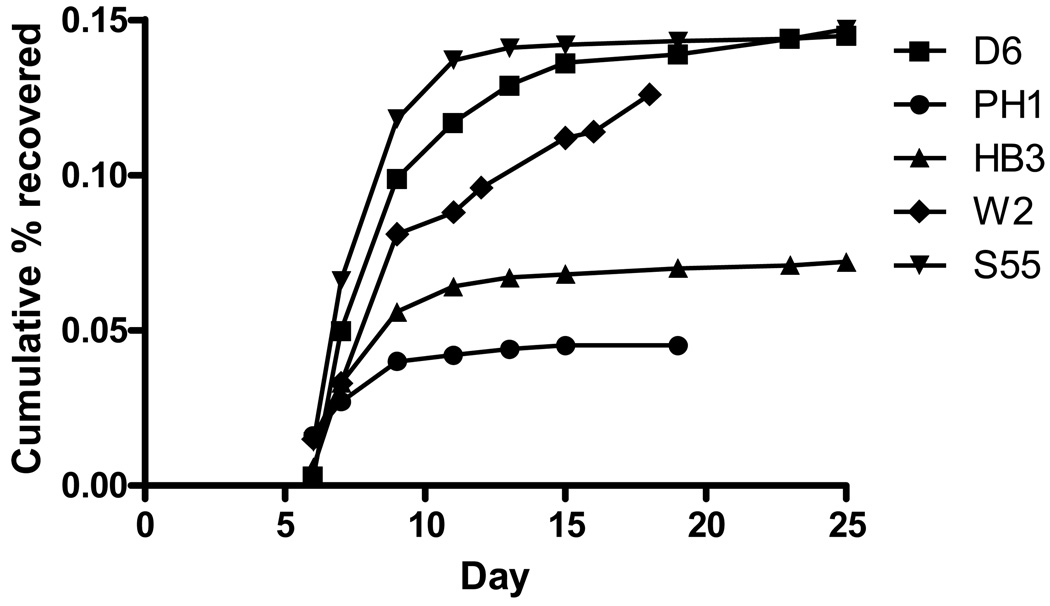
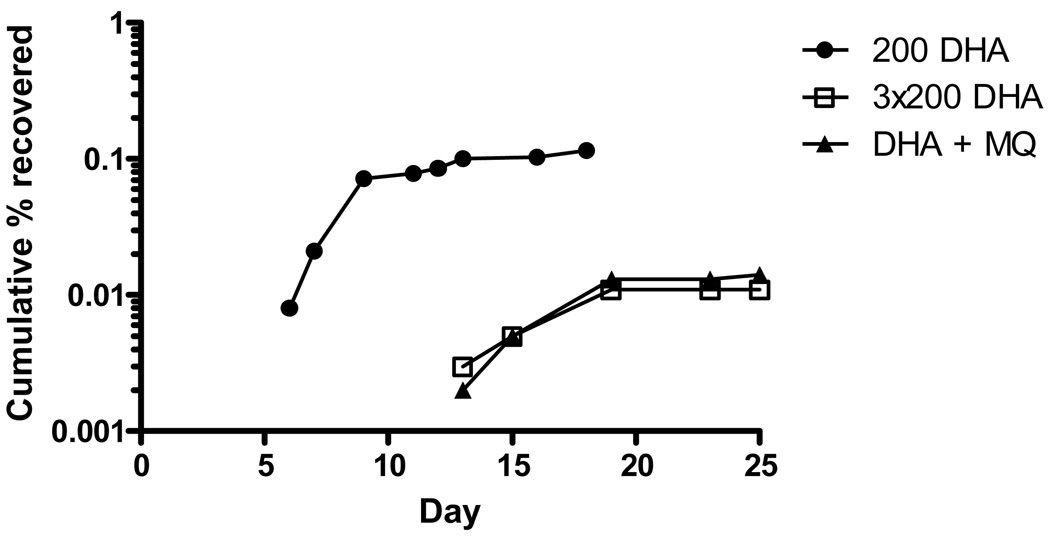
Results: Parasite development was abruptly arrested after a single exposure to DHA, with some parasites being dormant for up to 20 days. Approximately 50% of dormant parasites recovered to resume growth within the first 9 days. The overall proportion of parasites recovering was dose dependent, with recovery rates ranging from 0.044% to 1.313%. Repeated treatment with DHA or with DHA in combination with mefloquine led to a delay in recovery and an approximately 10-fold reduction in total recovery. Strains with different genetic backgrounds appeared to vary in their capacity to recover.
Conclusions: These results imply that artemisinin-induced arrest of growth occurs readily in laboratory-treated parasites and may be a key factor in P. falciparum malaria treatment failure.
Conflict of interest statement
The authors do not have a commercial or other association that might pose a conflict of interest.
Figures
Comment in
-
Waking the sleeping beauty.J Infect Dis. 2010 Nov 1;202(9):1300-1. doi: 10.1086/656478. J Infect Dis. 2010. PMID: 20863226 Free PMC article. No abstract available.
References
-
- White NJ, Nosten F, Looareesuwan S, et al. Averting a malaria disaster. The Lancet. 1999;353:1965–1967. - PubMed
-
- WHO. WHO/HTM/GMP/2008-1. Geneva: World Health Organization; World malaria report 2008.
-
- Nguyen DS, Dao BH, Nguyen PD, et al. Treatment of malaria in Vietnam with oral artemisinin. Am J Trop Med Hyg. 1993;48:398–402. - PubMed
-
- De Vries PJ, Dien TK. Clinical pharmacology and therapeutic potential of artemisinin and its derivatives in the treatment of malaria. Drugs. 1996;52:818–836. - PubMed
