


Postlumpectomy focal brachytherapy for simultaneous treatment of surgical cavity and draining lymph nodes
- PMID: 20864271
- PMCID: PMC3031997
- DOI: 10.1016/j.ijrobp.2010.05.062
Postlumpectomy focal brachytherapy for simultaneous treatment of surgical cavity and draining lymph nodes
Abstract
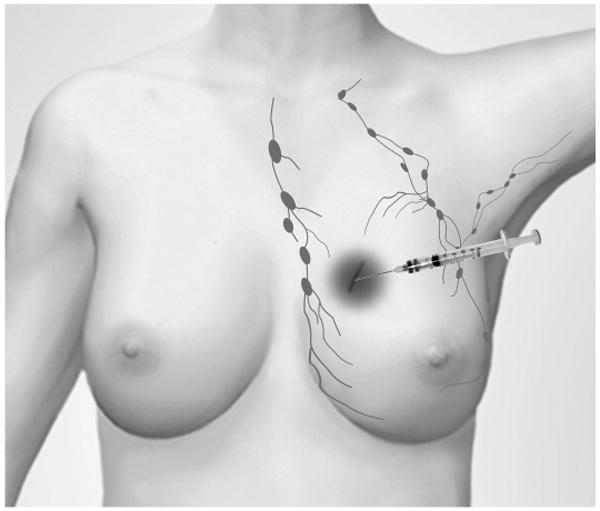
Purpose: The primary objective was to investigate a novel focal brachytherapy technique using lipid nanoparticle (liposome)-carried β-emitting radionuclides (rhenium-186 [(186)Re]/rhenium-188 [(188)Re]) to simultaneously treat the postlumpectomy surgical cavity and draining lymph nodes.
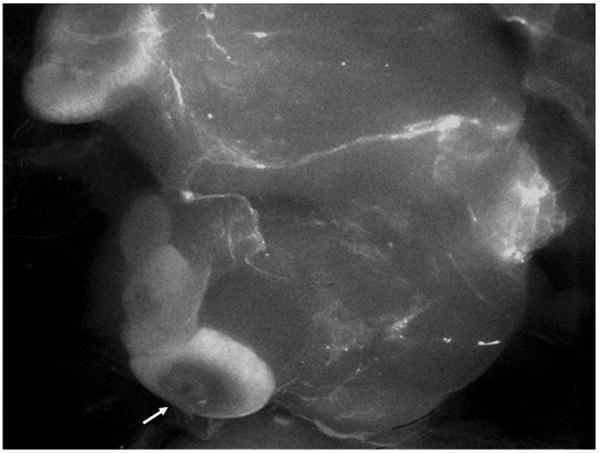
Methods and materials: Cumulative activity distributions in the lumpectomy cavity and lymph nodes were extrapolated from small animal imaging and human lymphoscintigraphy data. Absorbed dose calculations were performed for lumpectomy cavities with spherical and ellipsoidal shapes and lymph nodes within human subjects by use of the dose point kernel convolution method.
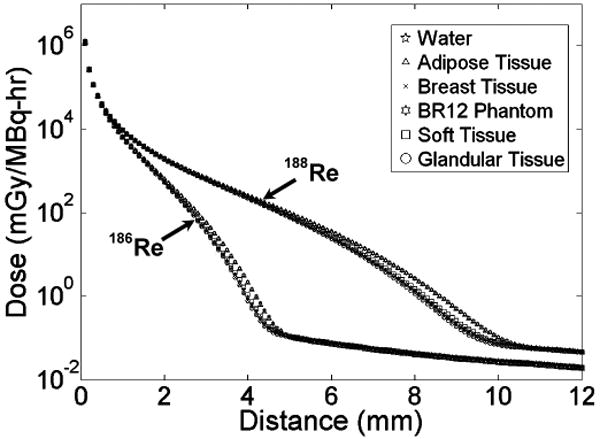
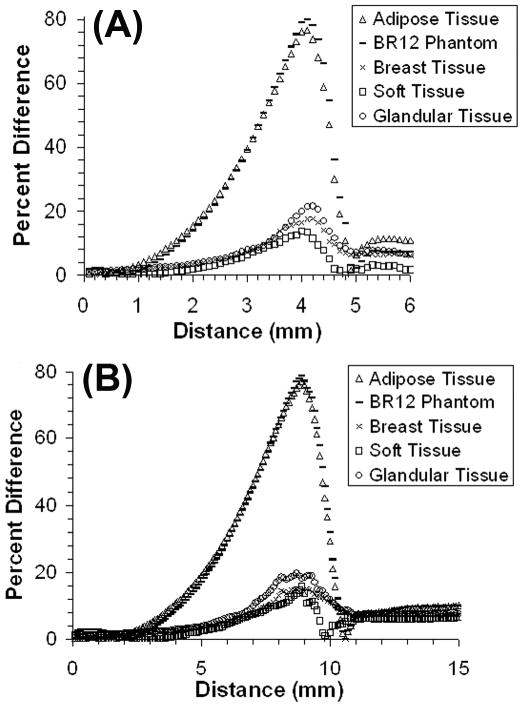
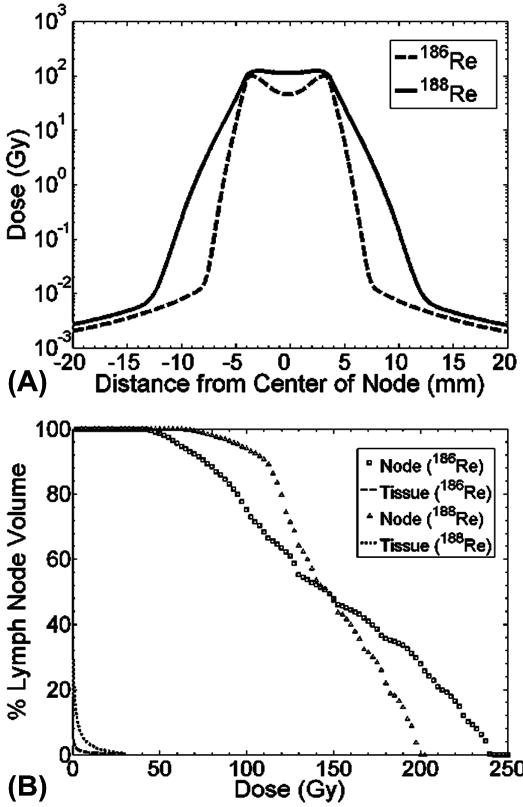
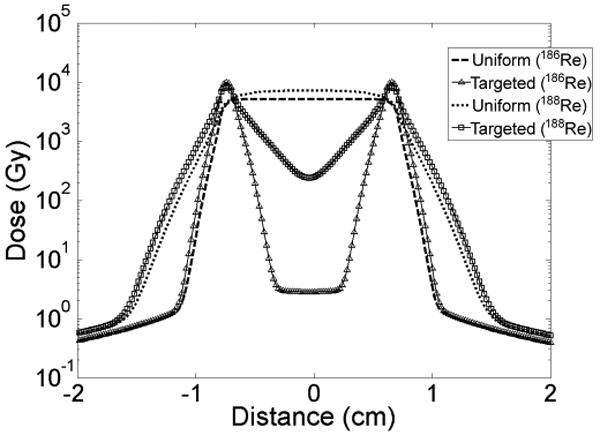
Results: Dose calculations showed that therapeutic dose levels within the lumpectomy cavity wall can cover 2- and 5-mm depths for (186)Re and (188)Re liposomes, respectively. The absorbed doses at 1 cm sharply decreased to only 1.3% to 3.7% of the doses at 2 mm for (186)Re liposomes and 5 mm for (188)Re liposomes. Concurrently, the draining sentinel lymph nodes would receive a high focal therapeutic absorbed dose, whereas the average dose to 1 cm of surrounding tissue received less than 1% of that within the nodes.
Conclusions: Focal brachytherapy by use of (186)Re/(188)Re liposomes was theoretically shown to be capable of simultaneously treating the lumpectomy cavity wall and draining sentinel lymph nodes with high absorbed doses while significantly lowering dose to surrounding healthy tissue. In turn, this allows for dose escalation to regions of higher probability of containing residual tumor cells after lumpectomy while reducing normal tissue complications.
Copyright © 2011 Elsevier Inc. All rights reserved.
Conflict of interest statement
Conflict of interest: none.
Figures
References
-
- Moore-Higgs GJ. Radiation options for early stage breast cancer. Semin Oncol Nurs. 2006;22:233–241. - PubMed
-
- Fisher B, Anderson S, Bryant J, et al. Twenty-year follow-up of a randomized trial comparing total mastectomy, lumpectomy, and lumpectomy plus irradiation for the treatment of invasive breast cancer. N Engl J Med. 2002;347:1233–1241. - PubMed
-
- Veronesi U, Cascinelli N, Mariani L, et al. Twenty-year follow-up of a randomized study comparing breast-conserving surgery with radical mastectomy for early breast cancer. N Engl J Med. 2002;347:1227–1232. - PubMed
-
- Liljegren G, Holmberg L, Bergh J, et al. 10-year results after sector resection with or without postoperative radiotherapy for stage I breast cancer: a randomized trial. J Clin Oncol. 1999;17:2326–2333. - PubMed
-
- Polgar C, Fodor J, Major T, et al. Radiotherapy confined to the tumor bed following breast conserving surgery. Strahlenther Onkol. 2002;178:597–606. - PubMed
Publication types
MeSH terms
Substances
Grants and funding
LinkOut - more resources
Full Text Sources
Medical
