


Discordant behavioral effects of psychotomimetic drugs in mice with altered NMDA receptor function
- PMID: 20865248
- PMCID: PMC4818544
- DOI: 10.1007/s00213-010-2023-4
Discordant behavioral effects of psychotomimetic drugs in mice with altered NMDA receptor function
Abstract
Rationale: Enhancement of N-methyl-D: -aspartate receptor (NMDAR) activity through its glycine modulatory site (GMS) is a novel therapeutic approach in schizophrenia. Brain concentrations of endogenous GMS agonist D: -serine and antagonist N-acetyl-aspartylglutamate are regulated by serine racemase (SR) and glutamic acid decarboxylase 2 (GCP2), respectively. Using mice genetically, under-expressing these enzymes may clarify the role of NMDAR-mediated neurotransmission in schizophrenia.
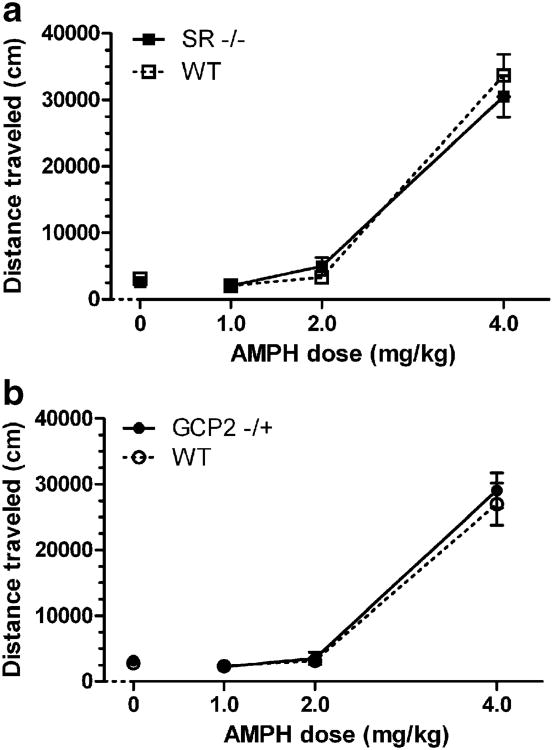
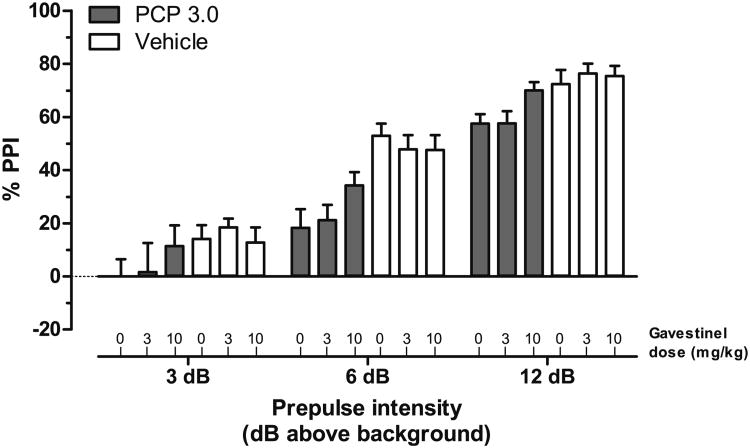
Objectives: We investigated the behavioral effects of two psychotomimetic drugs, the noncompetitive NMDAR antagonist, phencyclidine (PCP; 0, 1.0, 3.0, or 6.0 mg/kg), and the indirect dopamine receptor agonist, amphetamine (AMPH; 0, 1.0, 2.0, or 4.0 mg/kg), in SR -/- and GCP2 -/+ mice. Outcome measures were locomotor activity and prepulse inhibition (PPI) of the acoustic startle reflex. Acute effects of an exogenous GMS antagonist, gavestinel (0, 3.0, or 10.0 mg/kg), on PCP-induced behaviors were examined in wild-type mice for comparison to the mutants with reduced GMS activity.
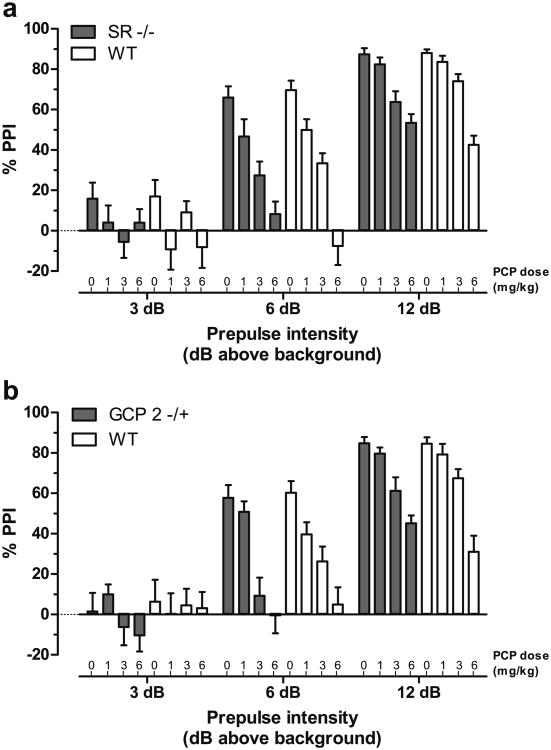
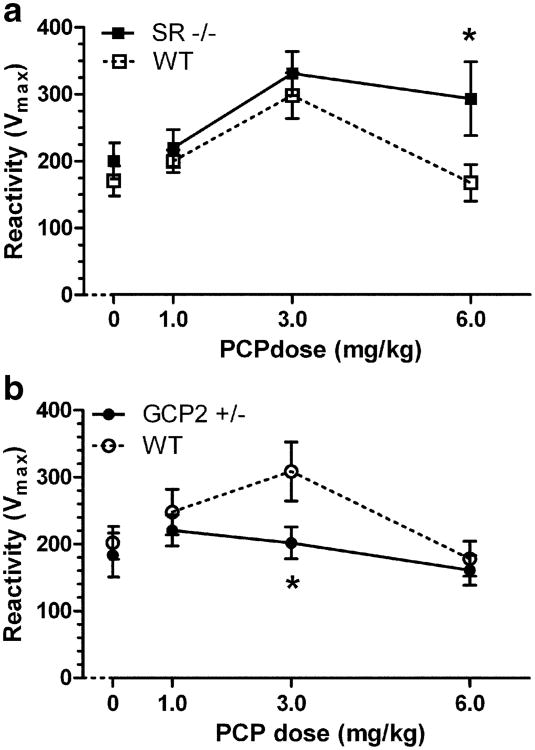
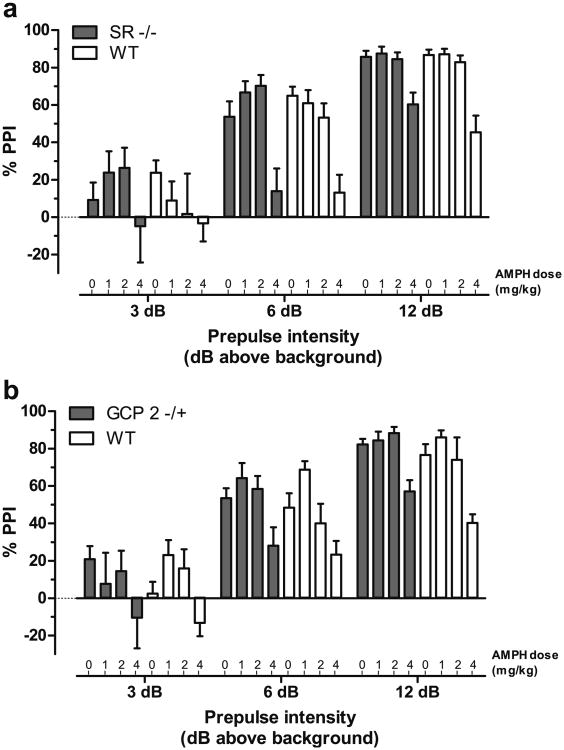
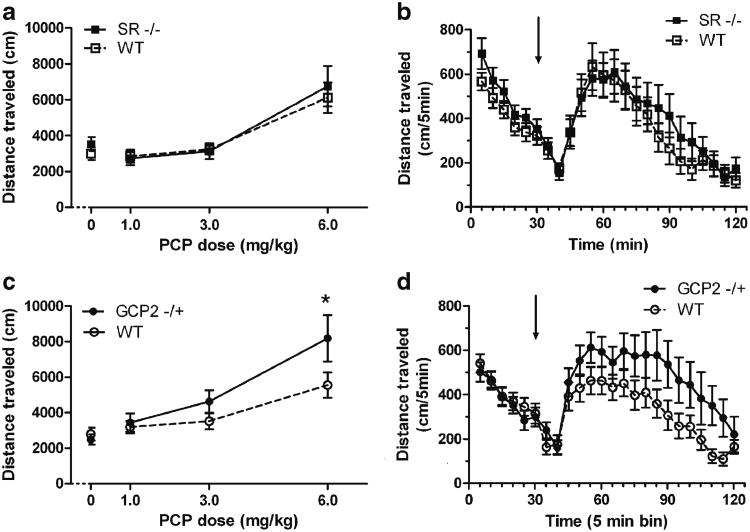
Results: PCP-induced hyperactivity was increased in GCP2 -/+ mice, and PCP-enhanced startle reactivity was increased in SR -/- mice. PCP disruption of PPI was unaffected in either mutant. In contrast, gavestinel attenuated PCP-induced PPI disruption without effect on baseline PPI or locomotor activity. AMPH effects were similar to controls in both mutant strains.
Conclusions: The results of the PCP experiments demonstrate that convergence of pharmacological and genetic manipulations at NMDARs may confound the predictive validity of these preclinical assays for the effects of GMS activation in schizophrenia. The AMPH data provide additional evidence that hyperdopaminergia in schizophrenia may be distinct from NMDAR hypofunction.
Figures
References
-
- Abi-Dargham A, van de Giessen E, Slifstein M, Kegeles LS, Laruelle M. Baseline and amphetamine-stimulated dopamine activity are related in drug-naïve schizophrenic subjects. Biol Psychiatry. 2009;65(12):1091–1093. - PubMed
-
- Allen NC, Bagade S, McQueen MB, Ioannidis JP, Kavvoura FK, Khoury MJ, Tanzi RE, Bertram L. Systematic meta-analyses and field synopsis of genetic association studies in schizophrenia: the SzGene database. Nat Genet. 2008;40(7):827–834. - PubMed
-
- Ballard TM, Pauly-Evers M, Higgins GA, Ouagazzal AM, Mutel V, Borroni E, Kemp JA, Bluethmann H, Kew JN. Severe impairment of NMDA receptor function in mice carrying targeted point mutations in the glycine binding site results in drug-resistant nonhabituating hyperactivity. J Neurosci. 2002;22(15):6713–6723. - PMC - PubMed
Publication types
MeSH terms
Substances
Grants and funding
LinkOut - more resources
Full Text Sources
Research Materials
