


Is surgery necessary for femoral insufficiency fractures after long-term bisphosphonate therapy?
- PMID: 20865463
- PMCID: PMC2974881
- DOI: 10.1007/s11999-010-1583-2
Is surgery necessary for femoral insufficiency fractures after long-term bisphosphonate therapy?
Abstract
Background: Prolonged use of bisphosphonates in patients with osteoporosis reportedly induces femoral insufficiency fractures. However, the natural course of these fractures and how to treat them remain unknown.
Questions/purposes: We determined the rates of fracture displacement and subsequent operations of undisplaced insufficiency fractures of the femur in patients treated with prolonged bisphosphonate therapy.
Patients and methods: We retrospectively collected and reviewed the clinical course of 11 patients (14 fractures) who had been diagnosed as having an insufficiency fracture of the femur after prolonged use (mean, 4.5 years; range, 3-10 years) of bisphosphonate. All patients were women with a mean age of 68 years (range, 57-82 years). The fracture site was subtrochanteric in six and femoral shaft in eight. The minimum followup was 12 months (mean, 27 months; range, 12-60 months).
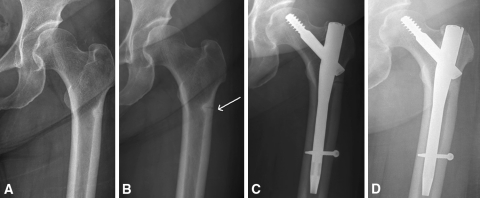
Results: During the followup period, secondary displacement of the fracture occurred in five of the 14 fractures after a mean of 10 months (range, 1-19 months). Three fractures were treated with internal fixation using a compression hip screw and two with intramedullary nailing. Because five additional fractures were treated surgically owing to intractable pain, surgery was performed in 10 of 14 insufficiency fractures during the followup period. All 10 fractures healed during followup. The remaining four patients (four fractures) not undergoing any surgery had persistent pain.
Conclusions: Femoral insufficiency fractures after prolonged bisphosphonate therapy seldom healed spontaneously and most patients had surgery either for fracture displacement or persistent pain.
Figures

References
-
- Black DM, Kelly MP, Genant HK, Palermo L, Eastell R, Bucci-Rechtweg C, Cauley J, Leung PC, Boonen S, Santora A, Papp A, Bauer DC. Fracture Intervention Trial Steering Committee; HORIZON Pivotal Fracture Trial Steering Committee. Bisphosphonates and fractures of the subtrochanteric or diaphyseal femur. N Engl J Med. 2010;362:1761–1771. doi: 10.1056/NEJMoa1001086. - DOI - PubMed
-
- Boden BP, Osbahr DC, Jimenez C. Low-risk stress fractures. Am J Sports Med. 2001;29:100–111. - PubMed
-
- Bone HG, Hosking D, Devogelaer JP, Tucci JR, Emkey RD, Tonino RP, Rodriguez-Portales JA, Downs RW, Gupta J, Santora AC, Liberman UA. Alendronate Phase III Osteoporosis Treatment Study Group. Ten years’ experience with alendronate for osteoporosis in postmenopausal women. N Engl J Med. 2004;350:1189–1199. doi: 10.1056/NEJMoa030897. - DOI - PubMed
MeSH terms
Substances
LinkOut - more resources
Full Text Sources
Medical
