


Biological synthesis of tooth enamel instructed by an artificial matrix
- PMID: 20869764
- PMCID: PMC2956865
- DOI: 10.1016/j.biomaterials.2010.08.013
Biological synthesis of tooth enamel instructed by an artificial matrix
Abstract
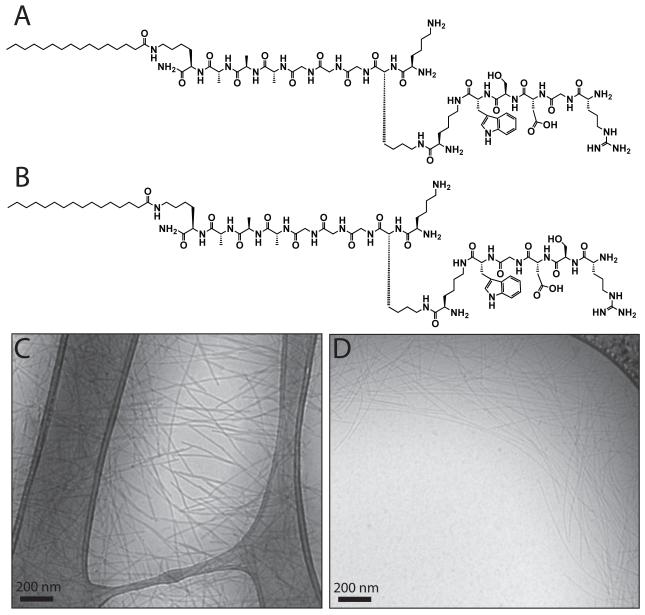
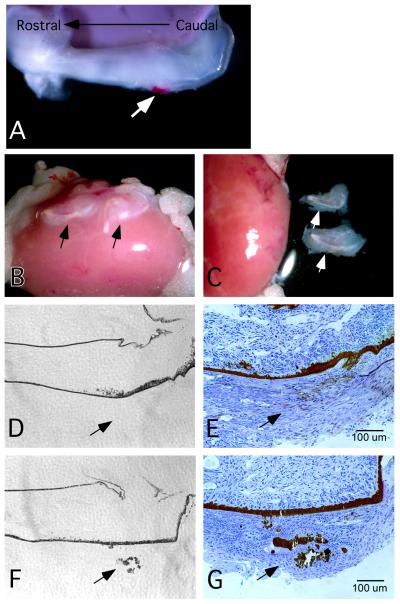
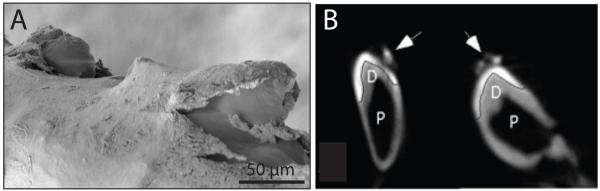
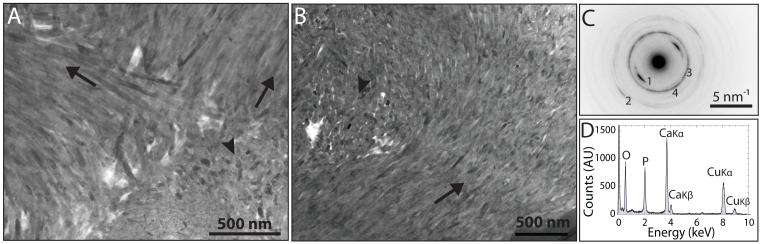
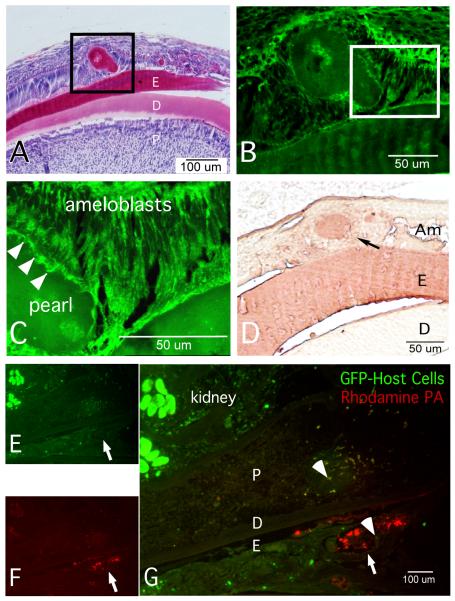
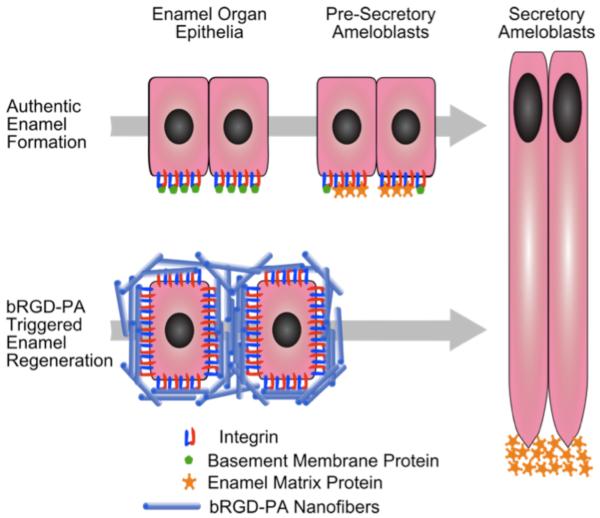
The regenerative capability of enamel, the hardest tissue in the vertebrate body, is fundamentally limited due to cell apoptosis following maturation of the tissue. Synthetic strategies to promote enamel formation have the potential to repair damage, increase the longevity of teeth and improve the understanding of the events leading to tissue formation. Using a self-assembling bioactive matrix, we demonstrate the ability to induce ectopic formation of enamel at chosen sites adjacent to a mouse incisor cultured in vivo under the kidney capsule. The resulting material reveals the highly organized, hierarchical structure of hydroxyapatite crystallites similar to native enamel. This artificially triggered formation of organized mineral demonstrates a pathway for developing cell fabricated materials for treatment of dental caries, the most ubiquitous disease in man. Additionally, the artificial matrix provides a unique tool to probe cellular mechanisms involved in tissue formation further enabling the development of tooth organ replacements.
Copyright © 2010 Elsevier Ltd. All rights reserved.
Figures
References
-
- Taubman MA, Nash DA. The scientific and public-health imperative for a vaccine against dental caries. Nat Rev Immunol. 2006;6:555–63. - PubMed
-
- Robinson C, Shore RC, Brookes SJ, Strafford S, Wood SR, Kirkham J. The chemistry of enamel caries. Crit Rev Oral Biol Med. 2000;11:481–95. - PubMed
-
- Caufield PW, Li Y, Dasanayake A. Dental caries: an infectious and transmissible disease. Compend Contin Educ Dent. 2005;26:10–6. - PubMed
-
- Hu B, Nadiri A, Kuchler-Bopp S, Perrin-Schmitt F, Peters H, Lesot H. Tissue Engineering of Tooth Crown, Root, and Periodontium. Tissue Eng. 2006;12:2069–75. - PubMed
-
- Mitsiadis TA, Graf D. Cell fate determination during tooth development and regeneration. Birth Defects Res C Embryo Today. 2009;87:199–211. - PubMed
Publication types
MeSH terms
Substances
Grants and funding
LinkOut - more resources
Full Text Sources
Other Literature Sources
