


Enhancement of RAD51 recombinase activity by the tumor suppressor PALB2
- PMID: 20871616
- PMCID: PMC2950913
- DOI: 10.1038/nsmb.1916
Enhancement of RAD51 recombinase activity by the tumor suppressor PALB2
Abstract
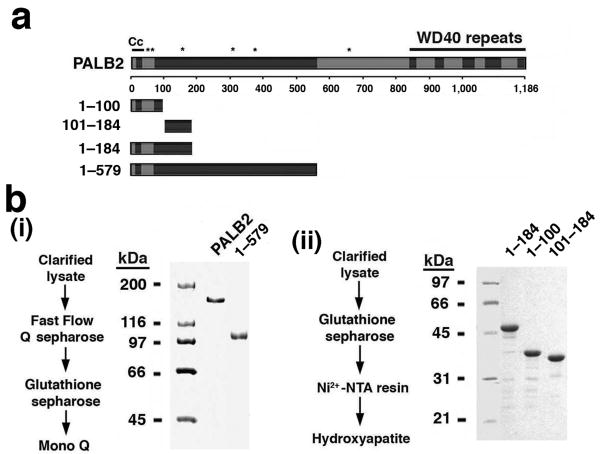
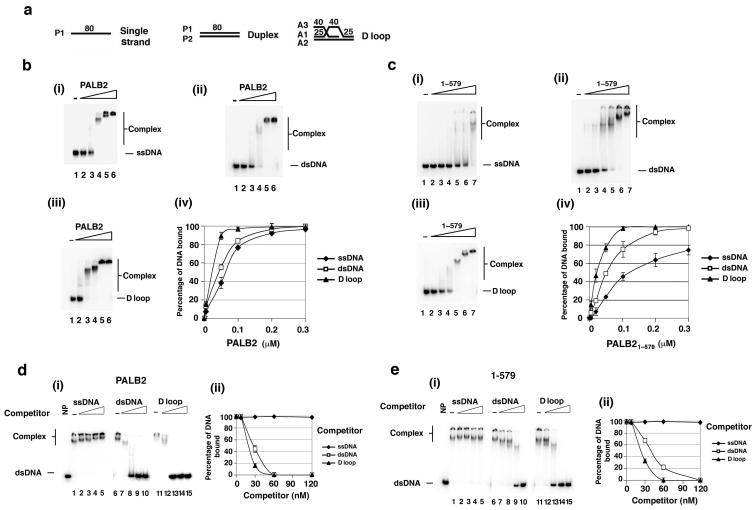
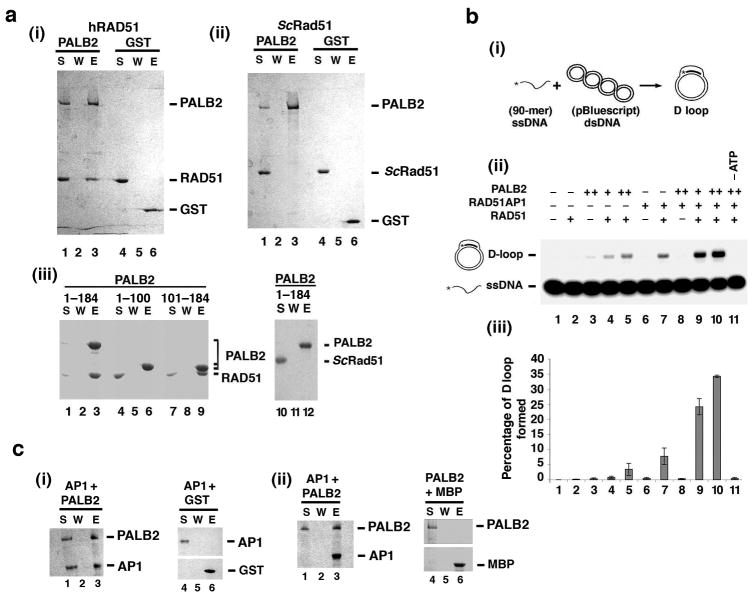
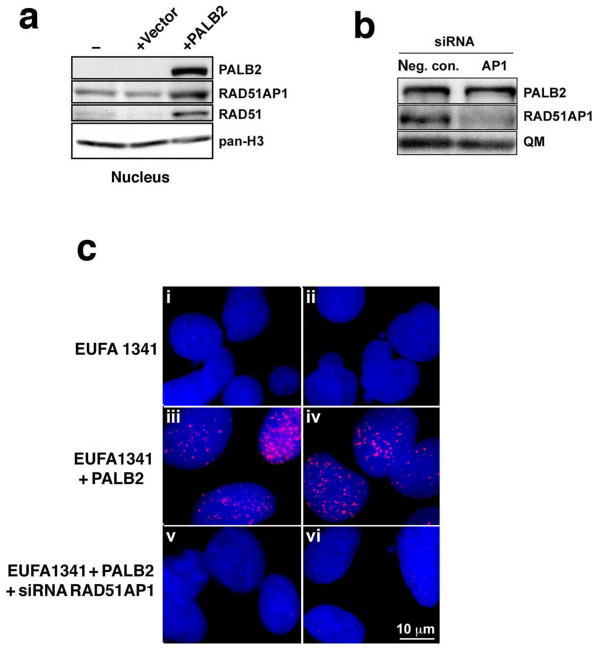
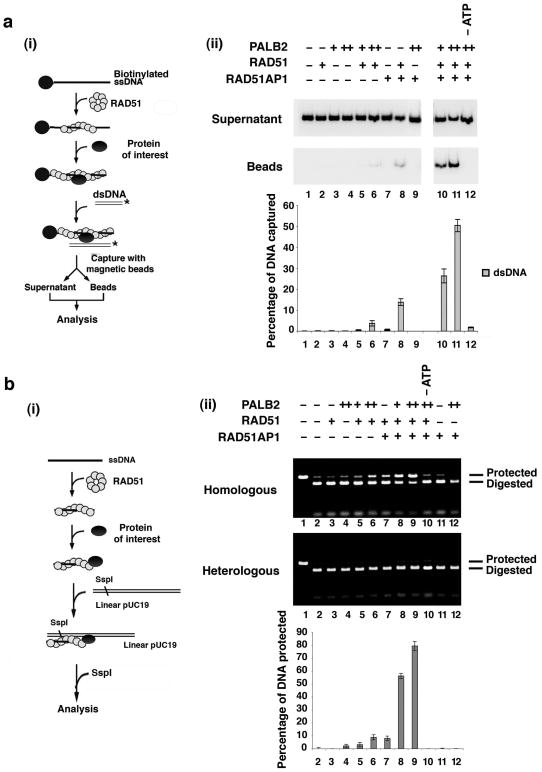
Homologous recombination mediated by RAD51 recombinase helps eliminate chromosomal lesions, such as DNA double-strand breaks induced by radiation or arising from injured DNA replication forks. The tumor suppressors BRCA2 and PALB2 act together to deliver RAD51 to chromosomal lesions to initiate repair. Here we document a new function of PALB2: to enhance RAD51's ability to form the D loop. We show that PALB2 binds DNA and physically interacts with RAD51. Notably, although PALB2 alone stimulates D-loop formation, it has a cooperative effect with RAD51AP1, an enhancer of RAD51. This stimulation stems from the ability of PALB2 to function with RAD51 and RAD51AP1 to assemble the synaptic complex. Our results demonstrate the multifaceted role of PALB2 in chromosome damage repair. Because PALB2 mutations can cause cancer or Fanconi anemia, our findings shed light on the mechanism of tumor suppression in humans.
Conflict of interest statement
Figures
References
-
- San Filippo J, Sung P, Klein H. Mechanism of eukaryotic homologous recombination. Annu Rev Biochem. 2008;77:229–57. - PubMed
-
- Moynahan ME, Pierce AJ, Jasin M. BRCA2 is required for homology-directed repair of chromosomal breaks. Mol Cell. 2001;7:263–72. - PubMed
-
- Tutt A, et al. Absence of Brca2 causes genome instability by chromosome breakage and loss associated with centrosome amplification. Curr Biol. 1999;9:1107–10. - PubMed
-
- Xia B, et al. Control of BRCA2 cellular and clinical functions by a nuclear partner, PALB2. Mol Cell. 2006;22:719–29. - PubMed
Publication types
MeSH terms
Substances
Grants and funding
LinkOut - more resources
Full Text Sources
Medical
Molecular Biology Databases
Research Materials
Miscellaneous
