


Comparative analysis of immune responses to Russian spring-summer encephalitis and Omsk hemorrhagic fever viruses in mouse models
- PMID: 20875909
- PMCID: PMC2966520
- DOI: 10.1016/j.virol.2010.08.021
Comparative analysis of immune responses to Russian spring-summer encephalitis and Omsk hemorrhagic fever viruses in mouse models
Abstract
Omsk hemorrhagic fever virus (OHFV) and Russian spring-summer encephalitis virus (RSSEV) are tick-borne flaviviruses that have close homology but different pathology and disease outcomes. Previously, we reported that C57BL/6 and BALB/c mice were excellent models to study the pathology and clinical signs of human RSSEV and OHFV infection. In the study described here, we found that RSSEV infection induced robust release of proinflammatory cytokines (IL-1α, IL-1β, IL-6 and TNF-α) and chemokines (MCP-1, MIP-1β, RANTES and KC) in the brain at 9 and 11dpi, together with moderate to low Th1 and Th2 cytokines. In contrast, OHFV infection stimulated an early and prominent induction of IL-1α, TNF-α, IL-12p70, MCP-1, MIP-1α and MIP-1β in the spleen of infected mice. Collectively our data suggest that a differential host response to infection may lead to the alternate disease outcomes seen following OHFV or RSSEV infection.
Copyright © 2010 Elsevier Inc. All rights reserved.
Figures
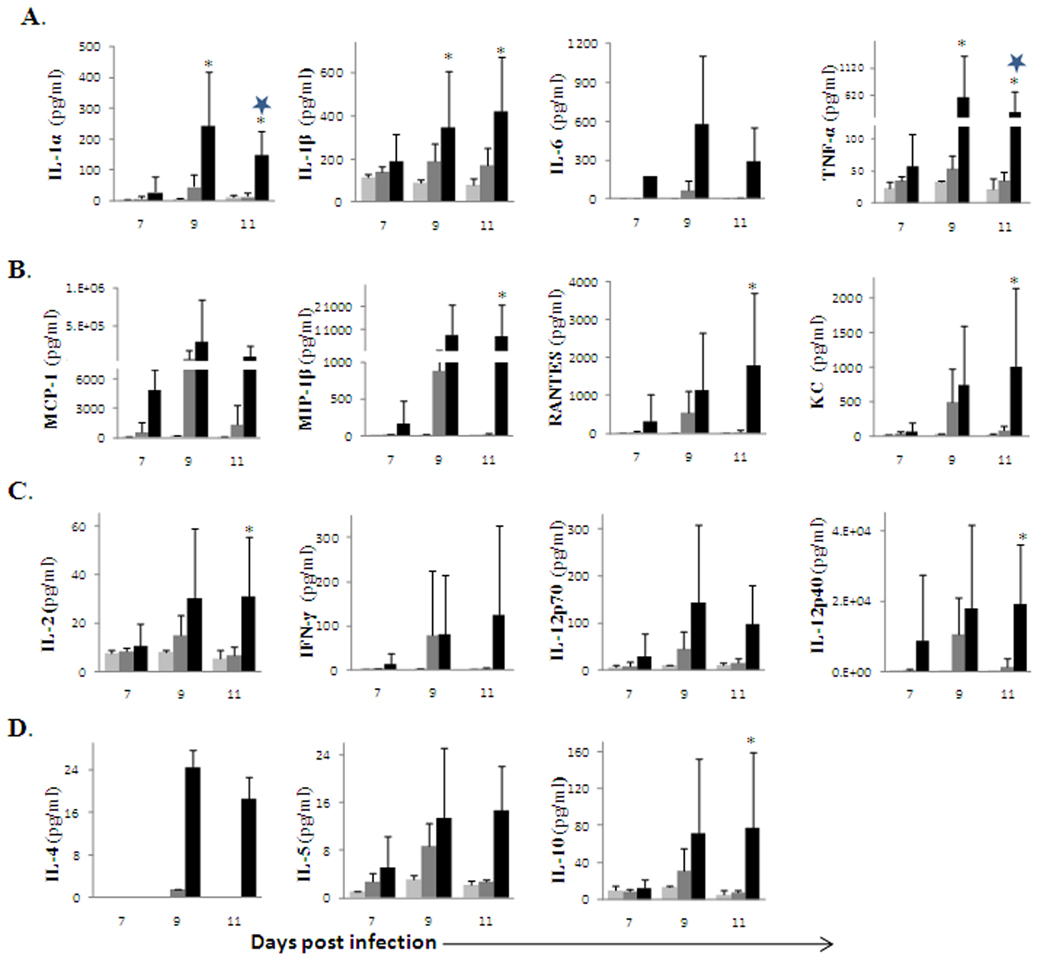
 ) mock, (
 ) OHFV or (
 ) RSSEV infection. Protein levels of (A) proinflammatory cytokines, (B) Chemokines, (C) Th1 cytokines and (D) Th2 cytokines were measured in the brain at the indicated time points following foot pad injection of 1000pfu OHFV or RSSEV. Data are shown as mean ± SD for 3–5 mice at each time point. *p<0.05 for the comparison between RSSEV and mock,
  p<0.05 for comparison between RSSEV and OHFV.
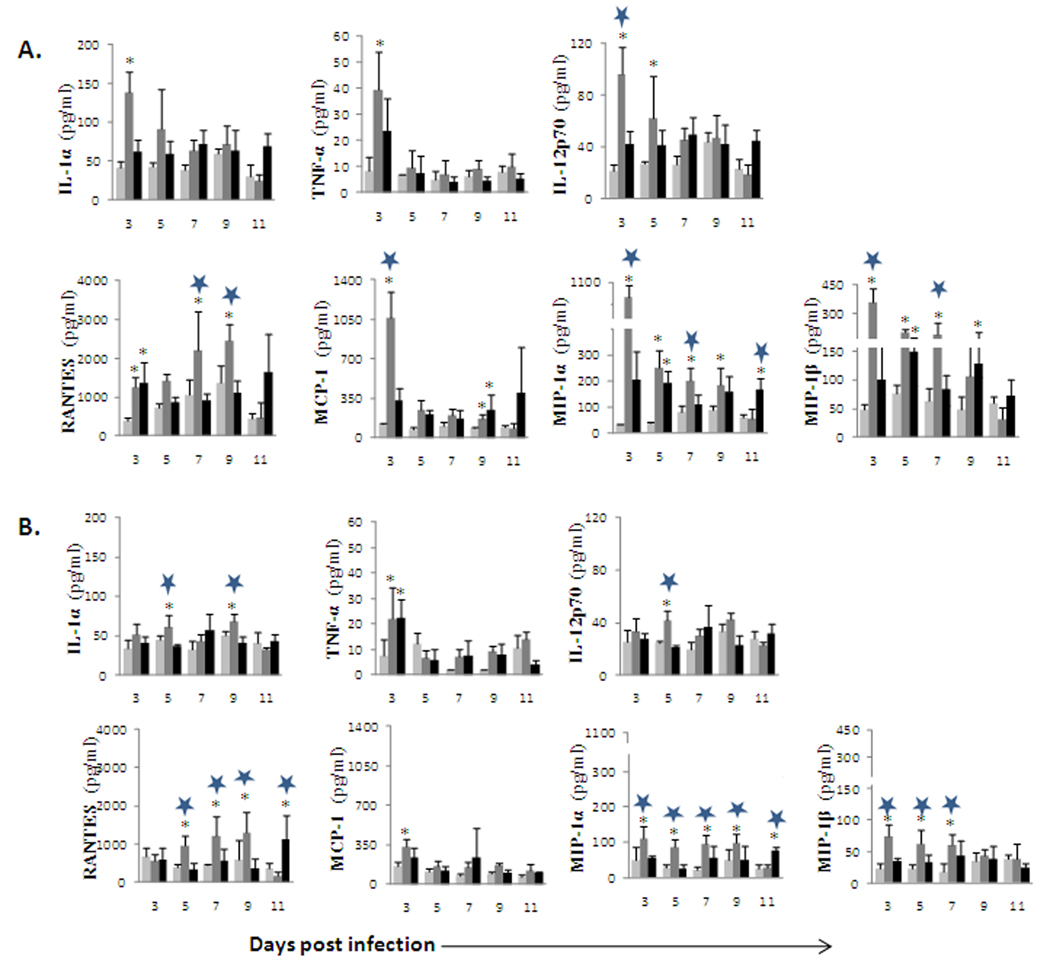 ) mock, () OHFV or () RSSEV infection of (A) BALB/c and (B) C57BL/6 mice. Spleen was extracted at the indicated time and the level of the cytokine was measured from the clear homogenates. Data are the mean ± SD for 3–5 mice at each time point. *p<0.05 for the comparison between OHFV/RSSEV and mock, p<0.05 for comparison between RSSEV and OHFV.
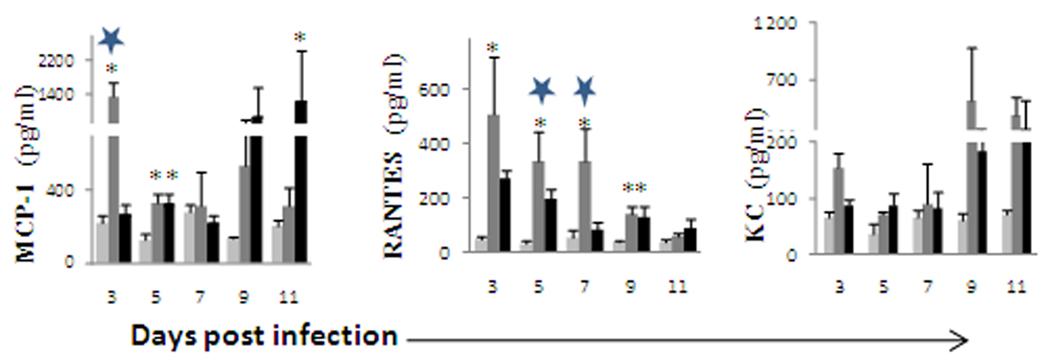 ) mock, () OHFV or () RSSEV infection of BALB/ c mice. Lung and liver were extracted at the indicated days and the supernatant was used to analyze the level of cytokines/chemokines. Data are shown as mean ± SD for 3–5 mice at each time point. *p<0.05 for the comparison between OHFV/RSSEV and mock, p<0.05 for comparison between RSSEV and OHFV.
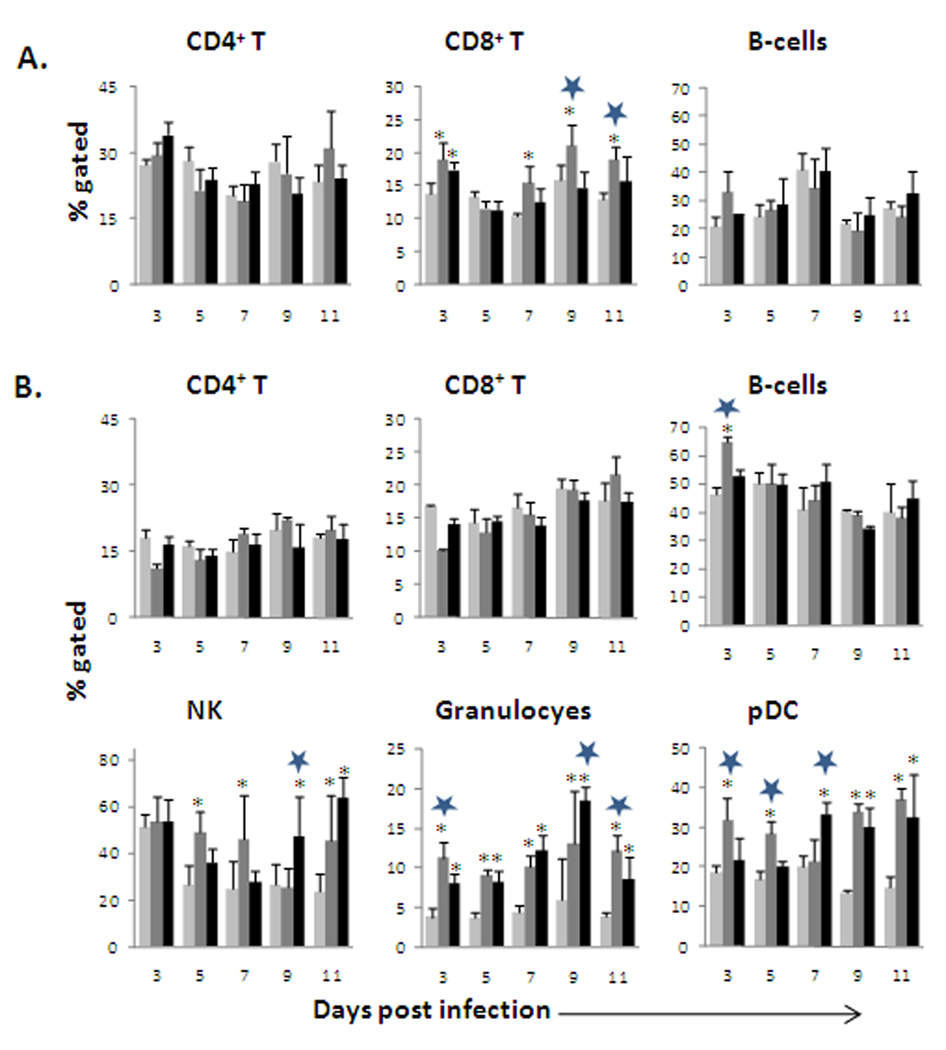 ) mock, () OHFV or () RSSEV. Dissociated splenocytes were isolated on the designated days post infection. The cells were stained with appropriate antibodies and analyzed using flow cytometry. Data are shown as mean ± SD for 5 mice at each time point. *p<0.05 for the comparison between OHFV/RSSEV and mock, p<0.05 for comparison between RSSEV and OHFV.
References
-
- Biswas SM, Kar S, Singh R, Chakraborty D, Vipat V, Raut CG, Mishra AC, Gore MM, Ghosh D. Immunomodulatory cytokines determine the outcome of Japanese encephalitis virus infection in mice. J. Med. Virol. 2010;82:304–310. - PubMed
-
- Chen CJ, Liao SL, Kuo MD, Wang YM. Astrocytic alteration induced by Japanese encephalitis virus infection. Neuroreport. 2000;11:1933–1937. - PubMed
Publication types
MeSH terms
Substances
Grants and funding
LinkOut - more resources
Full Text Sources
Miscellaneous
