


Exhaled carbon monoxide and risk of metabolic syndrome and cardiovascular disease in the community
- PMID: 20876437
- PMCID: PMC2975571
- DOI: 10.1161/CIRCULATIONAHA.110.941013
Exhaled carbon monoxide and risk of metabolic syndrome and cardiovascular disease in the community
Abstract
Background: Endogenous carbon monoxide (CO) at physiological concentrations is cytoprotective, whereas excess levels reflect underlying oxidative stress, inflammation, and vascular pathology and portend adverse clinical sequelae. However, the relation of exhaled CO to metabolic/vascular risk in the community is unknown.
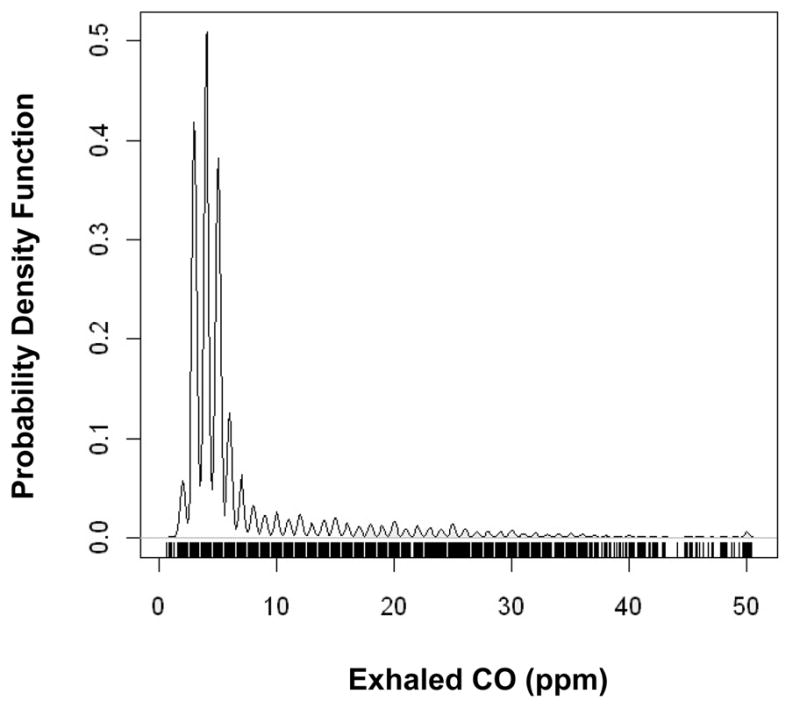
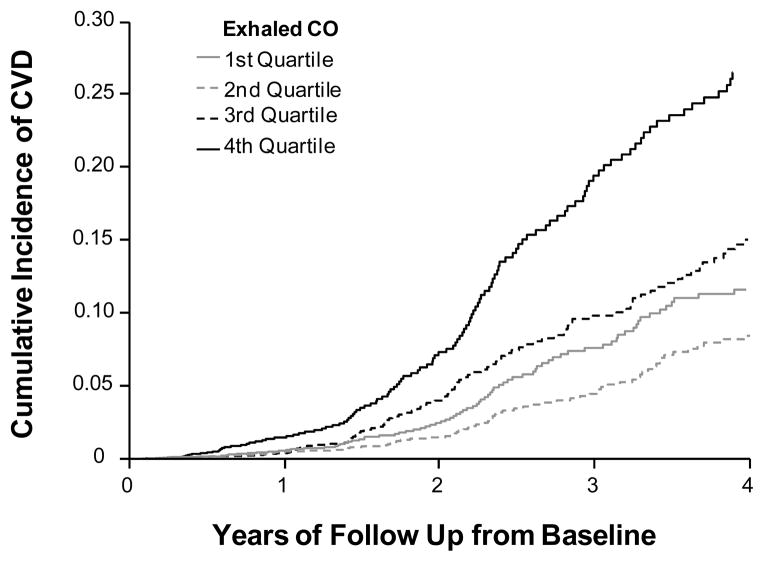
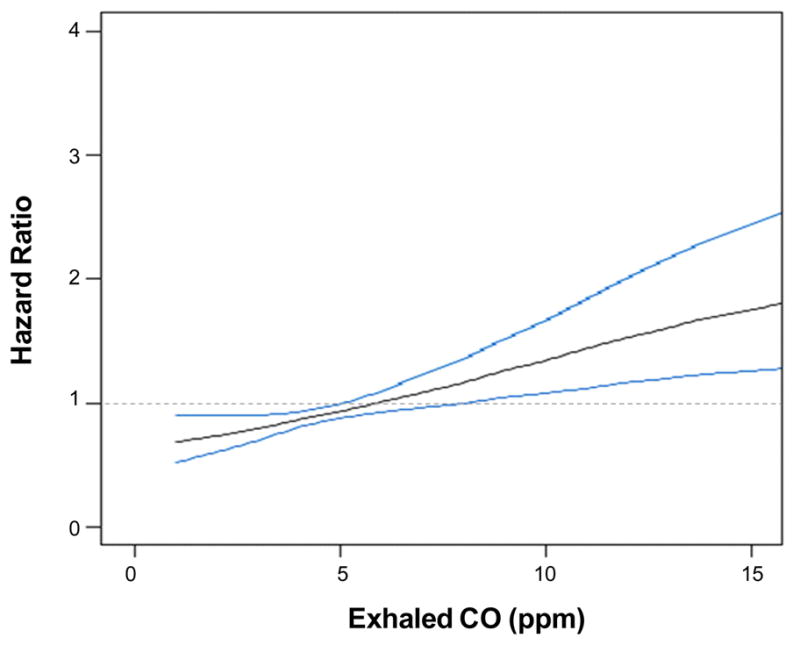
Methods and results: We related exhaled CO, a surrogate measure of blood CO concentration, to the risk of developing new-onset metabolic syndrome and incident cardiovascular disease following 14 943 routine examinations (4139 unique participants; mean age, 46 years, 53% women) in the Framingham Heart Study. Baseline exhaled CO was associated with the presence of cardiometabolic risk factors (including smoking) and prevalent metabolic syndrome (odds ratio, 1.09 per log CO; 95% confidence interval, 1.02 to 1.17; P=0.01). During up to 4 years of follow-up, 1458 participants developed new-onset metabolic syndrome, and 416 experienced a first cardiovascular disease event. Compared with individuals in the lowest quartile of exhaled CO, those in the highest quartile were more likely to develop metabolic syndrome (odds ratio, 1.48; 95% confidence interval, 1.25 to 1.76; P<0.0001) and cardiovascular disease events (hazard ratio, 1.66; 95% confidence interval, 1.14 to 2.40; P=0.008) in multivariable analyses that included adjustment for smoking status.
Conclusion: In our community-based sample, higher exhaled CO levels predicted the development of metabolic syndrome and future cardiovascular disease events, underscoring the importance of this endogenous second messenger in the pathogenesis of metabolic and vascular risk.
Conflict of interest statement
Figures
References
-
- Wu L, Wang R. Carbon monoxide: endogenous production, physiological functions, and pharmacological applications. Pharmacol Rev. 2005;57:585–630. - PubMed
-
- Durante W. Carbon monoxide and bile pigments: surprising mediators of vascular function. Vasc Med. 2002;7:195–202. - PubMed
-
- Sabaawy HE, Zhang F, Nguyen X, ElHosseiny A, Nasjletti A, Schwartzman M, Dennery P, Kappas A, Abraham NG. Human heme oxygenase-1 gene transfer lowers blood pressure and promotes growth in spontaneously hypertensive rats. Hypertension. 2001;38:210–5. - PubMed
Publication types
MeSH terms
Substances
Grants and funding
LinkOut - more resources
Full Text Sources
Medical
