


Aging and microRNA expression in human skeletal muscle: a microarray and bioinformatics analysis
- PMID: 20876843
- PMCID: PMC3110890
- DOI: 10.1152/physiolgenomics.00148.2010
Aging and microRNA expression in human skeletal muscle: a microarray and bioinformatics analysis
Abstract
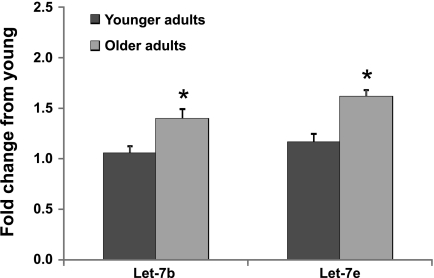
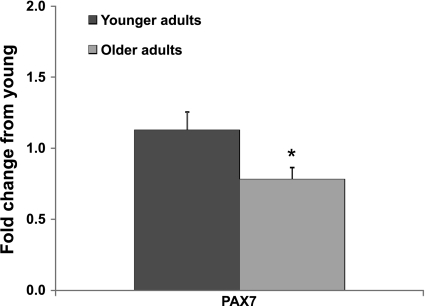
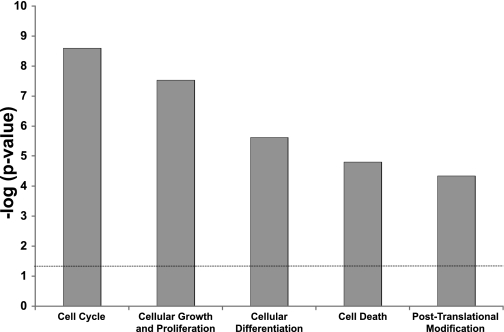
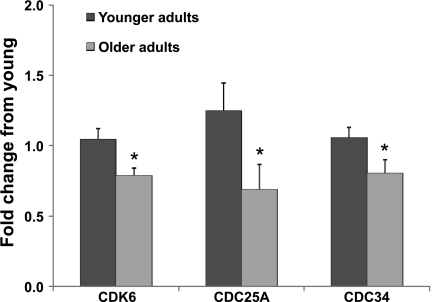
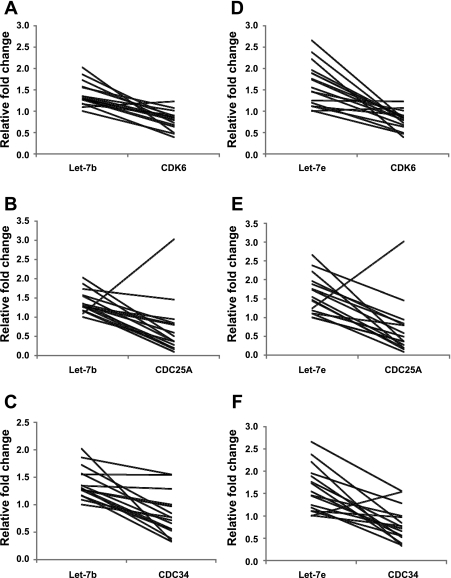
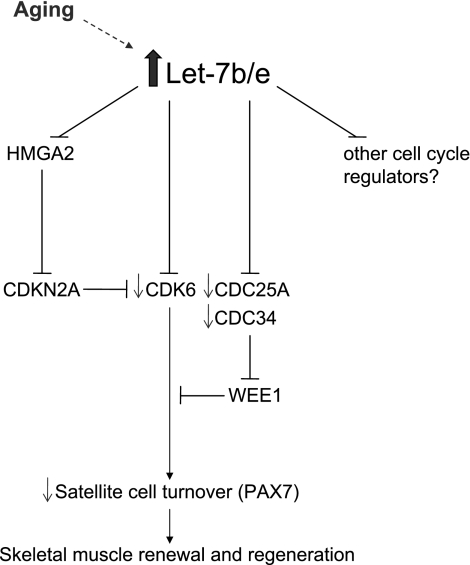
A common characteristic of aging is loss of skeletal muscle (sarcopenia), which can lead to falls and fractures. MicroRNAs (miRNAs) are novel posttranscriptional modulators of gene expression with potential roles as regulators of skeletal muscle mass and function. The purpose of this study was to profile miRNA expression patterns in aging human skeletal muscle with a miRNA array followed by in-depth functional and network analysis. Muscle biopsy samples from 36 men [young: 31 ± 2 (n = 19); older: 73 ± 3 (n = 17)] were 1) analyzed for expression of miRNAs with a miRNA array, 2) validated with TaqMan quantitative real-time PCR assays, and 3) identified (and later validated) for potential gene targets with the bioinformatics knowledge base software Ingenuity Pathways Analysis. Eighteen miRNAs were differentially expressed in older humans (P < 0.05 and >500 expression level). Let-7 family members Let-7b and Let-7e were significantly elevated and further validated in older subjects (P < 0.05). Functional and network analysis from Ingenuity determined that gene targets of the Let-7s were associated with molecular networks involved in cell cycle control such as cellular proliferation and differentiation. We confirmed with real-time PCR that mRNA expression of cell cycle regulators CDK6, CDC25A, and CDC34 were downregulated in older compared with young subjects (P < 0.05). In addition, PAX7 mRNA expression was lower in older subjects (P < 0.05). These data suggest that aging is characterized by a higher expression of Let-7 family members that may downregulate genes related to cellular proliferation. We propose that higher Let-7 expression may be an indicator of impaired cell cycle function possibly contributing to reduced muscle cell renewal and regeneration in older human muscle.
Figures
References
-
- Bigot A, Jacquemin V, Debacq-Chainiaux F, Butler-Browne GS, Toussaint O, Furling D, Mouly V. Replicative aging down-regulates the myogenic regulatory factors in human myoblasts. Biol Cell 100: 189–199, 2008 - PubMed
-
- Boehm M, Slack F. A developmental timing microRNA and its target regulate life span in C. elegans. Science 310: 1954–1957, 2005 - PubMed
-
- Bussing I, Slack FJ, Grosshans H. let-7 microRNAs in development, stem cells and cancer. Trends Mol Med 14: 400–409, 2008 - PubMed
-
- Calder AG, Anderson SE, Grant I, McNurlan MA, Garlick PJ. The determination of low d5-phenylalanine enrichment (0.002–0.09 atom percent excess), after conversion to phenylethylamine, in relation to protein turnover studies by gas chromatography/electron ionization mass spectrometry. Rapid Commun Mass Spectrom 6: 421–424, 1992 - PubMed
Publication types
MeSH terms
Substances
Grants and funding
LinkOut - more resources
Full Text Sources
Other Literature Sources
Medical
Molecular Biology Databases
Research Materials
