


Catechol O-methyltransferase pharmacogenomics and selective serotonin reuptake inhibitor response
- PMID: 20877297
- PMCID: PMC3113454
- DOI: 10.1038/tpj.2010.69
Catechol O-methyltransferase pharmacogenomics and selective serotonin reuptake inhibitor response
Abstract
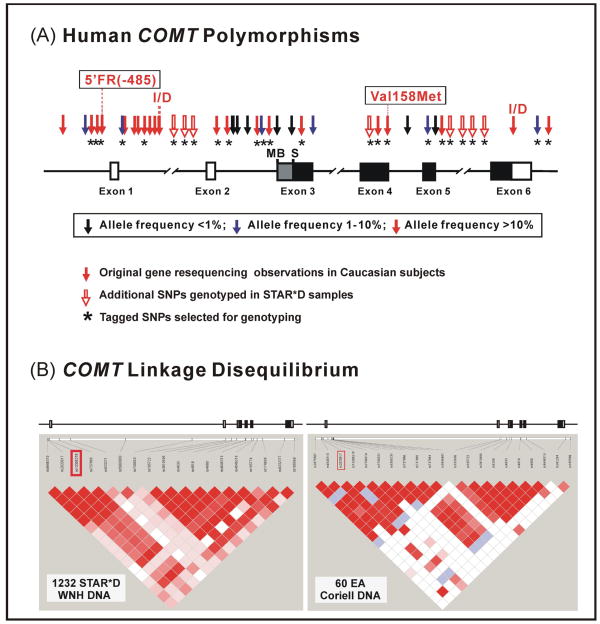
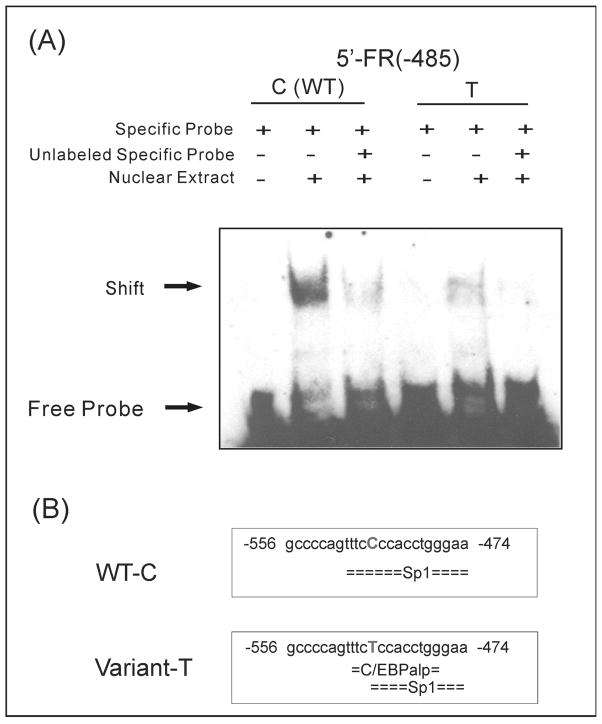
We applied a systematic pharmacogenetic approach to investigate the role of genetic variation in the gene encoding catechol O-methyltransferase (COMT) in individual variation in selective serotonin reuptake inhibitor (SSRI) response among depressed patients. In all, 23 single-nucleotide polymorphisms (SNPs) in COMT were genotyped using DNA from the Sequenced Treatment Alternatives to Relieve Depression (STAR(*)D) study (N=1914). One SNP, rs13306278, located in the distal promoter region of COMT, showed significant association with remission in White non-Hispanic (WNH) subjects (P=0.038). Electromobility shift assay for rs13306278 showed alternation in the ability of the variant sequence to bind nuclear proteins. A replication study was performed using samples from the Mayo Clinic Pharmacogenetics Research Network Citalopram/Escitalopram Pharmacogenomic study (N=422) that demonstrated a similar trend for association. Our findings suggest that novel genetic markers in the COMT distal promoter may influence SSRI response phenotypes.
Trial registration: ClinicalTrials.gov NCT00613470.
Conflict of interest statement
The authors have no conflict of interest to report.
Figures
References
-
- Kessler RC, Berglund P, Demler O, Jin R, Koretz D, Merikangas KR, et al. The epidemiology of major depressive disorder: results from the National Comorbidity Survey Replication (NCS-R) JAMA. 2003;289:3095–3105. - PubMed
-
- Preskorn S, Staga C, Feighner J, Ross R, editors. Antidepressants: Past, Present and Future. Springer; 2004. p. 242.
-
- Rang HD, MM, Ritter JM. Pharmacology. 4. Churchill Livingstone; 1999. p. 830.
-
- Schildkraut JJ. The catecholamine hypothesis of affective disorders: a review of supporting evidence. Am J Psychiatry. 1965;122:509–522. - PubMed
-
- Axelrod J, Tomchick R. Enzymatic O-methylation of epinephrine and other catechols. J Biol Chem. 1958;233:702–705. - PubMed
Publication types
MeSH terms
Substances
Associated data
Grants and funding
LinkOut - more resources
Full Text Sources
Medical
Molecular Biology Databases
Miscellaneous
