


Shedding light on avian influenza H4N6 infection in mallards: modes of transmission and implications for surveillance
- PMID: 20877466
- PMCID: PMC2942899
- DOI: 10.1371/journal.pone.0012851
Shedding light on avian influenza H4N6 infection in mallards: modes of transmission and implications for surveillance
Abstract
Background: Wild mallards (Anas platyrhychos) are considered one of the primary reservoir species for avian influenza viruses (AIV). Because AIV circulating in wild birds pose an indirect threat to agriculture and human health, understanding the ecology of AIV and developing risk assessments and surveillance systems for prevention of disease is critical.
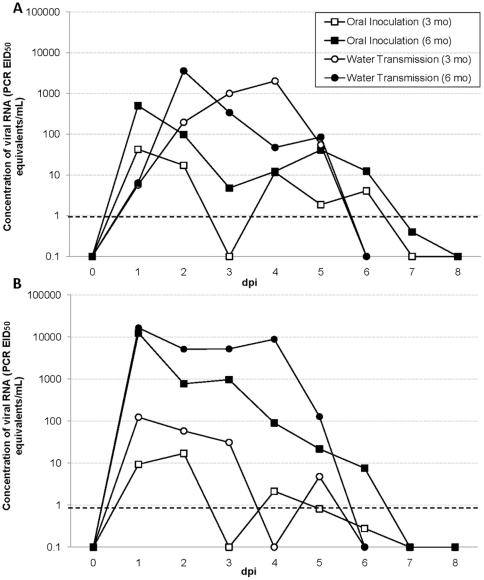
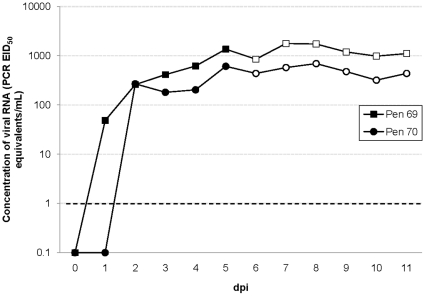
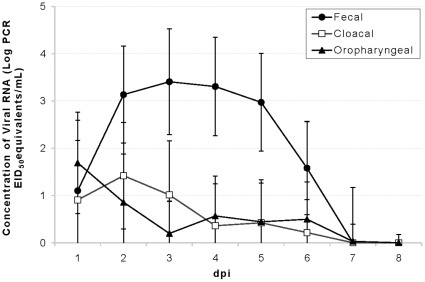
Methodology/principal findings: In this study, mallards were experimentally infected with an H4N6 subtype of AIV by oral inoculation or contact with an H4N6 contaminated water source. Cloacal swabs, oropharyngeal swabs, fecal samples, and water samples were collected daily and tested by real-time RT-PCR (RRT-PCR) for estimation of viral shedding. Fecal samples had significantly higher virus concentrations than oropharyngeal or cloacal swabs and 6 month old ducks shed significantly more viral RNA than 3 month old ducks regardless of sample type. Use of a water source contaminated by AIV infected mallards, was sufficient to transmit virus to naïve mallards, which shed AIV at higher or similar levels as orally-inoculated ducks.
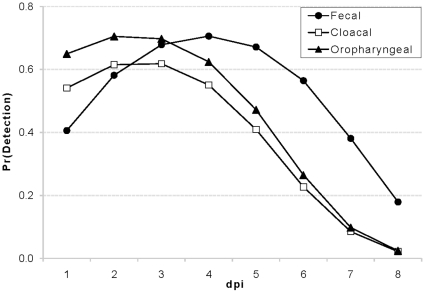
Conclusions: Bodies of water could serve as a transmission pathway for AIV in waterfowl. For AIV surveillance purposes, water samples and fecal samples appear to be excellent alternatives or additions to cloacal and oropharyngeal swabbing. Furthermore, duck age (even within hatch-year birds) may be important when interpreting viral shedding results from experimental infections or surveillance. Differential shedding among hatch-year mallards could affect prevalence estimates, modeling of AIV spread, and subsequent risk assessments.
Conflict of interest statement
Figures
References
-
- Olsen B, Munster VJ, Wallensten A, Waldenstrom J, Osterhaus ADME, et al. Global patterns of influenza A virus in wild birds. Science. 2006;312:384–388. - PubMed
-
- Halvorson DA, Frame DD, Friendshuh KAJ, Shaw DP. Outbreaks of low pathogenicity avian influenza in U.S.A. Avian Dis. 2003;47, Special Issue, Fourth International Symposium on Avian Influenza, 1997 Proceedings:36–46.
-
- Horimoto T, Kawaoka Y. Influenza: Lessons from past pandemics, warnings from current incidents. Nat Rev Microbiol. 2005;3:591–600. - PubMed
Publication types
MeSH terms
Substances
LinkOut - more resources
Full Text Sources
Medical
