


Disgust and Obsessive Beliefs in Contamination-related OCD
- PMID: 20877585
- PMCID: PMC2945391
- DOI: 10.1007/s10608-009-9253-y
Disgust and Obsessive Beliefs in Contamination-related OCD
Abstract
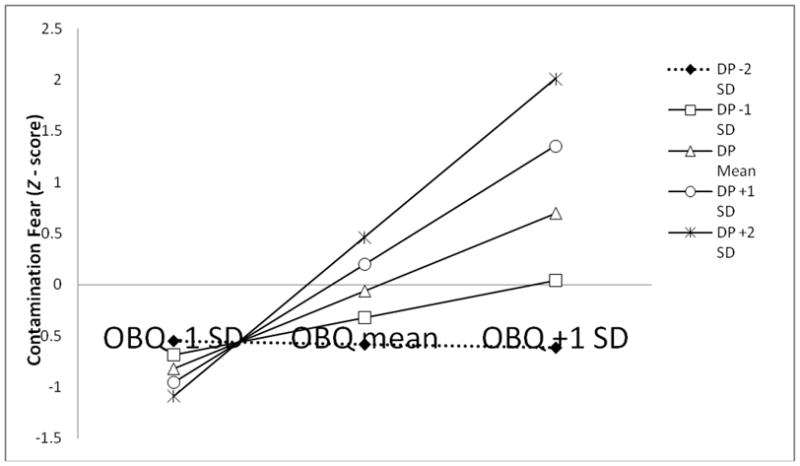
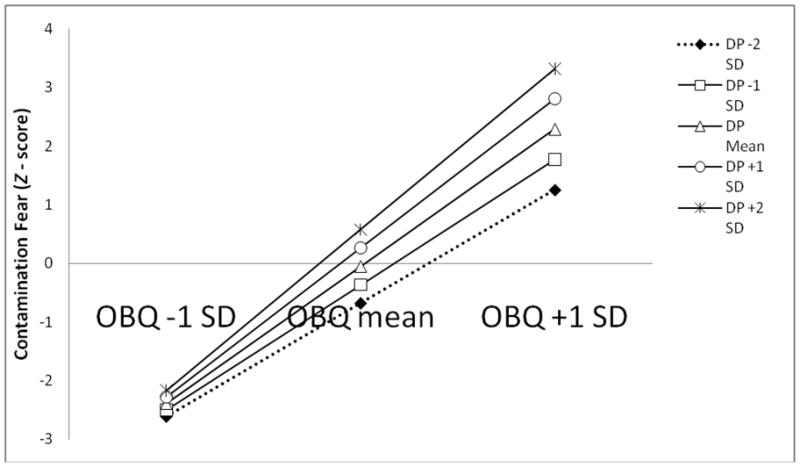
A large body of evidence suggests that disgust is an important affective process underlying contamination fear. An independent line of research demonstrates that obsessive beliefs, particularly overestimations of threat, are also an important cognitive process underlying contamination fear. The present study attempts to integrate these two lines of research by testing whether obsessive beliefs potentiate the influence of disgust propensity on contamination fear. The interaction between disgust propensity and obsessive beliefs was tested in two large non-clinical samples (N = 252 in Study 1; N = 308 in Study 2) using two different self-report measures of contamination fear. Regression analyses supported the hypotheses in both samples. The interaction remained significant when controlling for negative affect. The results are hypothesized to suggest that contamination fear results, at least partly, from obsessive beliefs about the contamination-based appraisals that accompany heightened disgust responding. These results complement previous affective-driven explanations of the role of disgust in contamination fear by suggesting cognitive factors that similarly potentiate disgust's role in contamination fear.
Figures
References
-
- Abramowitz JS, Deacon B, Olatunji B, Wheaton MG, Berman N, Timpano K, McGrath P, Riemann B, Adams T, Bjorgvinsson T, Storch EA, Hale L. Assessment of obsessive-compulsive symptom dimensions: Development and validation of the Dimensional Obsessive-Compulsive Scale. 2009. Manuscript submitted for publication. - PubMed
-
- Abramowitz JS, Khandker M, Nelson CA, Deacon BJ, Rygwall R. The role of cognitive factors in the pathogenesis of obsessive-compulsive symptoms: a prospective study. Behaviour Research and Therapy. 2006;44:1361–1374. - PubMed
-
- Abramowitz JS, Lackey GR, Wheaton MG. Obsessive-compulsive symptoms: the contribution of obsessional beliefs and experiential avoidance. Journal of Anxiety Disorders (in press) - PubMed
-
- Abramowitz JS, Nelson CA, Rygwall R, Khandker M. The cognitive mediation of obsessive-compulsive symptoms: a longitudinal study. Journal of Anxiety Disorders. 2007;21:91–104. - PubMed
-
- Burns GL, Keortge SG, Formea GM, Sternberger LG. Revision of the Padua Inventory of obsessive compulsive disorder symptoms: Distinctions between worry, obsessions, and compulsions. Behaviour Research and Therapy. 1996;34:163–173. - PubMed
Grants and funding
LinkOut - more resources
Full Text Sources