


Ex vivo assessment of mouse cervical remodeling through pregnancy via 23Na MRS
- PMID: 20878968
- PMCID: PMC3965669
- DOI: 10.1002/nbm.1507
Ex vivo assessment of mouse cervical remodeling through pregnancy via 23Na MRS
Abstract
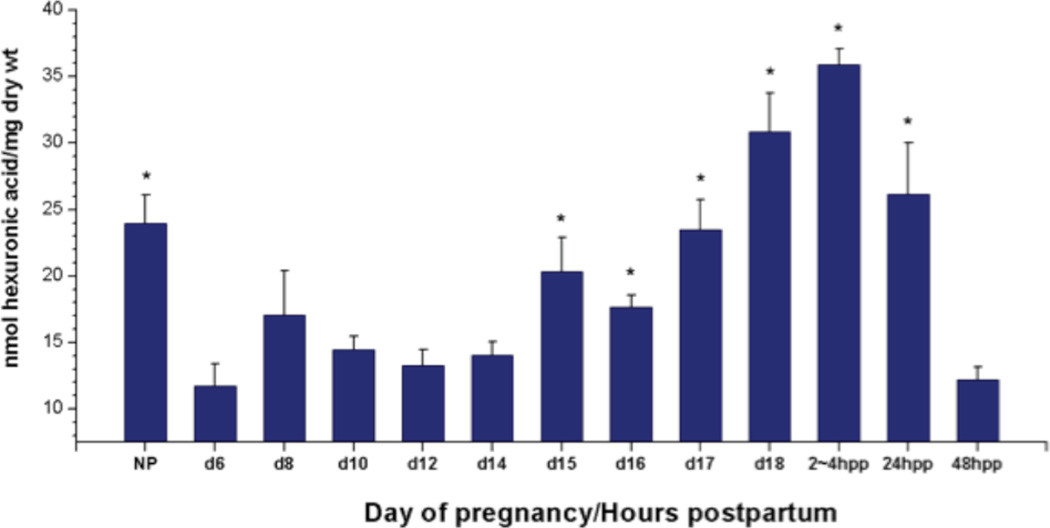
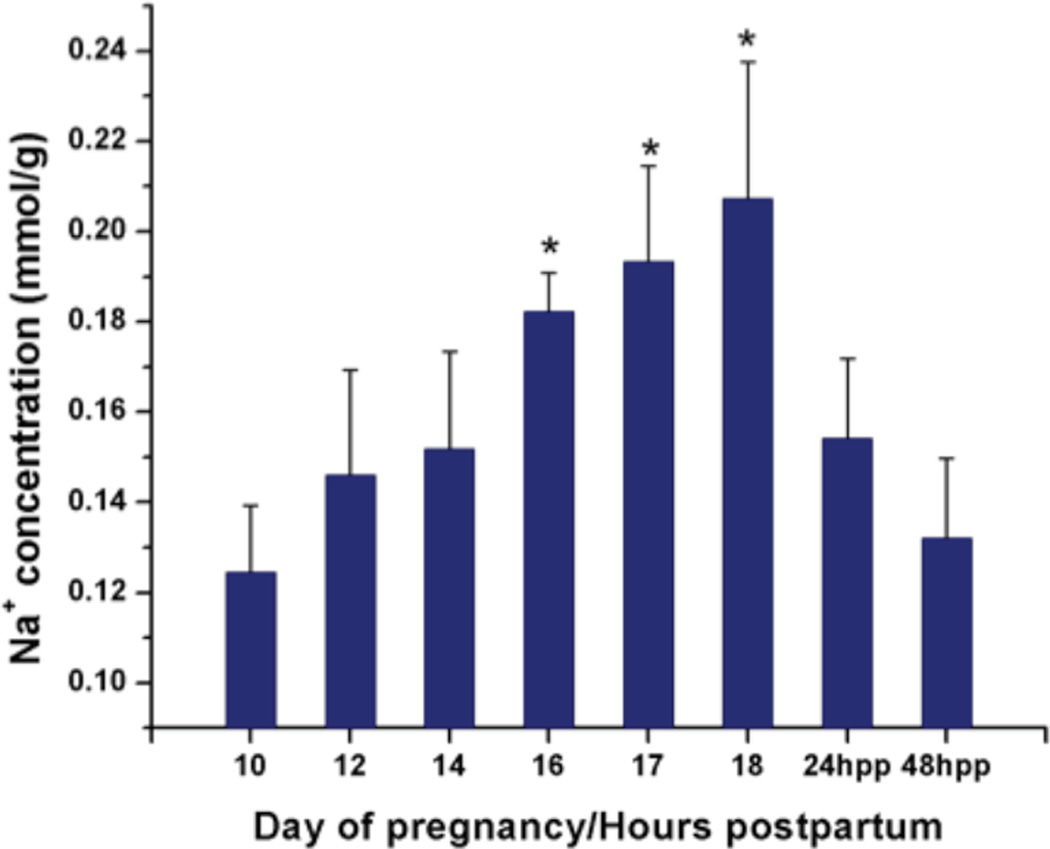
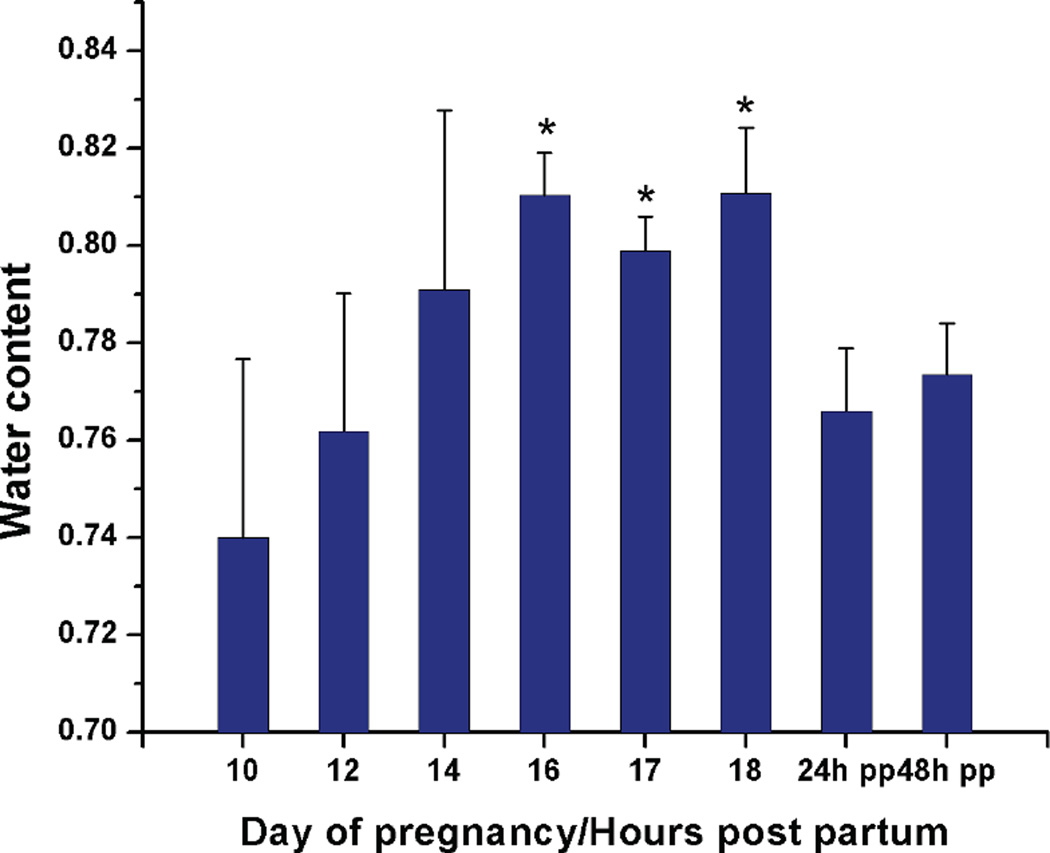
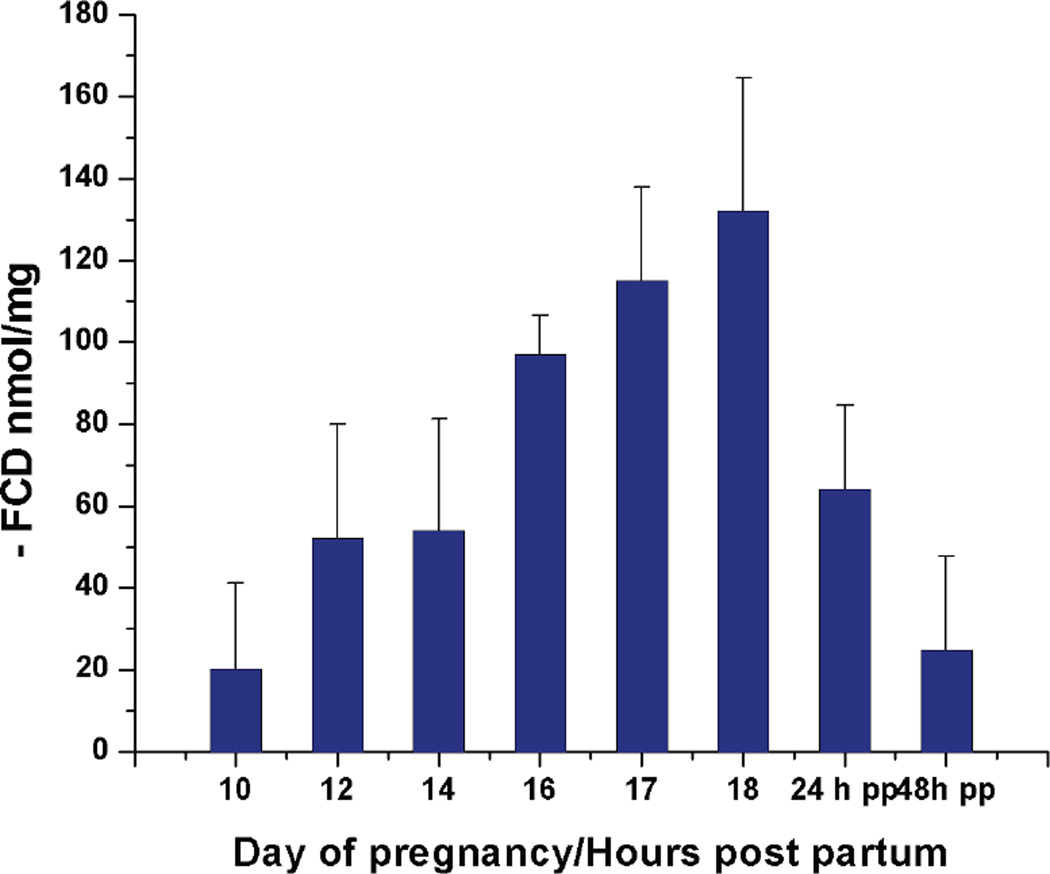
Preterm birth occurs in 12.5% of births in the United States and can lead to risk of infant death or to lifelong serious health complications. A greater understanding by which the two main processes, uterine contraction and cervical remodeling are regulated is required to reduce rates of preterm birth. The cervix must undergo extensive remodeling through pregnancy in preparation for parturition, the process of labor and delivery of young. One key aspect of this dynamic process is a change in the composition and abundance of glycosaminoglycans (GAGs) and proteoglycans within the extracellular matrix, which influences the loss of tensile strength or stiffness of the cervix during labor. 23Na NMR spectroscopy has previously been validated as a method to quantify GAGs in tissues. In the current study, the Na+ concentration was measured at several time points through pregnancy in mouse cervices using 23Na NMR spectroscopy. The Na+ concentration increased progressively during pregnancy and peaked one day before birth followed by a rapid decline after birth. The same trend was seen in GAGs as measured by a biochemical assay using independent cervix samples over the course of pregnancy. We suggest that monitoring the Na+ concentration via 23Na NMR spectroscopy can serve as an informative physiological marker in evaluating the stages of cervical remodeling ex vivo and warrants further investigation to determine its utility as a diagnostic tool for the identification of women at risk for impending preterm birth.
Copyright © 2010 John Wiley & Sons, Ltd.
Figures
References
-
- Committee on understanding premature birth and assuring healthy outcomes board on health sciences policy. Preterm birth: Causes, consequences, and prevention. Washington, D.C: National Academies Press; 2006.
-
- Cunningham GL, Kenneth J, Bloom Steven L, Hauth John C, Gilstrap Larry C, Wenstrom Katharine D, editors. Williams obstetrics. ed 22nd Edition. McGraw-Hill Professional; 2005.
-
- Leppert PC. Anatomy and physiology of cervical ripening. Clinical Obstetrics and Gynecology. 1995;38:267–279. - PubMed
-
- Word RA, Li XH, Hnat M, Carrick K. Dynamics of cervical remodeling during pregnancy and parturition: Mechanisms and current concepts. Seminars in Reproductive Medicine. 2007;25:69–79. - PubMed
-
- Myers K, Socrate S, Tzeranis D, House M. Changes in the biochemical constituents and morphologic appearance of the human cervical stroma during pregnancy. Elsevier Ireland Ltd; 2009. pp. S82–S89. - PubMed
Publication types
MeSH terms
Substances
Grants and funding
LinkOut - more resources
Full Text Sources
Medical
