


Inhibition of matrix metalloproteinases in Siberian hamsters impedes photostimulated recrudescence of ovaries
- PMID: 20881024
- PMCID: PMC3840726
- DOI: 10.1530/REP-10-0304
Inhibition of matrix metalloproteinases in Siberian hamsters impedes photostimulated recrudescence of ovaries
Abstract
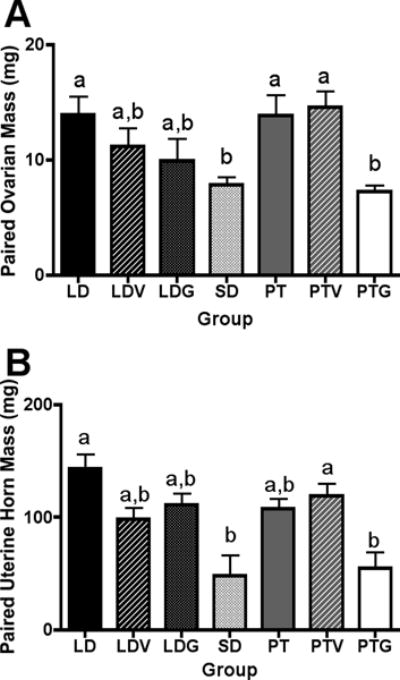
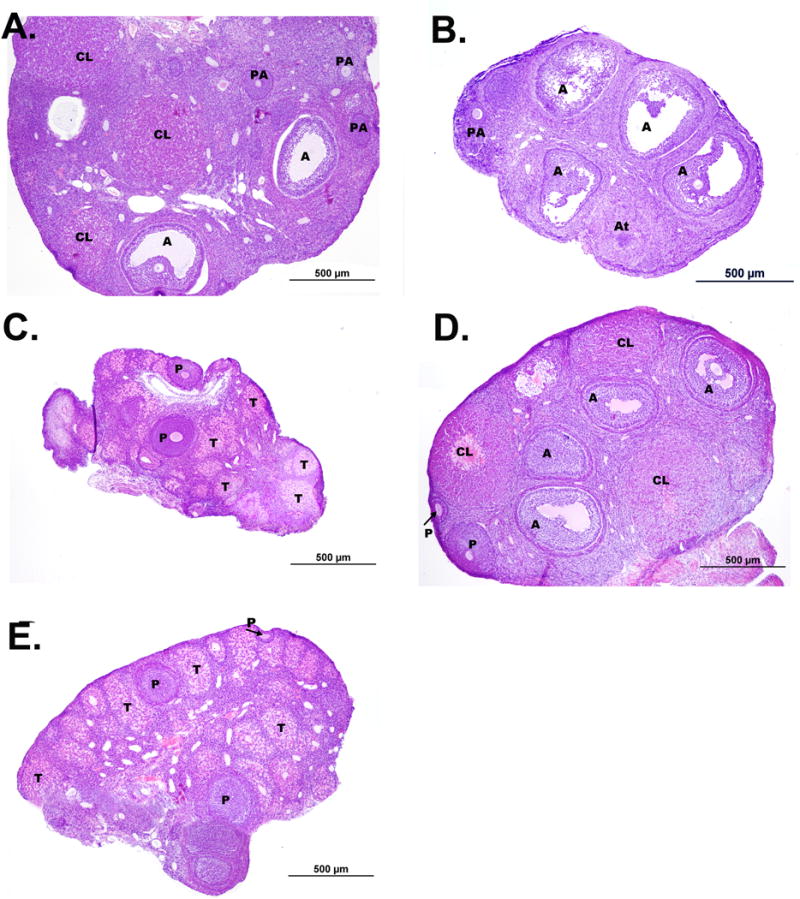
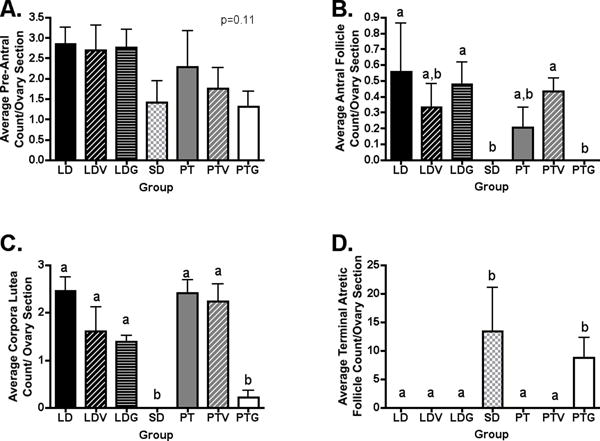
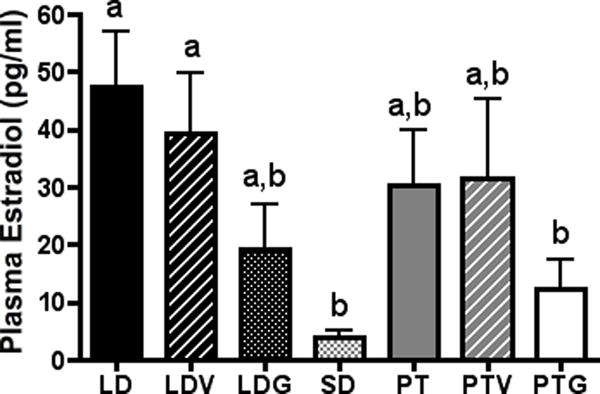
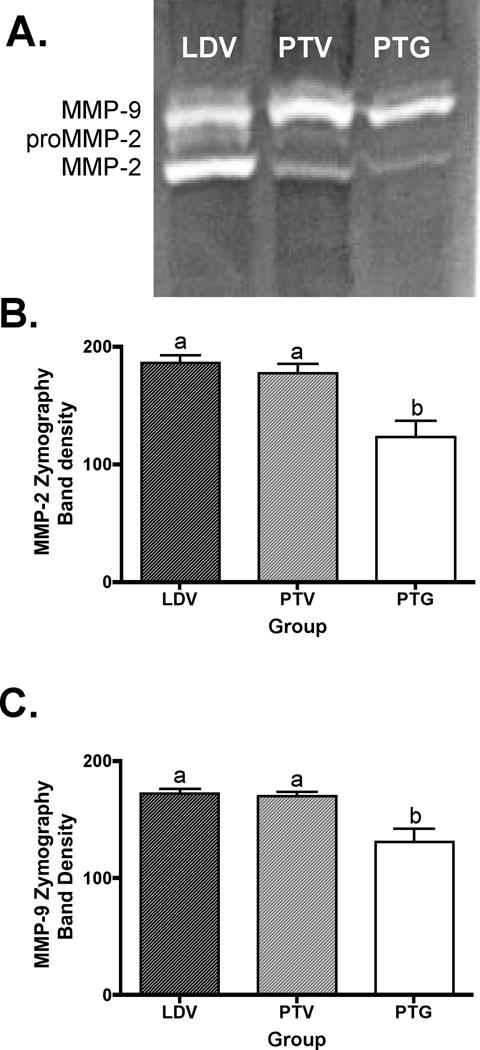
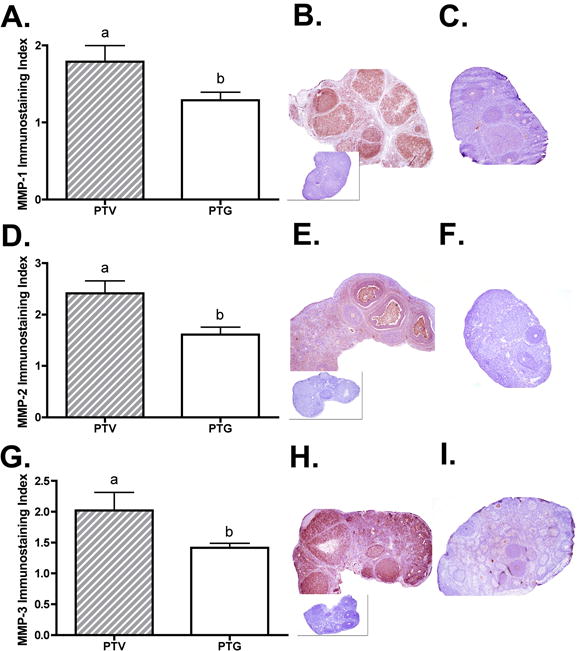
Exposure of Siberian hamsters to short photoperiod for 14 weeks induces ovarian regression. Subsequent transfer to long photoperiod restores ovarian function, and 2 weeks of photostimulation increases plasma estradiol (E(2)), antral follicles, and corpora lutea (CL). Because tissue remodeling involved with photostimulated ovarian recrudescence is associated with differential expression of matrix metalloproteinases (MMPs), we hypothesized that inhibiting MMP activity using a broad-spectrum in vivo MMP inhibitor, GM6001, would curtail recrudescence. One group of hamsters was placed in long days (LD; 16 h light:8 h darkness) for 16 weeks. Another group was placed in inhibitory short days (SD; 8 h light:16 h darkness) for 14 weeks. A third group was placed in SD for 14 weeks and transferred to LD for 2 weeks to stimulate recrudescence. During weeks 14-16, animals were either not treated or treated daily with i.p. injections of GM6001 (20 mg/kg) or vehicle (DMSO). GM6001 reduced gelatinase activity and decreased immunohistochemical staining for MMP1, MMP2, and MMP3 compared with vehicle. No differences between controls, vehicle, or GM6001 treatment were observed among LD animals, despite a trend toward reduction in CL and E(2) with GM6001. Although SD reduced ovarian function, photostimulation of transferred controls increased uterine mass, plasma E(2), appearance of antral follicles, and CL. With GM6001 treatment, photostimulation failed to increase uterine mass, plasma E(2), antral follicles, or CL. These data show, for the first time, that in vivo GM6001 administration inhibits MMP activity in hamster ovaries during photostimulation, and indicate that this inhibition may impede photostimulated recrudescence of ovaries. This study suggests an intriguing link between MMP activity and return to ovarian function during photostimulated recrudescence.
Conflict of interest statement
The authors declare that there is no conflict of interest that could be perceived as prejudicing the impartiality of the research reported.
Figures
References
-
- Bauvois B. Transmembrane proteases in focus: diversity and redundancy? J Leukoc Biol. 2001;70:11–17. - PubMed
-
- Butler GS, Will H, Atkinson SJ, Murphy G. Membrane-type-2 matrix metalloproteinase can initiate the processing of progelatinase A and is regulated by the tissue inhibitors of metalloproteinases. Eur J Biochem. 1997;244:653–657. - PubMed
-
- Curry TE, Jr, Osteen KG. Cyclic changes in the matrix metalloproteinase system in the ovary and uterus. Biol Reprod. 2001;64:1285–1296. - PubMed
-
- Curry TE, Jr, Osteen KG. The matrix metalloproteinase system: changes, regulation, and impact throughout the ovarian and uterine reproductive cycle. Endocr Rev. 2003;24:428–465. - PubMed
-
- Dodge JC, Kristal MB, Badura LL. Male-induced estrus synchronization in the female Siberian hamster (Phodopus sungorus sungorus) Physiol Behav. 2002;7:227–231. - PubMed
Publication types
MeSH terms
Substances
Grants and funding
LinkOut - more resources
Full Text Sources
Research Materials
Miscellaneous
